1 month ago
56
1 month ago
56
The UK government committed last week to either implementing a ban on under-16s accessing social media or imposing restrictions on children’s use of those platforms.
A consultation is already under way on whether to impose limits and the announcement confirms that curbs will be introduced. Here are some of the restrictions that could be brought in.
The imposition of an Australia-style ban is under consideration as part of the consultation but the UK technology secretary, Liz Kendall, said last week that there were “strongly different views” on whether it was the right way to go. The consultation closes at the end of May and the government is expected to act on its conclusions soon after.
The Molly Rose Foundation, established by the family of Molly Russell, a British teenager who took her own life after viewing harmful online content, does not support a ban and is calling for stronger online safety instead. However, there is political backing for a ban including from the opposition Conservative party and more than 60 Labour backbench MPs.
Molly Russell took her own life in 2017 after viewing harmful online content. Photograph: Family handout/PA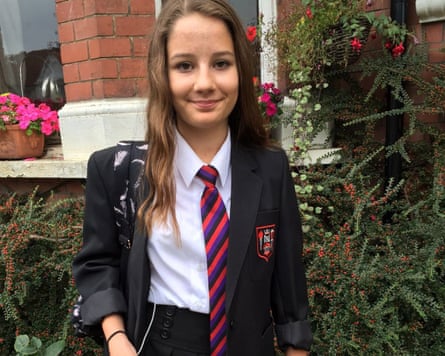
2. Tackling features such as livestreaming and disappearing messages
The consultation refers broadly to taking action on certain “features and functionalities” of apps and imposing an age limit on them. Examples of this include: livestreaming; the ability to send and receive images and videos containing nudity; location sharing; disappearing messages; and stranger-pairing, the term for enabling children to connect with strangers online.
All of these could enable harms such as grooming or harassment, according to the government. It has said the list of potential restrictions in the consultation is not exhaustive and is calling for other suggestions.
3. Limits on ‘addictive’ features
The consultation flags certain features that could encourage children to stay online for longer and asks whether they should be age-gated. These include: infinite scrolling, where your feed reloads automatically and the page you’re on never ends; autoplay features that launch a new video as soon as you have finished the one you are watching; affirmation functions such as like buttons and follower counts; and push notifications that pop up on your device in an attempt to get you back on to an app.
Photograph: Allard Schager/Alamy
4. Restricting personalised algorithms
The recommendation systems that serve content to users come under scrutiny in the consultation document. Should the government require an age limit on platforms that deploy personalised algorithms to serve up targeted content?
Molly Russell had been served a stream of harmful content related to self-harm, depression and suicide on Instagram and Pinterest before she died. The consultation said: “As the experience of Molly Russell so devastatingly demonstrated, algorithms can also be a force for immense harm when they serve children the wrong kind of content, in many cases when they are not proactively seeking it out, or where they drive compulsive use.”
5. Screen time limits and app curfews
The government raised the prospect of mandatory limits on services that have addictive features. This would put into law voluntary restrictions offered by the likes of TikTok and Instagram. An option is to introduce screen time limits for certain apps, as well as banning access to them overnight via a curfew. The consultation also highlights “nudge” techniques – subtly tweaking people’s behaviour via low-key interventions – such as enforcing a six-second pause before someone can access a platform.
6. Bringing AI chatbots into the fold
Chatbots were not in politicians’ considerations when the UK’s Online Safety Act was being drawn up. The act covers chatbots in some areas, such as platforms that allow users to create chatbots that other people interact with, but the government wants more protection from harms specific to chatbots, such as emotional dependence. So the consultation is also asking whether age restrictions, curbing some features and time limits might be appropriate for certain chatbots.