2 months ago
77
2 months ago
77
The International Olympic Committee has banned transgender women and DSD athletes from the female category of events at the 2028 Los Angeles Olympics and future Games.
Kirsty Coventry, the president of the IOC, said the landmark decision had been taken because “it would not be fair for biological males to compete in the female category”.
The IOC has also confirmed that all athletes wanting to compete in the female category at future Olympics will have to undergo a one-off SRY (sex determining region Y gene) screening to detect their biological sex. Usually that is done via an unintrusive cheek-swab or saliva test.
Coventry said the decision, which applies to elite individual and team sports, was based on science and would protect the fairness and safety of women’s sport. “As a former athlete, I passionately believe in the rights of all Olympians to take part in fair competition,” she said.
“The policy that we have announced is based on science and has been led by medical experts. At the Olympic Games, even the smallest margins can be the difference between victory and defeat. So, it is absolutely clear that it would not be fair for biological males to compete in the female category. In addition, in some sports it would simply not be safe.
“Every athlete must be treated with dignity and respect, and athletes will need to be screened only once in their lifetime.”
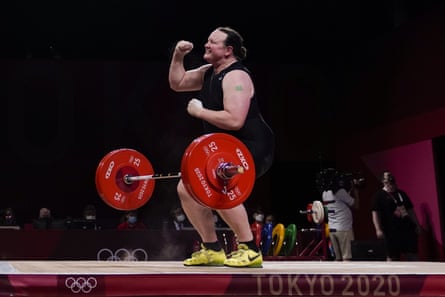
Sports have been wrestling with the issue of transgender and DSD (differences in sex development) participation in the female category for more than a decade. In 2021, the New Zealand weightlifter Laurel Hubbard became the first transgender woman to compete at an Olympics after transitioning.
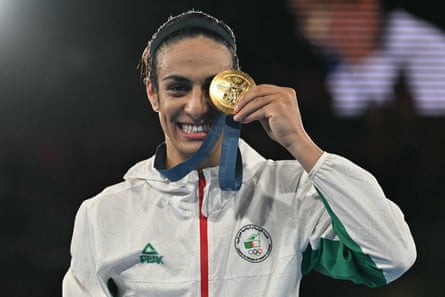
There have also been several high-profile cases of DSD athletes, who were reported female at birth but have male chromosomes and male testosterone levels, winning Olympic medals. They include the South African Caster Semenya, winner of London 2012 and Rio 2016 women’s 800m Olympic gold, as well as the boxer Imane Khelif in Paris in 2024.
In a 10-page document outlining its new policy, the IOC makes it clear transgender women, who have transitioned from male to female, and athletes with a DSD, retain the advantages of going through male puberty.
“There is a 10-12% male performance advantage in most running and swimming events,” it says. “There is a 20+ per cent male performance advantage in most throwing and jumping events. And the male performance advantage can be greater than 100 per cent in events that involve explosive power, eg in collision, lifting and punching sports.”
“XY transgender athletes and athletes with XY-DSD typically have testes/testicles and testosterone levels in the male range,” it adds. “The clear majority are androgen-sensitive, meaning that their bodies are receptive to and make use of that testosterone during growth and development and throughout their athletic career.
“The Olympic movement has a compelling interest in having a sex-based female category, because this is necessary to ensure fairness, safety and integrity in elite competition.”
The document maintains that the SRY screen test is the best way to check someone’s biological sex – and is not intrusive. “Based on scientific evidence, the IOC considers that the presence of the SRY gene is fixed throughout life and represents highly accurate evidence that an athlete has experienced male sex development,” it said.
“Furthermore, the IOC considers that SRY gene screening via saliva, cheek swab or blood sample is unintrusive compared to other possible methods.”
The IOC said its new policy should be adopted by all international sports federations and governing bodies for events, such as the Summer and Winter Olympics. It made it clear it only applies to elite sport and not any grassroots or recreational sports programmes.
The charity Sex Matters said it supported the IOC’s decision. “We wholeheartedly welcome the new IOC guidelines that secure a safe and fair female category,” its interim chair Emma Hilton said. “SRY screening is a simple, non-invasive, once-in-a-lifetime check that returns female sport to female athletes.”
However others reacted with disappointment, including the charity Dsdfamilies. “Fairness in competition is important, but eligibility rules must also be proportionate and aligned with contemporary standards of DSD care, rather than creating foreseeable and avoidable harm to this vulnerable minority group,” its spokesperson Ellie Magritte said. “We are concerned that proposed processes do not always demonstrate the level of understanding, dignity, and respect that this issue requires.”