3 months ago
90
3 months ago
90
The US secretary of state, Marco Rubio, has said that Washington is expecting a response from Iran to its proposals for an interim deal to end the conflict in the Middle East, as Iran accused the US of breaching the increasingly fragile ceasefire announced last month.
In recent days there have been the biggest flare-ups in fighting in and around the contested strait of Hormuz since the informal truce began. The rise in violence followed Donald Trump’s announcement – then rapid pause – of a new naval mission aimed at opening the strategic waterway.
On Friday US forces fired on and disabled two Iranian-flagged tankers that attempted to violate the American blockade of Iran’s ports, the US military said.
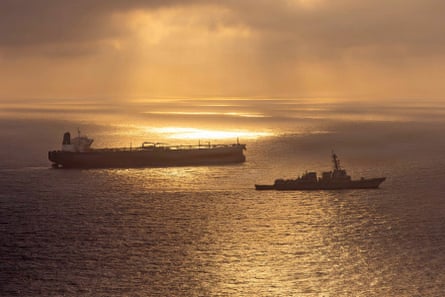
Despite the clashes diplomatic efforts continue, with the mediators Pakistan passing a brief memorandum to Iran that the US has said could act as a basis for a more solid ceasefire and allow new talks.
Speaking to reporters at the White House on Friday evening, Trump said he expected a response from Iran soon. “I’m getting a letter supposedly tonight,” he said. Asked whether Iran was intentionally slow-rolling the negotiation process, he replied: “We’ll find out soon enough.”
During a visit to Rome, Rubio said: “We’re expecting a response from them today at some point … I hope it’s a serious offer, I really do … The hope is it’s something that can put us into a serious process of negotiation.”
There have been wild swings from hope to despair in recent days, as the US and Iran test each other’s resilience and will, seeking leverage in any talks through belligerent rhetoric, defiance and sporadic violence.
Abbas Araghchi, Iran’s foreign minister, accused the US of breaking the ceasefire, posting on X on Friday: “Every time a diplomatic solution is on the table, the U.S. opts for a reckless military adventure.”
Araghchi also boasted that Iran’s ballistic missile stocks and launcher capacity had not only been repaired and restocked during the pause in hostilities, but expanded.
Control of the strait and the threat to restart attacks on nearby countries’ oil and other infrastructure in the Gulf are the two main cards Iran can play in negotiations. The US has blockaded Iran, stopping all Iran-linked shipping trying to leave the Gulf, to put pressure on Tehran.
The elimination of Iran’s missile armoury and production facilities were repeatedly stated as a key objective by US officials early in the war. Their restriction is also likely to be a demand during any negotiations.
An Iranian official said on Friday that US attacks overnight in and near the strait of Hormuz struck an Iranian cargo vessel, wounding 10 sailors, with five others missing. It was not immediately clear whether the vessel was directly targeted.
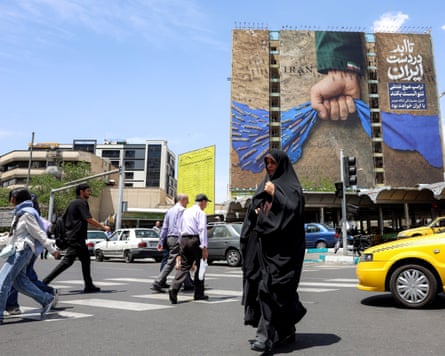
US Central Command said Iranian forces had launched missiles, drones and small boats at three US warships overnight but that none were hit, while US forces destroyed the incoming threat and retaliated against land bases in Iran.
Meanwhile, the United Arab Emirates said it had responded to another Iranian missile barrage on Friday. The UAE’s defence ministry said three people were wounded after air defences engaged two ballistic missiles and three drones launched by Iran. It was not clear if all were successfully intercepted. The authorities told people to stay away from any fallen debris.
Iran has launched hundreds of missiles and drones at the UAE during the war, frequently hitting civilian infrastructure, including oil facilities and luxury hotels.
Trump said on Thursday that the ceasefire was holding, but hopes earlier this week that an “interim” deal between Tehran and Washington might be agreed before the US president travelled to China next week now look premature.
Earlier on Friday, the US treasury announced sanctions against individuals and companies it accused of helping the Iranian war effort, including in China and Hong Kong. The fresh sanctions come just days before Trump is set to arrive in Beijing.
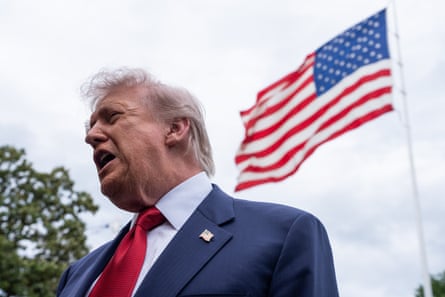
The US president minimised the clashes, dismissing strikes on Thursday as “just a love tap” – but has repeated threats to launch a major new offensive against Iran unless there was agreement soon.
The US proposal is believed to offer a formal ceasefire for at least 60 days that would lead to talks to resolve contentious issues such as Iran’s nuclear programme. “They have to understand: if it doesn’t get signed, they’re going to have a lot of pain,” Trump told reporters in Washington.
Despite many observers’ scepticism, the possibility of even a partial agreement that could lead to the reopening of the strait of Hormuz sent global stocks to near-record highs on Thursday as oil prices dropped steeply. On Friday, the price of a barrel of Brent crude headed upwards once more.
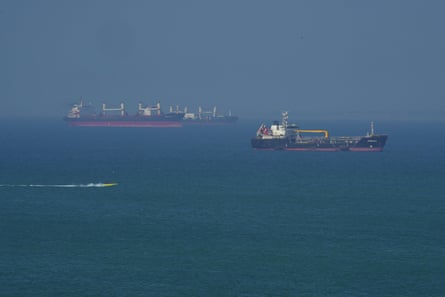
In normal times the strait carries a fifth of the world’s supplies of oil and fossil gas. Its closure in the first days of the war has already forced a steep rise in fuel prices around the world and threatens a global recession.
Pakistani officials have expressed optimism in recent days about a potential deal. Islamabad hosted a round of abortive face-to-face talks last month.
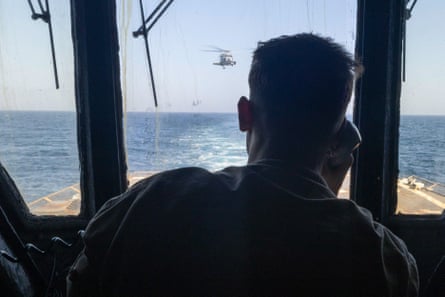
On Monday, the US military said it had destroyed six Iranian small boats, as well as cruise missiles and drones, after Trump sent warships to guide stranded tankers through the waterway.
Two ships of the many hundred that are stranded are believed to have crossed through the strait under the protection of the US navy, but the effort – called Project Freedom – was shelved after about 48 hours, possibly as a result of complaints from Kuwait and Saudi Arabia. Trump claimed he had paused it to allow negotiations a better chance of success.
In Washington on Friday, Qatar’s prime minister, Sheikh Mohammed bin Abdulrahman al-Thani, met JD Vance to discuss the Pakistani-led mediation efforts to bring the conflict to an end. During the meeting, al-Thani “stressed the need for all parties to engage with the ongoing mediation efforts, to pave the way for addressing the root causes of the crisis through peaceful means and dialogue, leading to a comprehensive agreement that achieves lasting peace in the region”, the Qatari foreign ministry said on X.
Analysts say Iranian leaders are divided over whether to engage in new talks with the US or hold out, despite the massive and continuing economic losses caused by the war and the US blockade.
Senior Iranian officials have publicly rejected concessions in recent days. Some appear to favour dragging out the negotiations closer to the November midterm elections in the US, when the Trump administration will be under intense pressure to settle the war and Iran may get a better deal.
However, regional diplomats believe Iran could overplay its hand, with there being an opportunity to finish the war and claim a victory at the present – something that could be harder if all-out fighting resumes. If there was no agreement, Washington could also unilaterally end the war and walk away, leaving Iran under suffocating economic sanctions, they said.
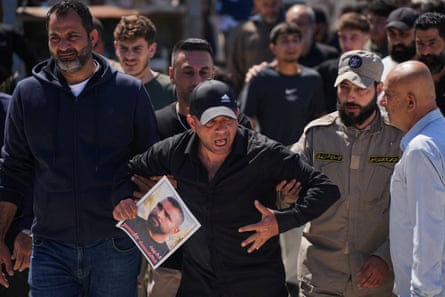
Any agreement between the US and Iran could also help lower tensions in Lebanon, where a separate truce was threatened by an Israeli strike on southern Beirut that killed a commander from Hezbollah, the Iran-backed Islamist militant movement, on Wednesday. The US announced on Friday that it would mediate two days of “intensive talks” between Israel and Lebanon next week.
A new Israeli strike on Friday killed four people, including two women, in the southern Lebanon town of Toura, the health ministry said. Air raid sirens sounded in several cities in northern Israel after shelling from Lebanon, according to the Israeli military.