3 months ago
82
3 months ago
82
I have been Chinese my whole life. Lately, many online have also found their Chinese roots, but not through traditional ancestry tests.
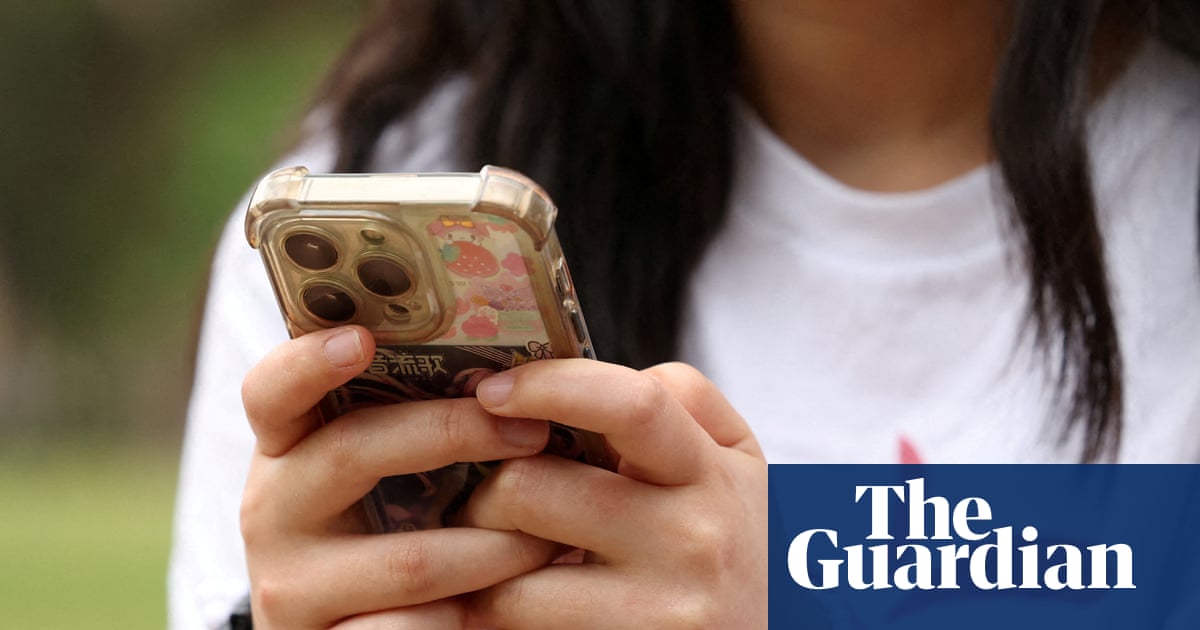
Creators are drinking hot water, wearing slippers around the house, using chopsticks, eating Chinese food, and wearing red. Taking off in popularity from mid-2025, these videos have racked up hundreds of thousands of views, finding virality first on TikTok, then later Instagram and X. Put simply, “people are trying to be more Chinese regardless of what their heritage is,” says Michelle She, a London-based fashion label owner.
Chinamaxxing has variations too: one may be in their “Chinese era”, or might say: “You met me at a very Chinese time of my life”.
It might seem odd to distill a millennia-old culture into a seconds-long TikTok video. But digital trends aren’t just an aesthetic, says Jamie Cohen, an associate professor of media studies at Queens College in New York. He says they’re a response to cultural changes – and a lot has been happening. Disillusionment with the west, an obsession with wellness and historic exoticisation of the east all laid the foundations for the trend to emerge from behind the Great Firewall. In true internet fashion, it is equal parts nonsensical and reductive.
“What’s spreading globally is not China in its full complexity, but fragments of everyday life,” says Tingting Liu, a research fellow at the University of Technology Sydney specialising in Chinese digital media.
China is not a new concept. So what does it feel like for your culture to become a trend? From North America to Australia, those from the Chinese diaspora that I spoke to all used the same word to describe Chinamaxxing: jarring. Though, with varying levels of indignation.
For some in the diaspora, Chinamaxxing reached its peak during lunar new year this February. Jenny Lau, British author of An A-Z of Chinese Food (Recipes Not Included), said that being told what to do for lunar new year, or how to prepare for the Year of the Fire Horse from non-Chinese creators felt unsettling. She says it can feel like a direct challenge to the identity of those within the diaspora.
Vanessa Li, a content creator based in Sydney, agrees: why are non-Chinese creators sharing tips about a holiday they’ve probably never celebrated before? When something becomes a trend it becomes disposable, says Li, who wonders whether a year from now, Chinese culture will be appreciated in the same way.
Everyone from the diaspora that I spoke to recalls a childhood defined by shame and ridicule around their heritage. For Li and Lau, the sudden passion for China stings particularly so, given the onslaught of xenophobic attacks against Chinese people and Asians more broadly during the Covid pandemic only six years ago.
Claire – who did not want her surname to be published – is a content creator from Canada and says it’s unfair that these cultural elements are suddenly being celebrated. Even more so when non-Chinese creators seem to be gaining the most success from Chinamaxxing.
Others from the diaspora are worried about the potential for cultural appropriation. Sherry Zhu is a content creator from the US, and a prominent face of the Chinamaxxing trend – she bestows Chinese heritage upon anyone who comes across her in their feed. But she too is concerned about non-Chinese creators reducing centuries old traditional medicine to a wellness fad. “I don’t want people to forget … the benefits that my culture is providing. It comes from China … it’s not coming from somewhere else.”
For Lau this trend is not new. “The Oriental ‘Other’ has always trended in western culture,” she says. “Chinamaxxing is Orientalism by any other name.”
Cohen traces Chinamaxxing’s origins back to early 2025, when tens of thousands of new users flocked to Chinese social media app Red Note and were exposed to a version of China they had never seen before.
“It was like a de-propagandisation device,” he says. For the first time young people from the US saw that “under those [different] systems of government, there’s still people who do wonderful things. Who are just like you”.
Cohen sees Chinamaxxing as a form of coping for people who have “lost faith” in the legitimacy of the US as a cultural and democratic force on the global stage. Claire agrees. She says the trend has allowed people to “express dissatisfaction with their government, and their conditions.”
“Some of the memes would be like, ‘I’m becoming Chinese because Trump just did this.’”
She acknowledges not everyone participating in the trend is examining their political beliefs every time they post, but it allows some people to be “counter-cultural … without doing too much”. The appeal of the meme is that it can be two things at once: rebellious and meaningless. “When people say they’re becoming Chinese, no one actually means that,” says Claire.
While Liu has reservations about the way Chinamaxxing encourages surface-level understandings of China, she ultimately sees it as a positive force. “For many years, China’s official cultural diplomacy was too serious, formal, and lacked this kind of sense of humour,” she says.
Others from the diaspora have also enjoyed the way the trend has humanised Chinese culture. It’s no longer solely associated with “spyware or cheap manufactured goods,” says Claire.
Zhu is unconcerned with the trend’s potential for perpetuating narrow images of China and sees it as “net-positive”. “I can’t see how [non-Chinese people drinking hot water] would be negatively impactful.”
There are generational differences in the spectrum of opinion among the diaspora: Lau is a millennial and She a zillennial, whereas Zhu, Claire and Li are zoomers. Cohen says gen Z has more of an “open-mindedness” towards the way culture can be discussed. “Young people in particular would prefer this [Chinamaxxing] over any other type of cultural appropriation or cultural anger,” he says.
For Claire, Chinamaxxing has been a welcome change in online attitudes. Before the trend, “without a doubt, every time I saw a post that remotely mentioned China, the comments would be flooded with negativity”. Now, “this is one of those rare times where it’s not that they’re laughing at us, but it’s almost like we’re laughing together,” she says.
But is China – and Chinese people – the butt of the joke? Claire doesn’t know for sure, but is willing to give people the benefit of the doubt. “I’m inclined to believe that when people want to engage with my culture, it’s from a genuine standpoint.”
At the time of speaking, most agreed that Chinamaxxing was reaching its tail-end. “If the trend makes it to Instagram, that’s its punctuation mark,” says Cohen.
Some are hopeful a more genuine and sustained interest in China will continue. Zhu and She are seeing this being taken offline and are interpreting this as a good sign. “I’ve never gotten more requests from my friends to organise a big China trip,” says She.
Li is just happy that younger people from the diaspora can feel proud about their identity. “It’s validating to be Chinese,” she says.