3 months ago
62
3 months ago
62
Window-rattling explosions turned Yara Basta-Bos’s street into a “war zone” last week, but she was spared from the worst of the new year chaos she had seen in the past. A few years ago, the emergency doctor in Amsterdam had to treat a patient clutching their own eyeball after a firework blew it out of its socket.
“It feels like such a waste,” said Basta-Bos, president of the Dutch society of emergency physicians, adding that last week’s revelry resulted in more than 1,200 injuries – one-third of whom ended up in hospital – and two deaths. “Of course, fireworks are nice to look at. But the level of damage it’s causing in the Netherlands right now is just unbelievable.”
New year whistles, crackles and bangs may have troubled the Dutch for the last time, however, as a nationwide ban on most consumer fireworks is expected to take effect before the close of 2026. The move would make the Netherlands only the second European nation, after Ireland, to forbid a tradition that critics across the continent argue is wildly dangerous, terrifies pets and chokes cities with toxic fumes.
Ines Kostić, an MP with the Party for the Animals, which began pushing for a ban 15 years ago, said the Dutch campaign had gained support as people grew more aware of the victims and the burden placed on emergency services.
“I used to set off fireworks myself,” she said. “We all grew up with it; it was completely normalised. But I came to realise how great the societal damage is.”
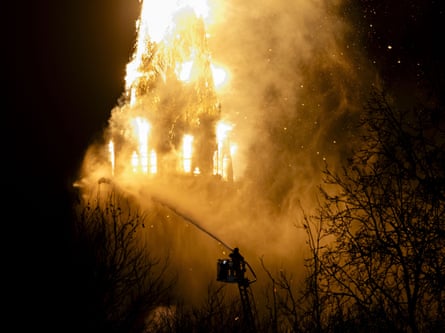
Firefighters received 4,286 fire incident reports during the most recent New Year’s Eve celebrations, a small rise from the year before, and a monumental 19th-century church burned down near Amsterdam’s famous Vondelpark in an evening marred by what police described as unprecedented violence.
Jolanda Trijselaar, the chair of the Dutch fire service, said firefighters were attacked with fireworks and even needed the support of riot police. “This has to stop,” she said. “Our staff are there to help, not to be targets of violence.”
The Dutch love for fireworks dates back to the 17th century, but the explosive displays only became widespread after the second world war. Defenders of the practice – in the Netherlands and elsewhere in Europe – argue that setting them off on New Year’s Eve has become a much-loved tradition that fun-crushing governments should not curb.
Fireworks sellers in the Netherlands, which already has more than a dozen municipal bans, have blamed imports of dangerous and illegal explosives for the chaos. Doctors say these were responsible for just over half of the injuries that sent people to A&E but that legal fireworks were still a serious danger.
Jolanda Pen, who with her husband, Frits, owns Dream Fireworks, a company licensed to stage displays and which includes a customer-facing shop, said she expected the ease of buying fireworks in neighbouring countries such as Belgium and Germany to make the ban on consumer fireworks ineffective.
“I understand why they do it but I don’t think it will make a difference,” she said. “If you do it for all of Europe, OK – but not just for us in the Netherlands.”
Debates around banning end-of-year firework displays have heated up in several European countries. In Germany, which regularly reports firework-related deaths around the turn of the year, calls to ban private sales have gained support from doctors, green groups and police unions – with some environmental groups going further and calling for a ban even on licensed firework displays.
In Finland, a citizens’ initiative to ban fireworks that was launched on New Year’s Eve gained the 50,000 signatures needed for lawmakers to debate it in just a few days, according to local media. A poll commissioned by the financial group OP Pohjola last week found that 70% of Finns supported restricting fireworks, with about 25% willing to ban them outright.
“There is a clear difference between the genders: 31% of women would ban fireworks entirely in contrast to only 19% of men who would do so,” said Raija Nikander, of Pohjola Insurance. “Thirty-four per cent of men would not restrict their use in any way, while just 14% of women feel the same.”
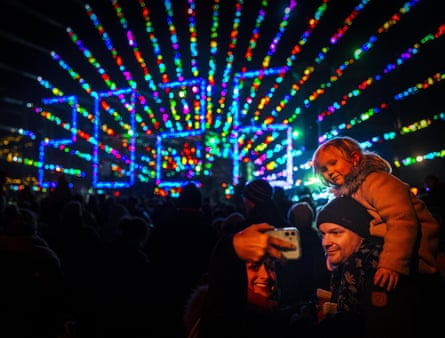
A handful of European capitals have sought alternatives in the absence of national bans. Athens, in Greece, and Nicosia, in Cyprus, rang in the new year with light displays and drone shows that avoided the loudly polluting explosions of previous years. In Brussels, Belgium, a ban on fireworks was partially flouted on a night in which emergency services and public transport workers were pelted with fireworks.
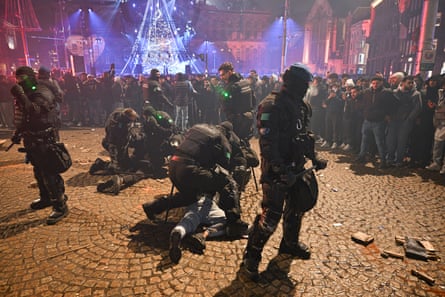
Basta-Bos said it was important to offer a safe way to celebrate the closing of the old year and the beginning of the new one through measures such as organised firework displays. “If we don’t offer an alternative, I think chaos will reign,” she said.
While the prospect of an EU-wide ban appears distant for now, officials have begun to acknowledge the problems in existing legislation. In September, the European Commission identified safety and environmental “shortcomings” in its pyrotechnics directive, highlighting the widespread availability of dangerous fireworks as well as the circumvention of rules via mail-order sales.
Politicians disagree on how to compensate for loss of business. The Dutch ban has been approved by parliament but its entry into force is conditional on reaching a deal to compensate an industry whose sales reached €129m in 2025, up from €118m the year before. The ongoing debate has frustrated campaigners who argue that society has already greatly subsidised the practice through health and environmental costs.
Kostić said compensation was an important condition to get a majority to support the ban in parliament and could help avoid legal disputes, even though her party was otherwise a strong supporter of making polluters pay. “It is indeed true that the costs of fireworks are largely paid by society,” she said.