2 months ago
60
2 months ago
60
Next week the Winter Olympic Games will return to Italy for the first time in two decades. From the fashion capital of Milan to the dramatic peaks of Cortina d’Ampezzo, the Milano Cortina Games – the first to be co-hosted by two cities – will stretch across northern Italy blending world-class winter sport with a strong sense of history and ambition.
Sixteen sports and more than 110 gold medals await, from the raw speed of alpine skiing and bobsleigh to the tactical endurance of biathlon and cross-country. Alpine fans will once again orbit Mikaela Shiffrin, still redefining excellence across the technical disciplines, while Team GB’s Dave Ryding will hope to deliver one last Olympic moment. Figure skating returns with its familiar blend of artistry and pressure, led by the American phenomenon Ilia Malinin, whose boundary-pushing jumps continue to reshape the sport. Speed skating and its short-track form, where Italy’s Arianna Fontana remains a dominant force, offer drama measured in hundredths of a second. Ice hockey brings physicality and heated rivalries (if you know, you know), with Canada the perennial favourites, and curling – yes, still with the brooms – will remind casual viewers, under the guidance of Team GB’s Bruce Mouat, that precision can be just as gripping as power.
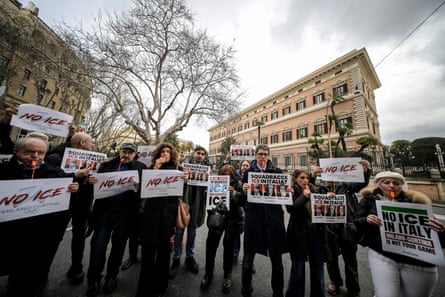
Geopolitically, the Olympics continues to navigate uncertain ground. The IOC president, Kirsty Coventry, has said the organisation remains committed to protecting the Olympic movement amid rising tensions, including heightened attention on the US president, Donald Trump. His foreign interventions, from the capturing of Venezuela’s Nicolás Maduro to his desire of a Greenland takeover, have received strong pushback from across the globe. ICE, responsible for the death of eight people in 2026 including Alex Pretti and Renee Nicole Good in Minneapolis, sending agents to support security operations in Italy is the latest news to cause dissent, with the Milan mayor, Giuseppe Sala, calling the law enforcement agency “a militia that kills”.
Russian and Belarusian athletes approved to compete will do so as “Individual Neutral Athletes”, after a ruling that overturned blanket bans and allowed participation under strict IOC conditions. Resistance from some federations made the qualification process complex and, at times, legally contested. Doping also remains a concern, after much of the Beijing 2022 coverage centred on Kamila Valieva’s positive test, something the IOC will hope not to see repeated. The broader political climate ensures the Games will not unfold in isolation from global events.
The organisers have framed Milano Cortina as a Games designed for the modern era: lighter on permanent construction, heavier on existing venues and rooted in sustainability rather than scale. The snow sports will unfold in the Dolomites, the ice events in Milan and nearby cities. Milano Cortina placed environmental concerns at the heart of its bid, promising reduced carbon emissions and the protection of surrounding ecosystems. Yet the climate crisis remains an unavoidable backdrop. Warmer winters and the use of artificial snow have sparked debate about the long-term future of winter sport.
The split-host model will also be under scrutiny. Organisers argue that spreading events across existing venues makes the Games more efficient and less disruptive. Critics point to the challenges for athletes (and their families and friends), fans and media moving between locations, and to the strain placed on transport infrastructure during competition days. How smoothly Milano Cortina functions may influence how future Olympic bids are designed.
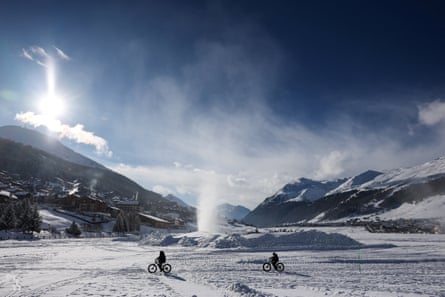
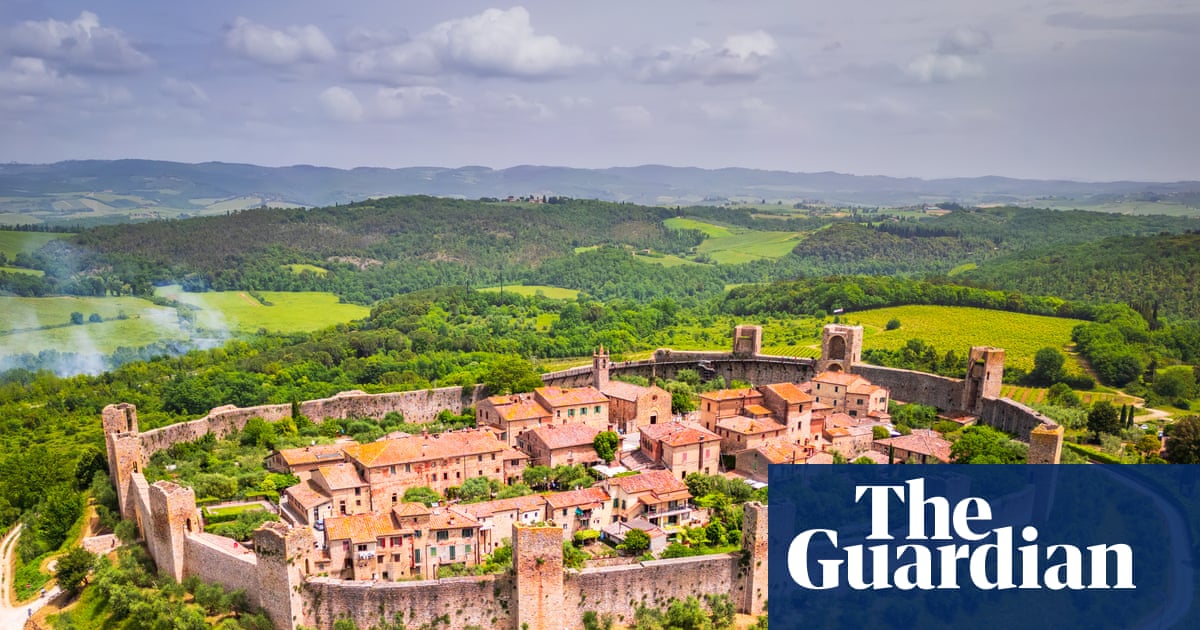
Italy, though, is betting that its cultural pull will cut through the noise. From the elegance of Milan’s arenas to the stark beauty of the Dolomites – a Unesco world heritage site since 2009 – these Games promise a visual identity unlike any other. Food, fashion, design and landscape will all play a role in how Milano Cortina is remembered.
Our daily briefing will be with you promptly at around 7am GMT every day, delivering results, a guide to what lies ahead and the best reporting from our writers across Italy. Whether it is a medal-winning performance, a surprise storyline or the quieter moments that often define an Olympic fortnight, we will aim to capture the scale and the detail of these Games.
If you’re receiving this newsletter unexpectedly, it is likely because you previously subscribed to our coverage of a previously Olympics. We hope you will stay with us for Milano Cortina. If you’d prefer not to receive further updates, you can unsubscribe easily via the footer. Otherwise, welcome back. The countdown is almost over.
Further reading from the Guardian
-
‘A militia that kills’: uproar in Italy over ICE security role at Winter Olympics
-
Why are ICE agents going to the Winter Olympics in Italy? – video explainer
-
Talent, tech and grit: how Team GB’s Big Tricks and Adrenaline dept got its mojo back
-
From scrums to the slopes: how rugby’s life lessons have helped hone Team GB’s Winter Olympians
-
Heated Rivalry star duo named torchbearers for 2026 Winter Olympics
What to look out for
Some of the sporting action will start before the opening ceremony on 6 February. Here is what you can enjoy before then. Times shown are local time (CET) – one hour ahead of GMT in the UK, six hours ahead of EST in the US and 10 hours behind Australian AEDT.
Wednesday 4 February
-
Curling – 7.05pm: the first session sees four mixed doubles, round-robin matches, including Great Britain v Norway.
Thursday 5 February
-
Curling – 10.05am, 2.35pm and 7.05pm: more mixed doubles match-ups across three sessions, with the reining gold medallists, Italy, in action against Canada.
-
Ice hockey – 12.10pm, 4.40pm and 9.10pm: the women’s preliminary round matches begin with the five-time gold medallists Canada facing Finland in the day’s final game.
-
Snowboarding (big air) – 7.30pm, 8.15pm and 9pm: three runs of the men’s qualification 1 takes place.
Friday 6 February
-
Curling – 10.05am and 2.35pm: mixed doubles continue with the US taking on Canada in the morning session.
-
Figure skating – 9.55am, 11.35am and 1.35pm: three team event sessions, first up the ice dance rhythm dance followed by pairs’ short program and women’s short program.
-
Ice Hockey – 12.10pm and 2.40pm: two more matches from the women’s preliminary round with France v Japan and the Czech Republic v Switzerland.
-
Opening ceremony – 8pm: San Siro will stage the event with musical performances from Mariah Carey and Andrea Bocelli. For the first time ever, there will be two Olympic cauldrons: one at the Arco della Pace in Milan and the other in Piazza Dibona, the charming main square in Cortina d’Ampezzo.
I will be back in your inbox on Wednesday 4 February. If you have any thoughts, questions or predictions you want to share, you can get in touch with me at [email protected]. Who knows, your words may make it into a future edition.