3 months ago
83
3 months ago
83
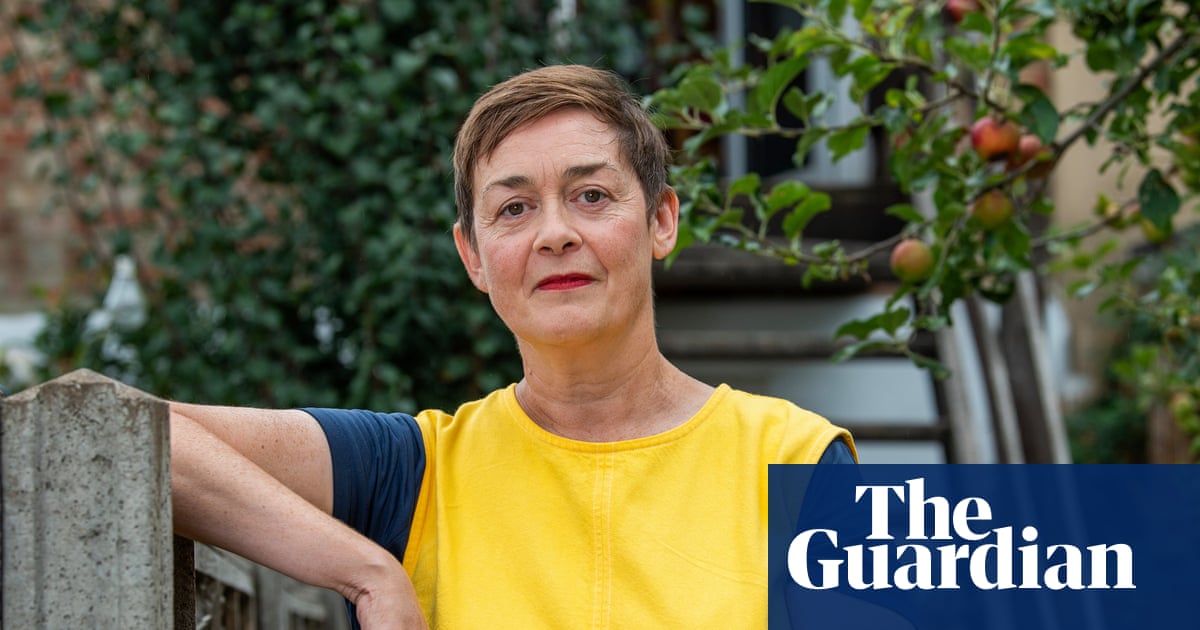
Kipp Popert is a man on a mission. The 27-year‑old Englishman, who tops the disabled world rankings, uses one word a lot: “opportunity”. Popert was “shocked” to hear from the DP World Tour that its G4D circuit, which staged a handful of tournaments per year for disabled players between 2022 and 2025, has been placed into cold storage.
The G4D Open, a tournament for 80 golfers with disabilities, will be staged at Celtic Manor from Thursday. It takes place thousands of miles from Pennsylvania and this week’s US PGA Championship, which last year bestowed $3.4m (£2.5m) on Scottie Scheffler. Even the main platform for players in this domain does not offer prize money. It is not Popert’s way to lambast anyone. He instead calmly articulates the impact of that move.
“In order for kids to see the future and to have inspiration on the tough days, the best players in the world need to be able to play regularly for a living,” Popert says. “That’s what the DP World Tour set out to achieve and we are all really grateful to them. It is just a shame that the sport at the moment has stopped.
“Performance sells sport. When you look at male or female able‑bodied sports, it is the elite side of it that creates opportunities at grassroots. The narrative of inclusivity is amazing but there needs to be an understanding that bringing the best players together is what brings a wow factor and hopefully sponsorship.”
On the G4D Tour scenario, a spokesperson for the DP World Tour said: “We are focusing on organising two major events that will provide the biggest platform for golfers with a disability. These are the annual G4D Open, run in partnership with the R&A, and a new G4D match at the 2027 Ryder Cup.
“We established the G4D Tour to grow participation and are proud of the fact that today, the numbers of golfers with a disability playing our sport competitively has grown significantly. G4D is now entering a new chapter with a wider range of stakeholders creating events.
“We will continue discussions with EDGA [European Disabled Golf Association], the IGF [International Golf Federation] and the R&A on a new structure that builds on the momentum generated by the G4D Tour and one that can ultimately realise the ambition of golf entering the Paralympics.”
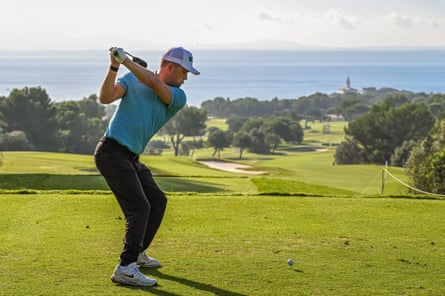
Indeed, Popert is hopeful his long-held ambition of Paralympic participation can be realised at Brisbane in 2032. Yet he offered a caveat: “The Paralympics is incredible and provides a brilliant lens for disabled sport but it also only happens every four years.
“That’s what golf had been doing so well, thanks to the DP World Tour. It is tough to fund but there is a lot of money in sport and a lot of opportunity in sport. Maybe 100 years ago, women were in the same situation. It might not be a funding issue as such but a distribution of funds one.”
This is not a binary conversation. The DP World Tour ordinarily does not struggle to attract sponsors, as their overall growth in that sector shows. Insiders at the DP World Tour cite a lack of competition and depth of talent in disabled golf as problematic. Popert, of course, could argue back; you must see it to be it. He cites Max Togisala, a wheelchair golfer, shooting five under par at last year’s US Adaptive Open as motivating. Deloitte backed that competition with each player receiving a $3,000 stipend. Popert has witnessed Kiefer Jones, who is blind, break par umpteen times.
Popert hosted his own tournament on Monday, the raising of £145,000 from corporate entities meaning all 18 entrants could receive a cheque to use as they pleased. His commitment to others is further demonstrated by the funding of golf lessons for disabled children and donation of buses to schools. His is a genuine and worthy cause. But are enough people taking notice?
“If you go to the R&A museum, there are pictures of disabled people playing golf 150 years ago,” Popert says. “Thousands of people before me were talented but never got an opportunity. I want disabled children who love golf to have opportunity in this sport.
“A big narrative in golf is growing the game. One in six people has a disability and golf is an amazing sport for that; if you are elite from 100 yards and in, be it with one leg or one arm, you can shoot under par. This is a real opportunity for the sport to grow. If there is not a way sustainable for people not to make a living but even cover costs then is it growing the game, really?”
Popert, who has a form of cerebral palsy, has participated in able‑bodied events and doubtless will do so again. “Those tours are not designed for disabled people,” he says. “To keep a Challenge Tour card, you probably have to play 25 events a year. As much as I believe I can play at that level, I can’t play in 25 events.” The trouble is, for the time being there are precious few alternatives.