3 months ago
88
3 months ago
88
Japan has rarely seen a prime minister as bold or as social media-savvy as Sanae Takaichi, the country’s first female leader.
Where previous prime ministers have gone viral for unflattering moments, such as the spectacle of one scoffing an onigiri in one messy gulp or another caught dozing off in the parliament during a key vote, Takaichi is being read by supporters as a symbol of a different era of leadership – one they feel Japan has lacked in recent years.
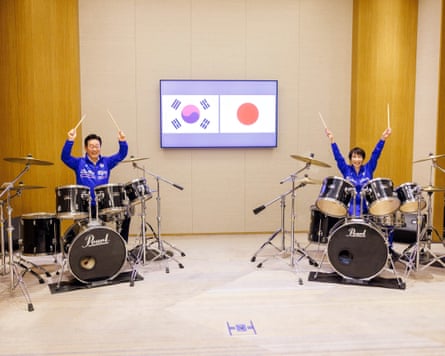
In January alone, Takaichi’s early diplomatic outings have produced the kind of viral imagery Japanese politics rarely generates. A clip of her drumming with South Korean president Lee Jae Myung to global sensation BTS’s Dynamite and Golden from Netflix’s KPop Demon Hunters spread rapidly online, with some viewers even assuming it was AI-generated. Many expected her to clash with Lee, so the clip helped boost her image as a dependable leader who can navigate through geopolitical challenges.
Her appeal isn’t confined to diplomacy. She is so popular that she even has her own fandom, “Sana-katsu” – something more commonly seen with idols rather than prime ministers – complete with adoring supporters circulating clips and copying her look, even down to using the same pen.
But there is a unique paradox at the heart of her appeal, especially among young supporters. Outside Japan, Takaichi is often framed as not particularly feminist with her socially conservative stance – including her opposition to legal reforms that would allow married couples to keep separate surnames, and same-sex marriage. Traditionally, these are issues that would be important to a progressive, young population.
So what explains her unusually high approval among such age groups? In a Sankei Shimbun/FNN poll conducted in mid-December, approval for her cabinet was 92% among those aged between 18 and 29 – a rarity when most young voters are often disengaged from politics.
At a glance, it might appear that Japan is shifting to the right – a trend seen across the world – especially as anxiety about immigration and foreign residents becomes a more visible political theme. In Japan, it is more amplified as Japanese citizens grapple with their identity as a homogeneous society and the reality that their population is declining.
But a deeper look may reveal that the answer is more likely to be economic rather than ideological. For young voters, life is becoming unaffordable as wages cannot keep up with the rising living prices along with a weakening yen, which lowers purchasing power. At the same time, the social contract looks increasingly lopsided. Young people pay ever-higher taxes and social insurance, while doubting that the same level of security will be there for them in the future, especially pensions, in a rapidly ageing society. To illustrate, official projections by the government show Japan having moved from 7.7 workers supporting one elderly person in 1975 to around 1.9 supporting one by 2025.
As a woman in my mid-20s, I feel the weight my generation carries – the sense that the milestones our parents reached at this age are now harder to achieve. My peers often complain about everyday prices rising (staples such as rice have doubled in price in one year) and the growing difficulty of starting a family when one income rarely feels sufficient and pregnancy or childcare can still derail a career.
This is the context in which Takaichi’s economic messaging lands. She has championed tax relief, including raising the income-tax threshold and expanding deductions aimed at boosting take-home pay. To a younger worker watching monthly deductions rise while real purchasing power falls, the promise of more money is hard to ignore.
As Takaichi has called a snap election set to happen on 8 February, her promise hinges on whether she can win a majority. But she may have to tread carefully. Reuters reported that Takaichi’s approval has slipped as voters grow more sceptical about whether her stimulus package, launched late last year, will actually aid the average voter with rising costs. Concerns that Japan may also need to take on additional debt to fund the measures have not helped.
But in the current economic situation, part of her undeniable appeal as leader is that she doesn’t come from a political dynasty. In a system full of men who seem to inherit Diet seats like family property, Takaichi stands out as someone who rose to the top in a political culture that has rarely made it easy for women to do so.
Among my peers, her boldness is part of the draw. “Someone who can make things happen” is a sentiment I often hear. Even as a progressive-leaning voter, I cannot deny Takaichi’s charisma and the pull she possesses. There are many things to admire about her such as her confident diplomacy and her modern leadership style.
But I’m not convinced she’s the answer. The snap election’s timing is hard to defend when it looks like a cynical attempt to cash in on a polling peak, rather than the best thing for the country. The funding and follow-through of her campaign promise – such as temporary tax breaks on essentials – remain unclear. And the optics are bad when her party willingly re-endorses figures previously linked to a slush-fund scandal, when in 2023 multiple members of the party Takaichi now leads were found to have received undeclared funds totalling almost 600 million yen.
Having watched other countries fall for charismatic “outsider” narratives, I’m wary of confusing a compelling image with an ability to govern, especially when the country has so many real problems to solve.
-
Karin Kaneko is a freelance journalist and a former reporter for the Japan Times