3 months ago
74
3 months ago
74
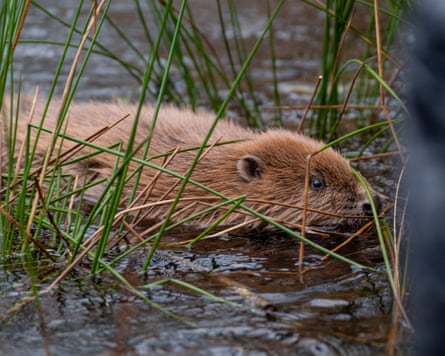
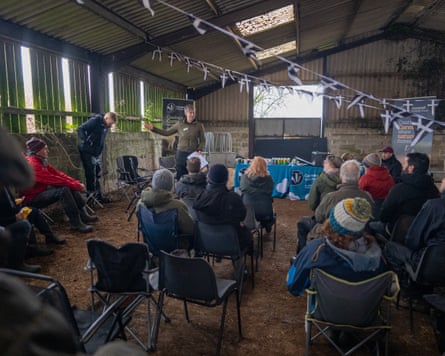
Shivering and rain-drenched at the side of a pond in Cornwall, a huddle of people watched in hushed silence as a beaver took its first tentative steps into its new habitat. As it dived into the water with a determined “plop” and began swimming laps, the suspense broke and everyone looked around, grinning.
The soggy but momentous occasion marks the first time in English history that beavers have been legally released into a river system, almost one year after the government finally agreed to grant licences for releases.
“It’s a beaver blind date,” said Cheryl Marriott, the director of nature and people for the Cornwall Wildlife Trust, as another made its way into the water.
The two beavers released into a top-secret location at the Helman Tor reserve are from enclosures across the country: one from Cheshire and the other from Dorset. They were meeting for the first time on Monday when they were released together into the same pond, while two others were released at a nearby site.
The beaver experts at the charity will be watching the pair closely to see if they get along.
“The beaver trust has a stud book to ensure genetic diversity,” Marriott said. “We want these two to start a family. Beavers don’t tend to be too fussy about their partners, from what I understand, but sometimes they don’t hit it off. We hope this is the start of a self-sustaining population.”
The first legal release under a new government licensing system happened last year on the National Trust’s Purbeck Heaths estate in Dorset. However, those beavers are contained on the local peninsula and cannot make their way up a river system. This is the first truly wild beaver release on the English mainland.
Four hundred years ago, beavers were hunted to extinction in the UK, sought for their thick pelt and an oil they produce.
But beavers are known as a keystone species that can rapidly improve the environment. Their dam-building activity slows the flow of water, helping to reduce flooding during periods of heavy rain, while also storing water in the landscape during drier months and increasing drought resilience. These wetlands filter pollutants and sediments, improving water quality. The remarkable habitats they create have been proven to boost numbers of bats, fish, birds, amphibians and invertebrates.
Despite that, it has taken years to get the government to agree to the return of the charismatic rodents. Last year, the Labour government finally agreed to grant some beaver licences – but it has taken a year, and £150,000 in administration and survey fees, for the nature charity to get permission from Natural England to release four of the rodents into a giant 300-hectare estate. This has raised concerns among smaller organisations and individual landowners who want beavers on their land but feel obtaining a licence is costly and lengthy.
Andy Collins, reserves manager for Cornwall, said he could not wait to see the results of the beavers’ work on the land: “We have a pair of willow tits, the fastest-declining native bird in this country. They need dead wood, shallow pools full of invertebrates and dense thickets, which is exactly the habitat beavers create.”
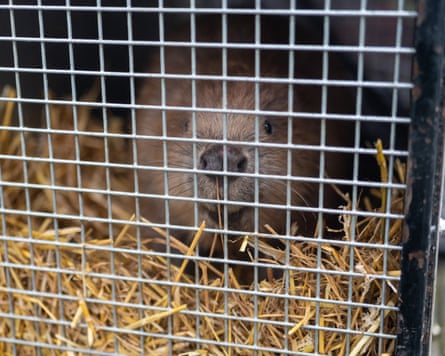
This project has been in the making since 2012. Because of the slow process, some conservationists have taken the matter into their own hands – a third party unknown to the Wildlife Trusts illegally dumped a pair of beavers on to the Tor in February 2024, a process known as “beaver bombing”.
“We were worried about it at first,” Collins said. “We would not encourage or condone this behaviour at all; it erodes trust. But they have done some amazing work. It took us two years and £29,000 to dig 20 wildlife ponds; this pair did twice that in half the time for free.”
Chris Jones, a local farmer, has had beavers in an enclosure on his land since 2017. He said the damp habitat they create has been a life-saver during drought, as it means his farm is the only one in the area which has grass for cows to graze. They’ve also turbocharged nature on his farm, with birds, invertebrates and other wildlife flocking to the still ponds the beavers create with their dams.
He argues he is the perfect candidate for a legal, wild release, and for his beavers to be let out of the enclosure they are now in.
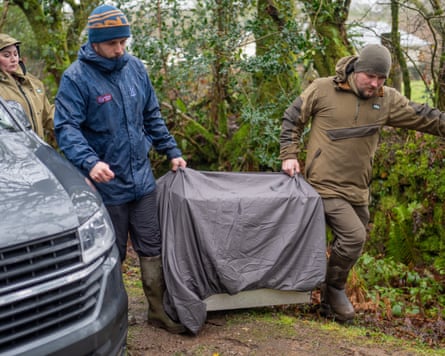
But he said the current indication from Natural England is that it will take at least three years to get permission and is likely to cost tens of thousands of pounds if not more. “It is an inordinate amount of money; it is a huge ask if this level of cost is maintained,” he said.
The layers of bureaucracy involved in releasing these animals are “farcical”, he said.
However, now the Wildlife Trusts have done their first wild release, they hope the next batch will be easier. They plan to release 100 beavers into their various reserves this year, and the National Trust is releasing some too, including a couple in Somerset on Tuesday.
Natural England officials also insist the process will become more streamlined and possibly cheaper, and says there are releases planned on major river catchments including the Humber, Severn and Thames. Stuart Otway, from the complex cases unit at the quango, said: “We want these projects to be successful, and they have to be large and catchment-scale, with self-sustaining, genetically diverse populations. We are looking at over 30 projects now, and you will see more releases this year and in the following years after that.”
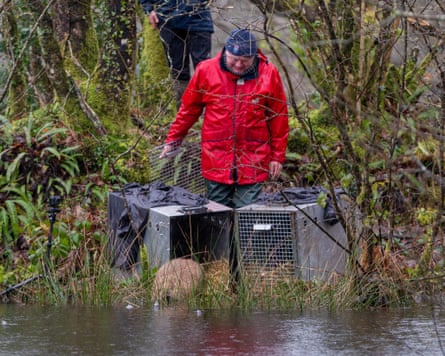
Despite the grumblings about how slow the whole process has been, it was a real occasion of hope.
“I cried when I saw them released. Luckily it was raining so much you couldn’t tell the difference between my tears and the rain,” said Lauren Jasper, beaver officer at the trust.
“I felt relieved but also the real work starts soon, monitoring them and ensuring this project is a success. Everyone will be watching us to see how we do – it is daunting,” she added.
The beavers seemed happy to work the crowd, swimming right up close and demonstrating a few circles of the pond.
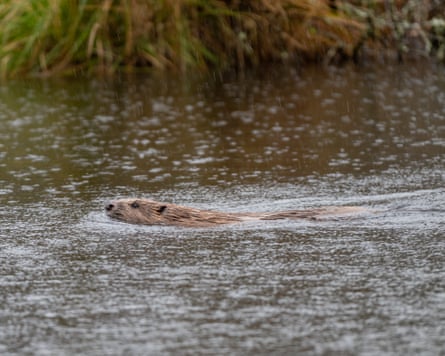
And then the magic happened. Appropriately for the week of Valentine’s Day, their blind date went well. After greeting each other with a sniff, the pair swam off into the horizon.