3 months ago
88
3 months ago
88
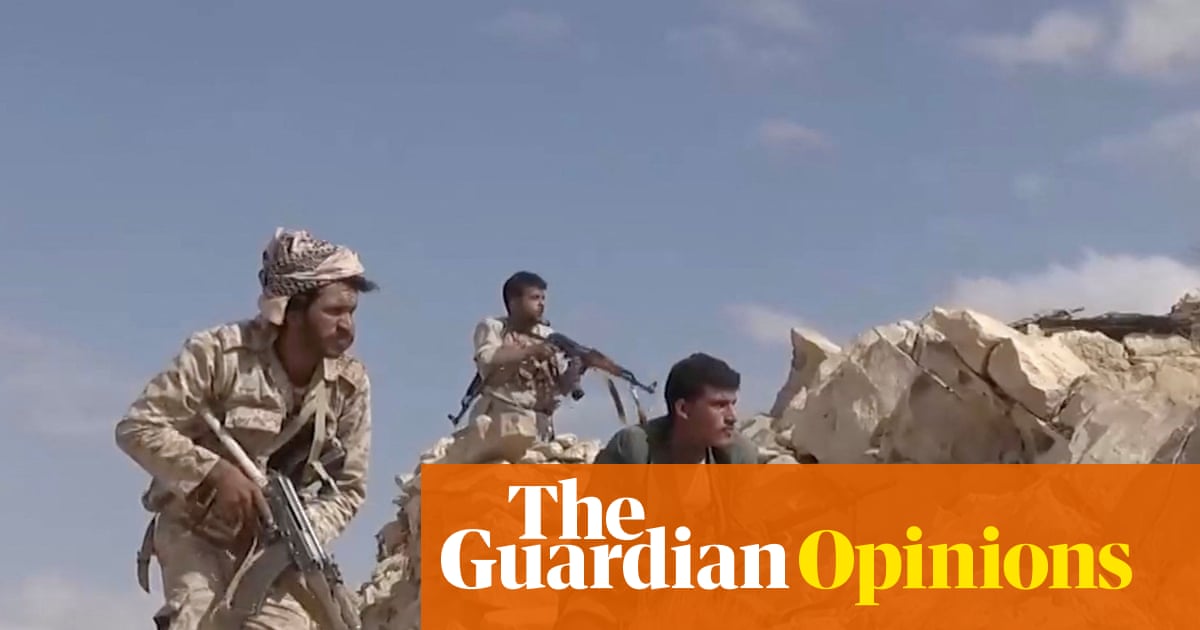
The Taliban in Afghanistan recently arrested three of my family members, kept them in captivity, tortured one, and confiscated my house. It was to silence me. I was about to write to European diplomats to seek support for the release of my innocent family when I heard the shocking news that the EU is inviting Taliban officials to Brussels.
After nearly five years, what has changed in Afghanistan to make life better for its women and its people? Five years with no official schools for female students beyond sixth grade, while thousands of religious schools have been established across Afghanistan, where girls may attend without restrictions. Five years of bans on women becoming doctors, while maternal and infant mortality have skyrocketed. Five years of exclusion from the job market, leaving women to beg on the streets.
Meanwhile, the Taliban relentlessly issues regulations and laws making life harder and harder. In their recent penal code regulation, they legalised slavery, allowing men to enslave and punish women. In the latest regulation on the “separation of spouses,” they legalised girl child marriage in several articles, and continue to act with zero accountability.
As the first female deputy speaker of parliament in Afghanistan, before the Taliban took control, I hold consultations with women across the country to listen to their challenges. Recently, one pointed out: “We talk about poverty, lack of jobs and increased pressure by the Taliban to control every detail of our lives. These are important, but none of the oppressive policies toward women and girls will end unless the culture of impunity toward the perpetrators of gender apartheid ends. So why don’t we collectively discuss ending the apartheid that we all live in?”
Afghanistan is the most visible example of gender apartheid, defined as “inhumane acts committed in the context of an institutionalised regime of systematic oppression and domination by one gender group over any other gender group or groups and committed with the intention of maintaining that regime”. Codifying gender apartheid as a crime under international law would establish a clear legal standard to address systemic, state sanctioned repression of women, not only in Afghanistan, but wherever it occurs, recognising it as a crime, not a cultural exception.
Gender apartheid is not merely a political statement or a cause. For our sisters back home in Afghanistan, they feel apartheid every day. They live it and they carry its pain.
In the absence of defence lawyers, female judges, prosecutors and laws that protect women, we have no access to an official justice system. The recent Taliban criminal courts procedure regulation, signed by the Taliban leader on 4 January 2026, is another nail in the coffin of freedom for women.
The procedure divides society into four categories: religious scholars and first-degree people, the elites – such as tribal elders and merchants – the middle class, and the lower class.
Discretionary punishments, or ta’zir, differ according to these categories. Article 4, Part 5, delegates punitive authority to individuals, including husbands or owners, reducing the dignity of a human being to that of a commodity and institutionalising coercive control in a manner that violates international law prohibiting slavery, torture and cruel or degrading treatment.
Under the Taliban’s penal regulation Article 32, “If a husband beats his wife in a manner that results in fractures, wounds, or bruises, and the wife proves her claim before the judge, the husband shall be sentenced to 15 days of imprisonment.”
Article 70 of the regulation states that anyone who harms a bird or an animal may be sentenced to five months in prison. This legal disparity makes clear the intent of the Taliban toward women: a bird is better protected than a woman.
Afghanistan exposes a broad legal gap. The international system lacks a framework to prosecute the totality of such abuses; with it, similar patterns of institutionalised discrimination elsewhere can be addressed with equal force.
Discrimination and apartheid have worsened day by day. Afghanistan’s minister of higher education told journalists in 2024 that education is “not possible” for now, and that even asking questions about schools is prohibited.
In these circumstances, while trust in international institutions is declining, I urge EU member states to act: codify gender apartheid, end impunity, and stand with Afghan women and girls. As an immediate measure, countries should adopt laws based on universal jurisdiction and enact legal measures to address gender apartheid in Afghanistan. Closing this legal gap will empower action against comparable systems of repression globally. After addressing the human rights subcommittee, and the Delegation for Relations with Afghanistan of the European parliament alongside fellow former MPs and activists, I left with hope. I hoped policymakers understood the gravity of the human rights catastrophe in Afghanistan and the urgent need for meaningful action to hold the Taliban accountable.
For women and girls in Afghanistan, accountability and pressure are a matter of survival. Every day, they are erased from public life, silenced, imprisoned within their country and stripped of their most basic human dignity.
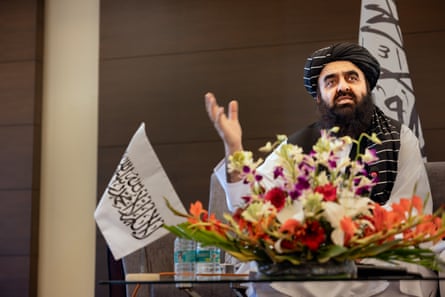
That is why, only a year after the EU-sponsored Independent Investigative Mechanism for Afghanistan was adopted at the UN Human Rights Council, seeing the Taliban welcomed on European soil feels like a devastating betrayal. It is a slap in the face to every Afghan woman and girl who has fought, suffered and resisted Taliban oppression.
Engagement without accountability risks legitimising oppression. It sends a dangerous message: that the international community’s promises to Afghan women can be abandoned for political convenience.
We do not need symbolic solidarity or empty statements. We need courage and commitment from those who claim to stand for justice. The human rights catastrophe in Afghanistan will affect the security of the region and beyond; it is just a matter of time.
Ending impunity for perpetrators of women’s rights violations is not a political act; it is a necessity.
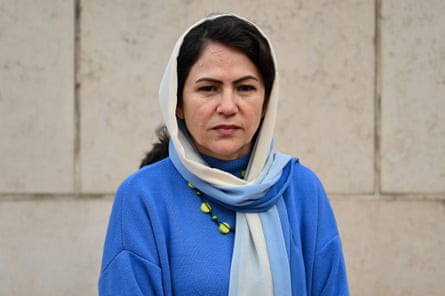
Fawzia Koofi, the first woman deputy speaker of parliament in Afghanistan, is a former peace negotiator with the Taliban, and president of the board of Women for Afghanistan and a fierce champion of women’s rights.