2 months ago
60
2 months ago
60
Madagascar has long been celebrated for its remarkable wildlife, with the vast majority of its species – from ring-tailed lemurs to certain species of baobab trees – found nowhere else on the planet. But when discussing the island nation’s endemic treasures, fungi are often left out of the conversation.
Yet “fungi are some of the most important things in the world”, says Anna Ralaiveloarisoa, a Malagasy scientist. “They feed 90% of terrestrial plants. Without them, there is no life on the Earth.”
As the first homegrown mycologist in Madagascar, Ralaiveloarisoa wants people to better understand the importance of this under-studied kingdom of life, adding that less than 1% of the estimated 100,000 species of fungi in Madagascar have been scientifically described.
Ralaiveloarisoa is now working on classifying each of the 200 new species she has identified so far, though she faces plenty of challenges in the process: trying to preserve mushrooms without proper infrastructure; journeying to remote spots in the jungle without reliable roads or electricity; and having no other experts to collaborate with in the country.
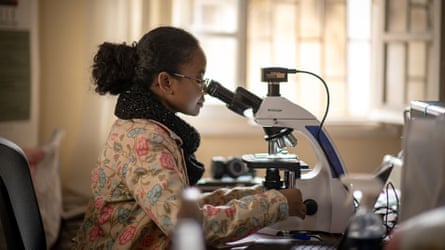
Though the obstacles are significant, they are ones Ralaiveloarisoa shares with many mycologists in nearby nations. She is part of an emerging cohort of scientists across Africa who are pioneering the study and conservation of fungi in their home countries.
Last November, many met for the first time at the International Congress on Fungal Conservation, held in Cotonou, Benin. The conference drew mycologists from 27 countries across Africa, Europe, the Americas and Asia, with several hailing from African countries where they serve as the only – or one of very few – mycologists in the nation.
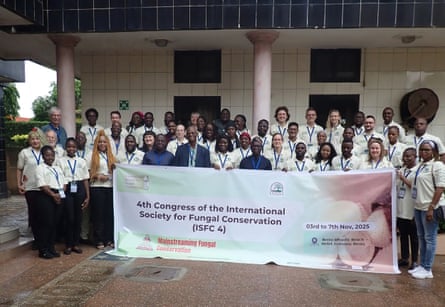
Their congress reflected the growing global momentum behind fungal conservation, and the growing role that African scientists see for themselves within it.
Nourou Yorou, a mycologist who was recently named general director of the Benin Agency for Science and Innovation, told delegates at the opening ceremony: “What an exciting time: from almost nothing 20 years ago, fungal conservation has evolved from a little-known field into a dynamic global movement.
“The challenge is now to plan a future where fungi are firmly placed in the conservation mainstream.”
Across the globe, protecting fungi has lagged significantly behind the conservation of plants and animals. While the first organisations dedicated to protecting birds were established in the 19th century, fungi had to wait until the 21st century, when mycologists from more than 40 countries established the International Society for Fungal Conservation (ISFC) in 2010, and the first conservation nonprofit organisation, the Fungi Foundation, was only created in 2012.
David Minter, president of the ISFC, says: “Fungal conservation up to the early 2000s was really just a few disjointed, separate voices of scientists expressing concern about the results they were observing.”
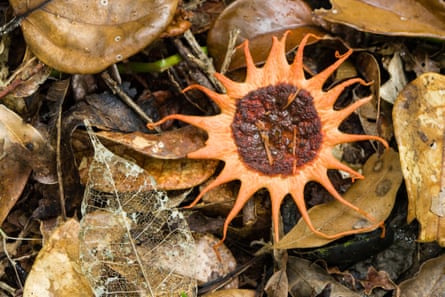
Since those groups were established, though, a global movement has emerged. The first conservation legislation to include fungi was passed in Chile in 2013. The Fungi Foundation, which helped get the law passed, began to champion the phrase “fauna, flora, funga” to encourage fungi’s inclusion in more conservation frameworks.
Other organisations began to form: in 2017, North America’s first fungal conservation nonprofit group, Fundis, was created; in 2021, the research organisation SPUN (Society for the Protection of Underground Networks) was cofounded by the evolutionary biologist Toby Kiers, who went on to win the Tyler prize for environmental achievement and a MacArthur “genius grant” for her work in fungal research and conservation.
Later this year, the “fungal conservation pledge” first proposed at the UN biodiversity meeting of Cop16 in Colombia in 2024 will be discussed again at the forthcoming biodiversity Cop in Armenia.
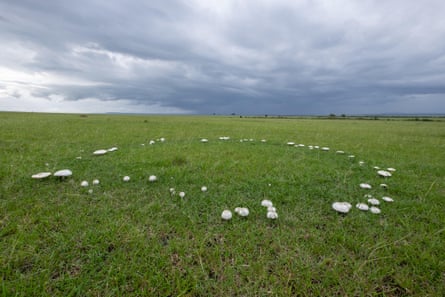
This interest in conserving fungi has been spurred in part by increasing evidence that they play a far larger role in how ecosystems function than was previously understood: 90% of plants on Earth rely on fungi to supply them with crucial nutrients, and newer evidence is increasingly pointing to the key role that fungi play in helping maintain a stable climate.
A recent study found that as much as 36% of annual CO2 emissions from fossil fuels are stored in the underground mycelium of mycorrhizal fungi.
Minter compares fungi to waste collectors performing basic but crucial services that allows the rest of society to function – and who everyone tends to overlook until they are gone. He says: “But if [waste collectors] go on strike, we sure know that they’re needed. It’s exactly the same with fungi.”
Fungi need protection, Minter adds, because they perform crucial functions in all ecosystems, and are just as susceptible to the climate crisis, habitat destruction and pollution as other living things.
And it cannot be assumed that fungi automatically benefit from conservation efforts aimed at animals and plants. A 2025 study published in Nature found that less than 10% of predicted hotspots of mycorrhizal fungal richness – the kind that form symbioses with plants – are protected.
“In 2010, it was absolutely normal not to mention fungi at all in conservation,” Minter says. “At some point in the future it will look strange if fungi don’t get a mention. And the very exciting thing is that, right now, we are at that tipping point.”
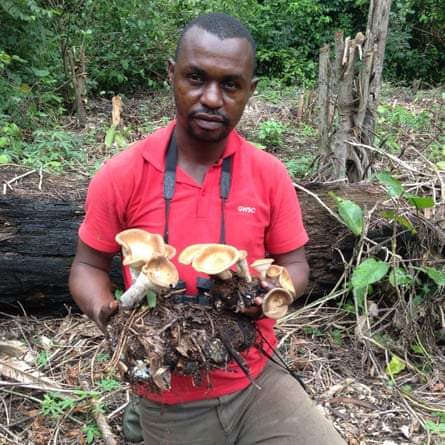
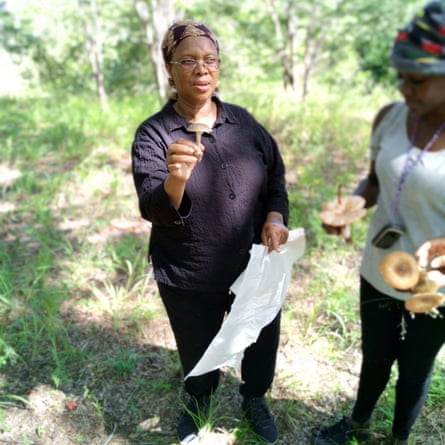
At the Benin congress, African mycologists made it clear that they have the expertise, commitment and interest to back this movement in their own countries and globally. In a workshop designed to help local mycologists evaluate the risk of extinction, Sydney Ndolo Ebika, the Republic of the Congo’s first mycologist, offered useful insights about Termitomyces, a genus of fungi that is “farmed” by termites.
Prized as an edible fungi throughout much of Africa, some species grow to be as large as an umbrella.
Ndolo Ebika’s expertise has been hard won: when he first decided he wanted to study fungi, there was no one in Congo-Brazzaville to teach him, so he speculatively began emailing mycologists abroad to ask if he could join their laboratories.
When he eventually did begin studying on a graduate programme in Germany, about the same time that the ISFC was formed, he sometimes photocopied entire books on fungi, because he knew no one in the Congo had access to these resources.
He has now established the Republic of the Congo’s first fungarium, where type specimens are preserved to allow mycologists to establish the existence of new species and hold on to them for future study.
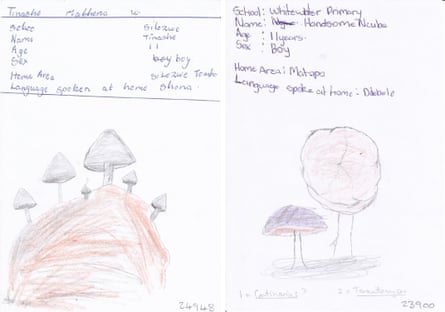
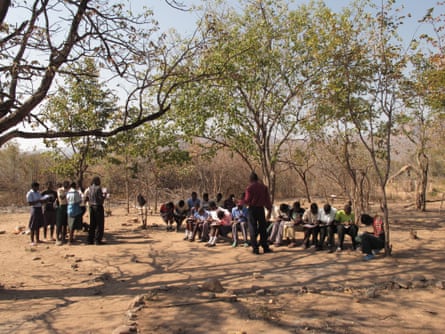
Cathy Sharp has taken a different approach in Zimbabwe, where she has been researching the amount of children’s knowledge of fungi, such as going to schools and asking pupils to draw the first thing that came to mind when they heard “mushroom” in their local languages.
Most pictures they drew were detailed enough for her to identify them by the genus; some could be narrowed down to species.
Conserving fungi requires people to know and care about them, Sharp argues, so she is implementing educational initiatives in museums and schools to preserve this knowledge.
“We were the only country in the world at one point to have fungi in our junior curriculum … which we were so proud of,” Sharp said during her presentation at the Benin congress.
“And then during Covid the policy was changed. So when I’m finished [with] what I’m doing now, I’m going to fight to have it put back in.”
For Joyce Jefwa, a Kenyan mycologist, it is clear that “Africa is still finding its way in fungal conservation”. But she is hopeful about opportunities to meet other mycologists across the continent and beyond to share resources and learn from what has worked in other countries.
“We have to talk with one voice as African mycologists, so that the policymakers and those who are in different sectors, such as forestry, conservation and environment, can get to know the importance of fungi,” she says.
A few months after the congress in Benin, participants released the Cotonou declaration, a document intended to address “the persistent under-representation of fungi” in conservation locally, nationally and globally. Cowritten by participants from four continents, it codifies global priorities for mycology conservation, while its name is a reminder that Africa must continue to play a key role in the growing fungi conservation movement.
For Yorou, the congress was “a milestone for the global mycological community and … fungal conservation, both in Africa and across the world”, pointing the way to a future “where fungi stand as a recognised pillar of global biodiversity conservation”.