5 hours ago
16
5 hours ago
16
Jim Flanagan has four days to hand his keys back to his landlord.
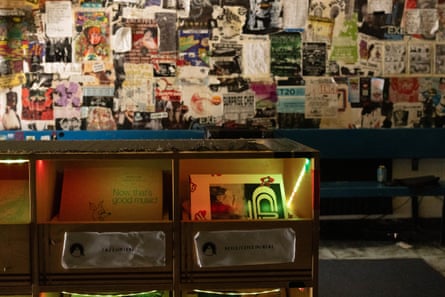
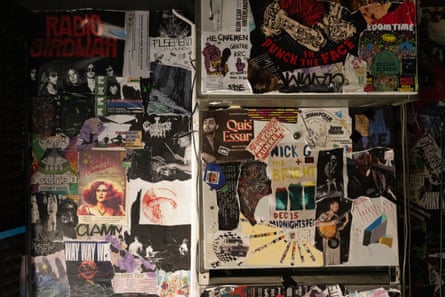
Panels engulfed in grungy band posters, handmade plates that have served countless customers, a shelving unit housing a library of iconic vinyls: all of it will be sold for next to nothing in the rush to vacate.
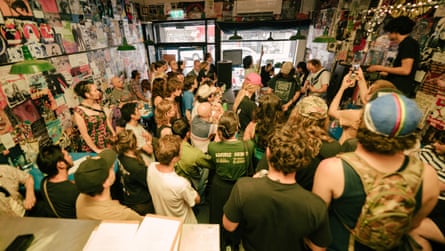
But not before Lazy Thinking hosts one final, family affair: a farewell gig on Saturday night.
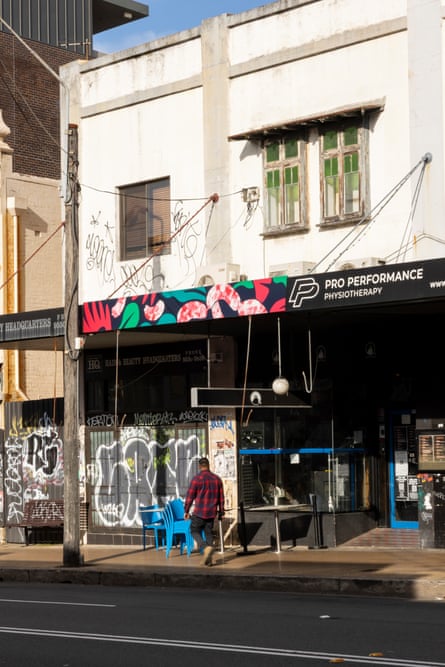
The not-for-profit music venue has been forced to close its doors in Dulwich Hill, in Sydney’s inner west, after it was asked to vacate by the landlord, according to Flanagan.
It is the latest in a spate of live music venue closures that is fuelling calls to re-examine the influence landlords exert over Australia’s culture and nightlife.
Flanagan says Lazy Thinking had been on a month-by-month lease for years, but after starting a conversation with the landlords about the building’s infrastructure and a long-term lease, it became clear they “weren’t interested in arriving at a productive solution”.
Sign up for a weekly email featuring our best reads
Though disappointed, Flanagan says the issue is systemic among arts and live music venues.
“The obsession with property ownership means that live music venues are always exposed as commercial renters … They are very often at risk to both the political and economic whims of the marketplace,” he says.
“You are overwhelmingly talking about businesses that are renting their properties, and we have some of the lowest rental protections in the developed world – all of those forces mean landlords exercise a profound influence over our arts sector.”
The Bearded Lady in Brisbane’s West End closed in May 2025 after negotiations with the venue’s landlord fell through, The Jade in central Adelaide in January announced its closure after its venue’s lease was not renewed and in March last year the Gasometer hotel in Melbourne’s Collingwood ended operations after its building owners rejected offers for another party to take over the business, organisers said.
In July, LGBTQ+ inclusive performing arts venue Divine Playhouse was booted from a deconsecrated church in the Sydney CBD over what its landlord, Redevelop, deemed to be “offensive trade”.
A host of other live music venues including MoshPit, Darling Nikki’s and Mary’s Underground – all in Sydney – and Melbourne’s Stay Gold, Bendigo hotel and Misfits have also announced their closures since the beginning of 2026.
While most have cited financial pressures rather than interactions with landlords, being a renter can add to economic burden. Venue operators are often pincered between rising rents and disappearing income streams – particularly the loss of revenue from ever-declining alcohol sales.
Aran Tanaka Van de Ven, a venue manager for the group that operated Stay Gold, has worked at spaces with lease clauses stipulating rent can never go backwards.
“Live music venues are often a labour of love,” he says. “But for landlords, the value of their property has always got to be protected, even if it’s in a climate where everyone’s business is devalued because there’s a cost-of-living crisis.”
After engaging with almost 100 venues, music industry figures and stakeholders across Europe, the RMIT University live music venue expert Dr Sam Whiting found owning the building in which the venue operates was fundamental to long-term sustainability.
“Venues often rent commercial premises where the landlord doesn’t care what kind of way the building is used, they just want to make sure that their rent is paid on time and the lease is fulfilled,” Whiting says.
“So music venues don’t have security of tenure, which means a lack of certainty, which breeds unease and precariousness.”
Those owned by the operators were able to plan better, weather challenges more easily and apply for grants with greater success. Spaces with longer leases were also able to better forecast and plan – but private landlords were not incentivised to support this, Whiting found.
The Real Estate Institute of New South Wales chief executive officer, Tim McKibbin, says landlords are investors who want the maximum annual return and capital growth, and no harm to their asset, and warns that imposing restrictions on investors will lead them to take their funds elsewhere.
The CEO of the institute’s Victorian branch, Toby Balazs, echoes this sentiment.
after newsletter promotion
“If governments want to support live music and arts venues, the focus should be on targeted incentives that encourage owners to retain and provide suitable spaces, rather than policies that penalise property owners or interfere with commercial agreements,” he says.
Many of the venues left standing are encouraged to act more like larger spaces, which book palatable artists to attract a general audience rather than catering for specific communities, the SydneyMusic co-founder Joe Hardy says.
“Everything is a venue for hire, so it will be one scene on one day and another scene another day and there’s no real continuity,” he says.
“This means the space doesn’t become an incubator for community, it is just a place where they hope to sell enough tickets and drinks over the bar.”
This curtails artists’ creative expression and, when combined with restrictions regarding sound, curfews and other limits, kills the vibe for punters.
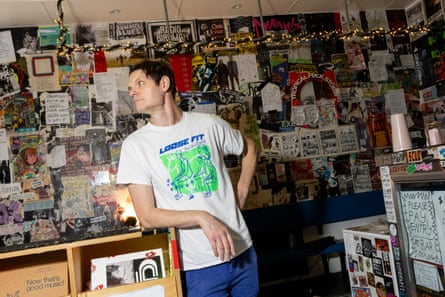
“If you wonder why less and less people care about live music, you should look at the vibe,” the SydneyMusic co-founder Caitlin Welsh says.
Smaller venues are also integral for emerging artists, with Hacky Sack singer-songwriter Huck Hastings noting his biggest shows in 2025 followed a gig at Lazy Thinking.
“If we don’t have places to play or if we don’t see an arts career modelled for us, there’s going to be no way forward,” he says.
The NSW government has introduced a series of vibrancy reforms, including funding for venues, while its Victorian and Queensland counterparts have announced grants for spaces and local musicians.
“If we let our music venues fail then our night-time economies and our cultural life will suffer, and we can’t afford to let that happen,” the NSW music minister, John Graham, says.
But Whiting says arguments about the economic benefits of live music are not enough, particularly for smaller venues that rarely turn a profit.
Instead, he has called for governments and the industry to reorient policy towards treating live music as a public good, similar to education or health, as this would lower barriers to entry for musicians, participants and audiences.
He also recommends the establishment of community land trusts, and suggested Australia create an equivalent to the UK’s Music Venue Properties. The community-funded charity buys buildings that host grassroots music venues and leases them back to their current operators, offering affordable rents, support with repairs and insurance, and flexibility.
Governments could also buy spaces and act as benevolent landlords, or collaborate with venues to co-own spaces, Whiting says.
Tanaka Van de Ven and Flanagan support current government measures but believe more must be done to address the root causes eating away at the sector.
“The live music scene is now in utter crisis,” Flanagan says. “I’m not going to reopen the Lazy Thinking venue in anything that looks like the same setup.
“Perhaps it’s a government-provided free space, perhaps it’s a space that one of our donors provides at a discounted rent … but the new venue will have an entirely different economic framework because the existing one just doesn’t work.”