1 month ago
53
1 month ago
53
Stroll through the Devon town of Ashburton, or pop into the Old Exeter Inn on West Street, and you’re almost bound to bump into a storyteller, a mythologist, a pagan – perhaps even a friendly witch.
The town on the edge of craggy Dartmoor, home to about 4,000 people, is becoming a magnet to those drawn to the old folky ways and the reimagining of 21st-century versions of earthy rural traditions.
This early May bank holiday weekend, hundreds will take part in the fledgling Dartmoor Tors festival, which celebrates West Country folklore through music, talks, walks and workshops.
The Welsh/Cornish singer Gwenno is a headliner, but more esoteric highlights include the recreation of the custom of a mass walk to one of the high points on the moor, Bellever Tor, on Beltane (May Day in some traditions) and a newly minted closing procession to an ancient healing well in the town to honour water as the source of all life.
Sophie Pierce, the festival’s co-organiser, said she felt that something was in the air – and the water. “I think Ashburton is fast becoming the epicentre of a folk revival, a place where people are interested in the land and old traditions,” she said.
“The idea of the festival is to try to get a deeper understanding of what this place means to people. It’s all about exploring this place and the human relationship with Dartmoor.”
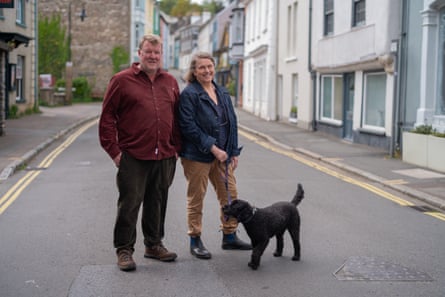
Rebecca Beattie, a writer and witch, grew up on Dartmoor but spent much of her adult life away before moving back when Covid hit. “I made my escape and came home.”
As a child, she felt less able to express an interest in folk traditions and practices. “Certainly in the village I grew up in, it was very conformist, and you had to do certain things in order to be accepted. I had to go away to learn how to embrace my inner weirdness – and then come home and be able to express it openly.”
There is also a feeling that, in these troubled times, people are increasingly seeking a connection to seemingly simpler times.
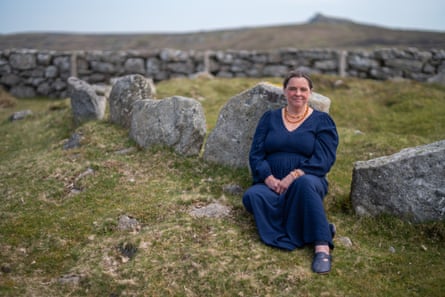
Beattie said: “In the early 20th century, there was a real push to re-find landscapes, legends and folklore. If you think about the similarities between then and now – wars, pandemics, recessions – it may be that people are again feeling the need to find a rootedness.”
Helen Bruce, from the Dartmoor Preservation Association, will lead a festival walk exploring tales of spectral black dogs. She moved to the area after experiencing something of a revelation while at the remains of the Grimspound prehistoric settlement on the moor. “In that moment, I was possessed by the spirit of Dartmoor.”
Bruce said a “turning point” in this folklore revival came a couple of years ago during a protest against an attempt to ban wild camping. “We weren’t just holding up placards. We were called to raise up the spirit of Old Crockern [believed by some to be an ancient god]. That’s when I realised that folklore [and] storytelling was colliding with modern-day ecological activism.”
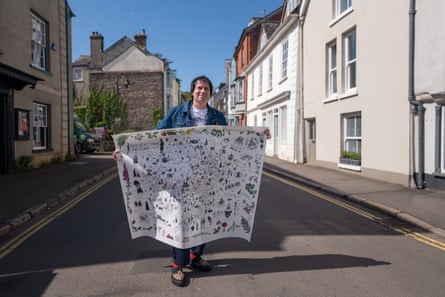
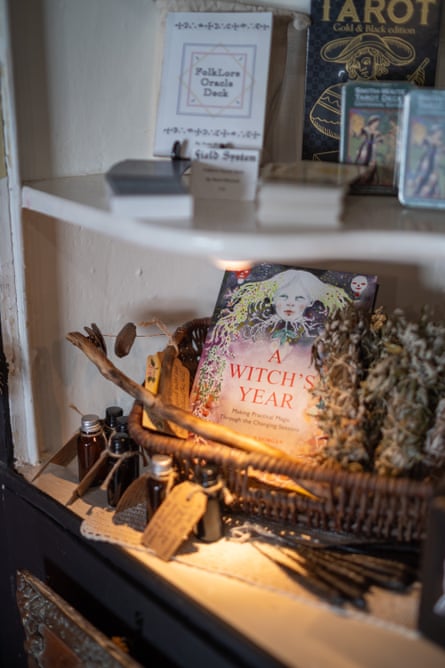
At the heart of the Ashburton folk revival is the Field System gallery, which sells everything from folk-inspired jewellery to mythology books and artworks depicting the Devon tors. Among its bestsellers is the Dartmoor Folklore Map, a seven-year labour of love by the artist and writer Ethan Pennell.
Co-founders Milly Brown and Mark Jessett moved to the town 13 years ago and take an expansive view of folk culture. “It’s DIY, sort of anti-establishment, a bit punk,” said Brown. “People can be turned away, excluded by the art world and creative industries. We try to use folk to … soften the edges and invite everyone in.
“Ashburton’s interesting. There are two strata, very simply speaking. There’s some people that have lived here for many generations and there are blow-ins like us. We’re quite determined to bring them together.”
The mythologist and storyteller Martin Shaw, a Devon native and leader of “wilderness vigils”, wondered whether the rise of the screen had led people to turn to folklore. He said: “In a time of a blizzard of screens, I’m not surprised that there is an instinctive move of the soul back to stuff that has resonance and a sense of place.”
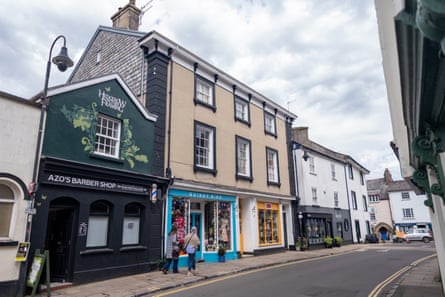
After writing more than a dozen books on myth – “A few people liked them and a few people didn’t. There was no ripple” – his latest, Liturgies of the Wild, made the New York Times bestseller list. “I began to think maybe there was something actually afoot.”
While some might complain about rising house prices driven by incomers, Shaw struck a different note. “I’d like to petition for the stranger. I think it’s one thing to be from a place but you can also become of a place,” he said, adding that he was pleased there was a fish deli and comic bookshop in the town.
Shaw concluded with the Devon dialect word “palsh” – a slow walk while looking. “I think we need more palsh,” he said. “We need to walk away from our screens. I love the idea of talking across the hedge to different species. These are old, beautiful, healthy [ways of being].”