3 months ago
107
3 months ago
107
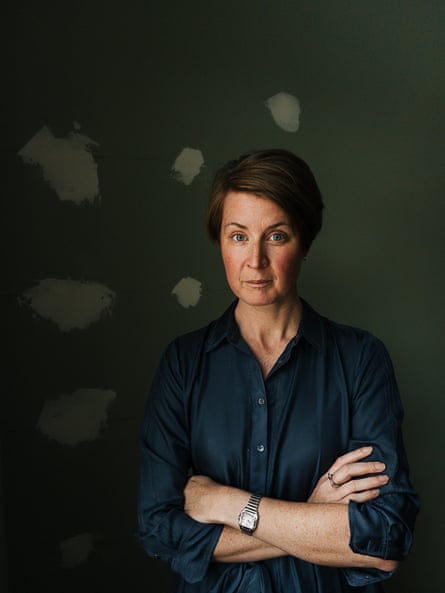
Coming face to face with a probable psychopath was enough to make Dr Leanne ten Brinke rethink her career choices. Early in her 20s, while studying forensic psychology in Halifax, in the Canadian province of Nova Scotia, Ten Brinke was volunteering at a parole office, which would hold weekly group meetings for released sex offenders. “Most of the men showed contrition,” says Ten Brinke. “They really seemed to recognise the damage that they had done.” Except for one. The treatment programme seemed “like a game to him”, she says. One week, in a discussion about the impact their crimes had on victims, this rapist stared at Ten Brinke and, smiling slightly, started to say how much his victim looked like her, “and how I was ‘his type’. Clearly he was trying to scare me, and he did.”
It put her off a career working with convicted criminals, but she remained fascinated with “dark personalities” – psychopathy, mainly, but also narcissism, machiavellianism (manipulating and exploiting others) and sadism. From politics to business to the media, it wasn’t as if there was a shortage of people to study. There were selfish, callous, impulsive and manipulative people everywhere, often presenting as gregarious and charming. “It started to occur to me that these traits aren’t just confined to an underworld. These traits appear in all aspects of our lives,” she says.
Now associate professor of psychology at the University of British Columbia, Canada, Ten Brinke says these people could be in our families, or living next door. They’re the trolls online. They’re at work, at school, leading our institutions and our countries.
Instead of being specific conditions that one either has or hasn’t, psychopathy and other personality disorders are now thought to exist on a continuum, says Ten Brinke. It is estimated that 1% of the general population have clinical levels of psychopathy (scoring highly on the PCL-R, the psychopathy checklist assessment commonly used for diagnosis). Other studies have suggested that up to 18% have “elevated” levels – what we may call “dark territory”, as Ten Brinke puts it in her new book, Poisonous People: How to Resist Them and Improve Your Life. Within the prison population, the instance of clinical psychopathy is about 20%. However, these dark personalities – who are potentially the most dangerous and likely to reoffend – are particularly good at convincing parole boards to release them, probably because they can be so persuasive.
Although the vast majority of people do not have clinical levels of psychopathy, people with elevated dark traits cause an outsize harm to society, whether that’s in the criminal or political arena, or in the corporations they run. “The research suggests that nature and nurture both play a role,” Ten Brinke says. “That’s promising in the sense that we know that affecting the environment can change people’s outcomes.” This is particularly true for children with “callous unemotional” traits and persistent aggressive behaviour. This can be measured, says Ten Brinke, “as early as two or three years old, and getting these kids into treatment as early as possible is important because there we can see changes to traits over time”.
With adults, treatment can only really change behaviour, not personality. “The best research that we have on treatment for adults is coming out of criminal justice settings – these are people who have shown very high clinical levels of these traits, and have committed some crime, often violent in nature. The goal of those treatment programmes is usually to reduce the likelihood of recidivism, and especially violent recidivism, and the research shows that it can work. Individuals, even with high levels of psychopathy, who stay in treatment show lower levels of reoffence over time.”
Ten Brinke watched a documentary on psychopathy one day at school and was hooked. “I was just so intrigued by someone who had such a different experience of the world than I do.” She was fascinated by criminals. Her doctoral thesis was on whether it was possible, by watching the public appeals of parents whose children had gone missing, to detect those who had, in reality, killed them. By the end of her PhD, however, Ten Brinke was getting tired of murder. She went on to study business, “where my interest really broadened, to study dark personality traits across different contexts”.
There is, she says, a small but reasonable chance that your boss is a psychopath, given that people with dark personality traits are over-represented in senior management. “We certainly know that dark personalities are really interested in power and status,” says Ten Brinke. “They also tend to come across as quite charismatic and extremely confident, and we tend to confuse confidence for competence. Also, they’re probably just putting themselves forward for these positions more than the average person.”
In her consulting work, Ten Brinke was brought in by a financial advisory company to help assess which hedge fund managers it should trust with its money. “I was particularly looking for signs that they might be lying, which certainly the company would want to know before handing over millions of dollars. But we were also looking at the personality traits of these individuals.” Several stuck out. At one investor conference, Ten Brinke watched in fascination as one CEO demeaned colleagues and potential clients – which can be a sign of a dark personality. “Everything had to revolve around him, all attention on him, no one else could get any praise.” He would constantly interrupt people. “What was so interesting is that the audience was actually really into that. His behaviour seemed to validate perceptions of what kind of personality would succeed in this role, even though our research suggests that these traits actually lead to decreased returns.”
It’s the same reason we think extreme confidence makes for good leaders – again, our willingness to conflate confidence with competence. A “strongman” type tends to think of themselves as a great leader, and they tell the rest of us that they are. “We tend to believe them because we have a truth bias. Research suggests that we tend to just believe the things we are told, unless we’re given some very specific reason to be suspicious.” There is also what Ten Brinke describes as a “dark spiral”. At times of uncertainty and conflict, “we look for a ‘strong’ leader. Then, in position, they can create more chaos, more instability, which actually makes us more likely to vote, again, for someone with these traits. We can end up going round and round.”
In her book, Ten Brinke acknowledges that she has no idea how Donald Trump would score on the PCL-R checklist, but she suggests he has elevated traits, giving the example of his tens of thousands of lies , lack of empathy (such as when he mocked a disabled reporter), impulsiveness and deviation from social norms. However, in one of her studies of more than 100 US senators, dark personality traits had a negative impact on their influence. What worked in getting bills passed was cooperation, “people who are more humble, who are courageous but are also willing to see the other side and admit if they make mistakes, admit if they change their mind”. Recognising and valuing these traits may help us choose leaders differently.
Recognising dark personalities can help us make more informed choices in many areas of life, says Ten Brinke. “It can be either a ‘detect and avoid’ or a ‘detect and manage’ type of situation, depending on the circumstances.” Research has found that job adverts that look for people who are “results-oriented” or who “think outside the box” attract more narcissists than adverts whose language highlights a desire for team players. The same could be said for dating profiles. How can someone avoid attracting a dark personality, or identify one from their profile? “They might use euphemisms to put a positive spin on some of these traits,” says Ten Brinke. “‘Thrill-seeking’ might indicate some impulsivity.” Power can be attractive, but “you might want to be discerning about whether that is achieved by earning people’s respect or by putting people in a fearful, submissive position”.
It’s important to remember that someone’s personality is a pattern, she says – “first impressions will only get you so far” – but there are broad behaviours to watch out for. “If someone interrupts often, but gets really angry if they are interrupted; if they ignore and push personal and professional boundaries.” They can be charismatic, and charming. In romantic relationships, “love bombing” at the start is often a feature. “I think that’s a good case for taking things relatively slowly. You need time and context to get a real sense of someone.”
People with dark personalities can be skilled at deception, but we tend to be quite bad at detecting this, says Ten Brinke. Contrary to many people’s beliefs, you can’t reliably detect a lie by reading body language. “I think we really want it to work,” she says. “But we consistently find that those cues are pretty weak.” Instead, you need to pay attention to verbal cues, such as inconsistencies, but this is tiring and probably not something you want to be running in the background in every interaction. “But in some situations where I’m like, OK, this is a person who has a personality that is likely to manipulate, I might pay more attention to the words they’re saying. Ask good questions, ask follow-up questions.”
Those who lean towards narcissism can display “classic things such as showing off and talking about themselves a lot. They are always the expert on every topic of conversation.” Someone with psychopathic traits may be impulsive. “We also see emotional differences in the sense that they might be weirdly calm, showing no emotion.” Or their emotions might flare up but be short-lived, particularly in the case of anger. We can all experience moments of schadenfreude at others’ misfortune, but if someone routinely puts others down or seems to take pleasure in someone else’s failure or pain, “those can be important red flags. You start to gain evidence for a lack of compassion or empathy for others.” Does Ten Brinke deploy this in her day-to-day life? It’s more that she clocks behaviour and files it away, she says.
It’s unrealistic, she adds, to avoid everyone with dark personality traits. Instead, for those with lower levels of psychopathy and other negative traits, you can usually manage them. “We’re not changing someone’s personality, but we can approach our interactions with a harm-reduction mindset. One is having clear boundaries.” Having rules – and writing them down or saying them out loud – makes it harder for the person to break or test them, whether this is in a family or work setting. One study asked people showing various levels of psychopathy to distribute money between themselves and another person; those who were given no rules or instruction were more likely to keep the money. “Understand their motivations, and understand that it’s probably not the same as yours.”
Rewards can be key. “I think we often forget about the power of rewarding people. Especially with these personalities, we think, ‘Oh, they’re a bad person – you should never reward them.’ But if they do something good – if you see them acting fairly, kindly, being honest – provide some reward that they care about. We know that people, especially with psychopathic personalities, are very reward-motivated. Punishment really doesn’t hit them very hard. So you can help to shape their behaviour by rewarding when they do something good.” In a work setting, if you are the manager of a dark personality, this reward may be a pay rise or a new title. But she would not recommend giving anyone displaying these traits a management position. “We know that people with these traits tend to bully their subordinates.”
When broaching a tricky conversation, finding something in common, however small, can get it off to a better start. “It can decrease the likelihood that they’ll respond aggressively whenever you give them some negative feedback. This is particularly true for people with narcissistic traits, who tend to be very sensitive to any criticism, rejection or failure.” If negotiating, it can be useful to do it in writing, such as over email or text – in person, you’re more likely to be dazzled by the charm and confidence of a dark personality.
It can be useful to frame requests in the form of a question, rather than a statement, says Ten Brinke. “For example, ‘What do you think of picking the kids up from school on Wednesday?’ instead of, ‘You need to pick the kids up.’ It’s just a little thing, but it can help to avoid shutting down the conversation before it even starts.” Of course, if you are having to carefully manage these kinds of interactions with a partner, you may question if it’s a relationship you want to be in. Ten Brinke points out that the moment of leaving a potentially abusive relationship with someone with dark personality traits can be incredibly dangerous and you should seek support from specialist agencies.
When I took the assessment Ten Brinke includes in her book, aimed at detecting low levels of dark traits, I was alarmed to find I scored higher than I’d like. If someone is worried they’re a psychopath, what should they do? That worry is a good sign, she says. The usual problem for people with psychopathy is that “it can be quite difficult to motivate them to want to change”.
We can all turn our dark personality traits down, she says. Ten Brinke points to a study where people took “agreeableness challenges” over four months, such as showing gratitude to someone they interacted with during the day. “People who actively worked on these skills, to consider other people’s perspectives and to show compassion, reported lower dark traits at the end of that four-month period.” It was self-reported, she says, “so I don’t know if people around them also felt the same way about these behavioural improvements, but research shows that our personalities are not chiselled in stone. They can shift.” It may be wise to look at ourselves – the world does not need more people with psychopathic and narcissistic traits. “I do think that recognising that we can all become a little bit less manipulative, a little bit more caring, and that all of these things will add up across people and across time, is a hopeful message.”