2 months ago
91
2 months ago
91
On a snowy Sunday morning in February 1808, the poet William Wordsworth was walking along Fleet Street in London. He’d just been to visit his friend, Samuel Taylor Coleridge, in his lodgings on the Strand. Coleridge was at a low ebb: stuck in an unhappy marriage, weighed down by perennial financial difficulties, mentally blocked from writing, in poor health and addicted to opium. The visit had a lowering effect on Wordsworth’s own spirits. Walking along Fleet Street, eyes downcast, “ear sleeping”, feet moving automatically, he was absorbed in sombre thoughts.
But then something made him look up. A vision lay before him: Fleet Street blanketed with snow, “silent, empty, pure white”, and, at the end of it, the “huge and majestic form” of Saint Paul’s Cathedral. It was a spellbinding moment: the great thoroughfare temporarily devoid of carts and carriages, the cathedral looming blurrily out of the still-falling snowflakes – a real-life snow globe. “I cannot say how much I was affected at this unthought-of sight,” Wordsworth told his friend and patron, Sir George Beaumont, in a letter he wrote a few days later. “What a blessing I feel there is in habits of exalted imagination.” The great London silence was another piece in his accumulating pile of evidence that intuiting something beyond yourself is the route to becoming morally magnificent.
Silence has inspired, daunted, comforted and terrified writers throughout the long course of English literature. One of the earliest English poems, The Wanderer, composed in the language of the Anglo-Saxons, communicates the sheer strangeness of silence via an alien grey seascape in which the protagonist is utterly alone. This silence is composed not of complete noiselessness, for the hail beats on the waves and a seabird occasionally mews, but of an intense and total absence of human voices.
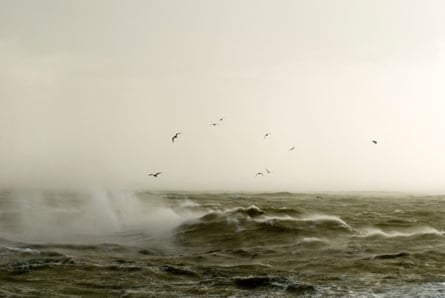
The poem conveys the difficulty of this silence; its wretched, aching loneliness, its perpetual reminder of lost happiness. But it also portrays silence as a duty, the mark of a seasoned warrior forged by Graeco-Roman stoicism, the Germanic hero ethos and Christian asceticism. And it confronts readers, here at the very beginnings of English literature, with a silent inner voice: the necessary basis of an interior life.
Silence and grief are a natural pairing. Grief hits you like a wrecking ball, leaving you gasping for breath. When his beloved friend Arthur Henry Hallam died at the age of 22 in 1833, the lack of words was, for the 24-year-old Alfred Tennyson, a personal and professional affront. So, in In Memoriam, his great poem of almost 3,000 lines, he threw all his skills and resources at the problem.
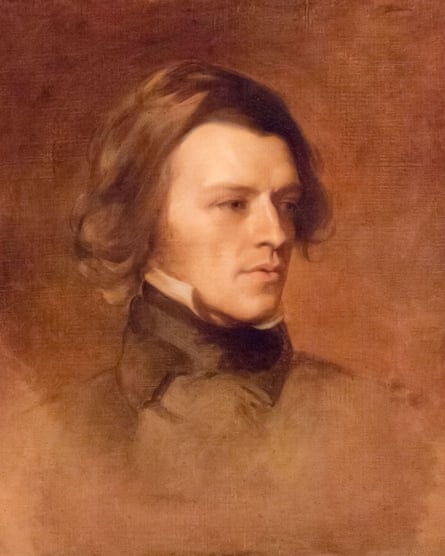
He wrote about the ship that was carrying Hallam’s body home; how he couldn’t sleep for thinking of it being tossed about by the waves. He tried to convey what the pressing absence felt like: he described going to Hallam’s house and becoming upset about the door where he used to knock and wait impatiently for his friend, and which would never now be answered again. He wrote about the unbearable knowledge that Hallam’s potential would be unfulfilled, this young man who had been the brightest and best of them. He imagined Hallam’s silenced voice silently speaking to him. He told of a dream – the ultimate in wish fulfilment – in which a shining ship appeared with Hallam on the deck: he climbed on board and simply fell in silence on his friend’s neck. But the emotional impact of In Memoriam is not in what it says, but in what it doesn’t say – in what it is silent about because it cannot be expressly communicated.
For others, silence is about solace rather than inexpressibility. In 2016, the 16,141,241 people who voted remain in the Brexit referendum, myself included, got to know what it felt like to be on the losing side of a historical turning point. Disbelief, anger, grief, shame, denial. Being a remainer after the Brexit vote offered a taste of a widespread experience in the second half of the 17th and early 18th centuries. In that time, those who felt what it was like to be on a losing side included royalists during the Interregnum, republicans after the Restoration, Nonjurors who refused to swear the oaths of allegiance to William and Mary after the Glorious Revolution, Whigs under Queen Anne, and Tories under George I.
Defeat had enormous ramifications: many individuals were led to question their understanding of God’s providence and rethink what it meant to live a good life. Some quit the public sphere. The withdrawn silences of writers such as John Milton, Andrew Marvell, Anne Finch, the Countess of Winchilsea, and Alexander Pope have a setting and a colour. Whether expressing devastated defeat or calm self-possession, they are the green silences of gardens and country estates.
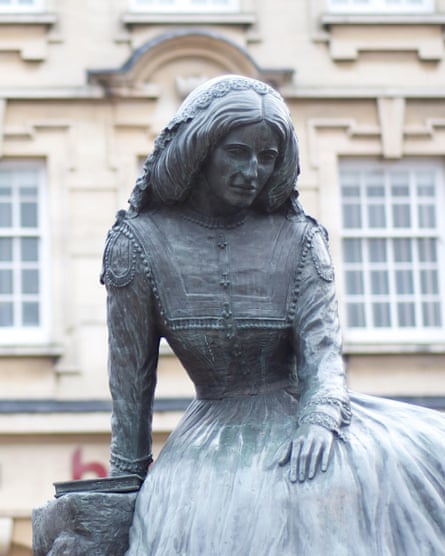
The blockbuster genre that is the 19th-century novel is the last place most people would think to look for silences. But there are numerous examples of novels of the period suggesting just how liberating it can be to opt out of conversation and other social verbal requirements. Elizabeth Gaskell’s tactful silences are a gentle reminder that it is sometimes kinder not to say everything we know, all of the time. Thomas Hardy’s companionable silences convey an easy togetherness that words would only ruin. George Eliot wrote silences that make empathic connection when feelings are running at their highest.
The tiniest of silences in the 19th-century novel are also the funniest. In Jane Austen’s Persuasion (1817), financially pressed Sir Walter Elliot is talking to his land agent, Mr Shepherd, about finding a soldier or sailor to tenant his country house, Kellynch Hall. Mrs Clay, who is amorously pursuing Sir Walter, is in favour of the suggestion and observes that such a tenant could look after the gardens and shrubberies. But Sir Walter has other ideas:
As to all that,” rejoined Sir Walter coolly, “supposing I were induced to let my house, I have by no means made up my mind as to the privileges to be annexed to it. I am not particularly disposed to favour a tenant. The park would be open to him of course, and few navy officers, or men of any other description, can have had such a range; but what restrictions I might impose on the use of the pleasure-grounds, is another thing. I am not fond of the idea of my shrubberies being always approachable; and I should recommend Miss Elliot to be on her guard with respect to her flower-garden. I am very little disposed to grant a tenant of Kellynch Hall any extraordinary favour, I assure you, be he sailor or soldier.”
After a short pause, Mr. Shepherd presumed to say,
“In all these cases, there are established usages which make every thing plain and easy between landlord and tenant.”
Mr Shepherd’s nonplussed “short pause” is perfectly timed. One of those you-can-not-be-serious silences that follow something preposterous, it allows the full folly of Sir Walter’s remarks to bloom into view.
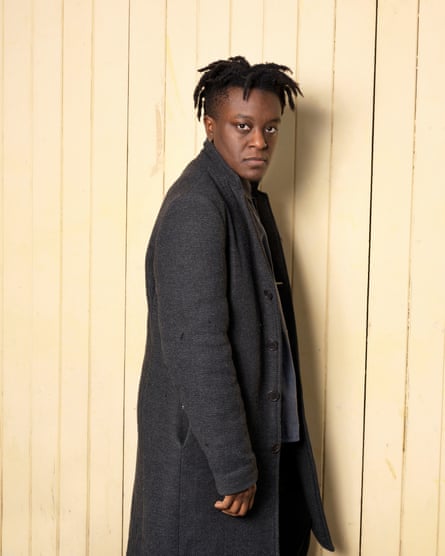
In 2016, the poet Jay Bernard took up a residency at the George Padmore Institute in north London, an archive dedicated to radical Black history in Britain. The New Cross fire, which in 1981 killed 13 young Black people, was playing on their mind. And then, on 14 June 2017, as Bernard puts it, “Grenfell happened”. Bernard was sickened by the similarities: “the lack of closure, the lack of responsibility and the lack of accountability” at the centre of both conflagrations.
Surge, the multimedia poetry collection that was Bernard’s response, registers a gamut of silences as it winds between the New Cross and Grenfell Tower fires: the details that were literally “Tipp-Ex’d out” of the file in the case of New Cross; the silence of the media; the silences of the queen and prime minister; and the weighty silences of the ghostly dead.
Over 1,200 years, English literature has spoken to us – and spoken to us eloquently – through silences as well as through words. Without silences, we wouldn’t have the exquisite hush of medieval lullabies or the suspenseful secrets of the realist novel or the jagged fragmentation of modernist poetry. We would lose implicitness, a good deal of ambiguity, much precision, a powerful mode of protest and a variety of moods. Iago would explain exactly why he wanted to destroy Othello, Keats’s Grecian Urn would be a bride of something other than quietness and the dog in the Sherlock Holmes story would bark in the night-time. The ineffability of the divine, wordlessness in the grip of strong emotions, attempts to efface the self, speechless reactions to the awe-inspiring natural world: these are just a few examples of silences that literature explores. These are not peripheral matters but among the most important ideas to concern humanity.
-
Silence: A Literary History by Kate McLoughlin is published by Oxford University Press on 27 March (£30)