3 months ago
70
3 months ago
70
Four millennia ago, a Sumerian king, his frontier beset by nomadic tribes fleeing prolonged drought in their own lands, ordered the construction of the world’s first border wall: a 177km-long boundary laid in stone between the Tigris and Euphrates rivers.
Since humanity’s earliest city-states and kingdoms arose in ancient Mesopotamia, walls, ditches and fences have defended territory, marked the edges of empires and projected political power across the void. But the world’s first border wall failed. It now lies buried beneath Iraq’s desert sands. Rome’s legions abandoned Hadrian’s Wall long ago, and the iron curtain’s razor-wire fences fell with the eastern bloc’s collapse in the late 1980s.
The Ozymandian ruins of many such walls litter our ancient and modern landscapes, because for as long as humanity has built hard borders, people have inevitably found ways to cross, topple or simply bypass them. The ruins should teach us that raising higher walls or digging deeper ditches is an exercise in futility. But still, modern nation-states insist on building more.
For 28 years, the Berlin Wall stood as a symbol of the ideological division between capitalism and communism. This 155km-long concrete divide claimed the lives of 140 people who attempted to cross it. The wider iron curtain dividing Europe claimed thousands more lives, with many drowning in rivers or shot by border guards. In 1989, sledgehammers toppled the wall and the iron curtain’s fences were dismantled. As David Hasselhoff belted out Looking for Freedom from a crane above the Brandenburg Gate, the world entered a new age. But it was not a borderless one.
In fact, in the years since, states have embarked on an extended border-building spree, raising barriers to tackle security threats or curb illegal migration. The Migration Policy Institute estimates that when the cold war drew to a close, there were 12 border walls in the world. By the 2020s, there were 74. The European Union calculated that between 2014 and 2022, border fences grew from 315km to a staggering 2,048km. The West Bank barrier has a planned length of more than 700km. Morocco’s Western Saharan Wall stretches for 2,700km across the desert, and India has fenced 3,000km of its 4,000km border with Bangladesh.
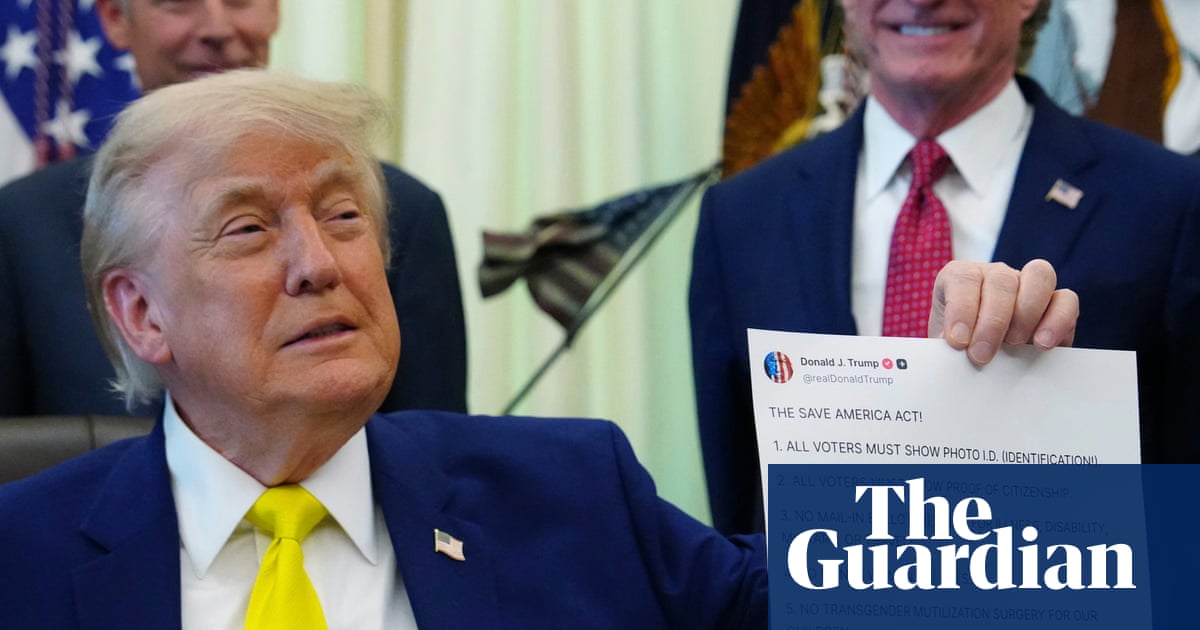
The financial cost of building these hard borders is extraordinary. Trump’s wall with Mexico is estimated to cost $20m per mile. The human cost is a preventable tragedy. Between 2020 and 2023, drownings at the US-Mexican border increased by 3,200% as migrants attempted to bypass the wall, with deadly consequences. Here in the UK, politicians promise almost daily to secure or strengthen our borders. Brexit was built on the idea that we’d take back control of them, but at what cost? Migration Observatory reports that between 2018 and 2025, 257 people have died while illegally entering the UK.
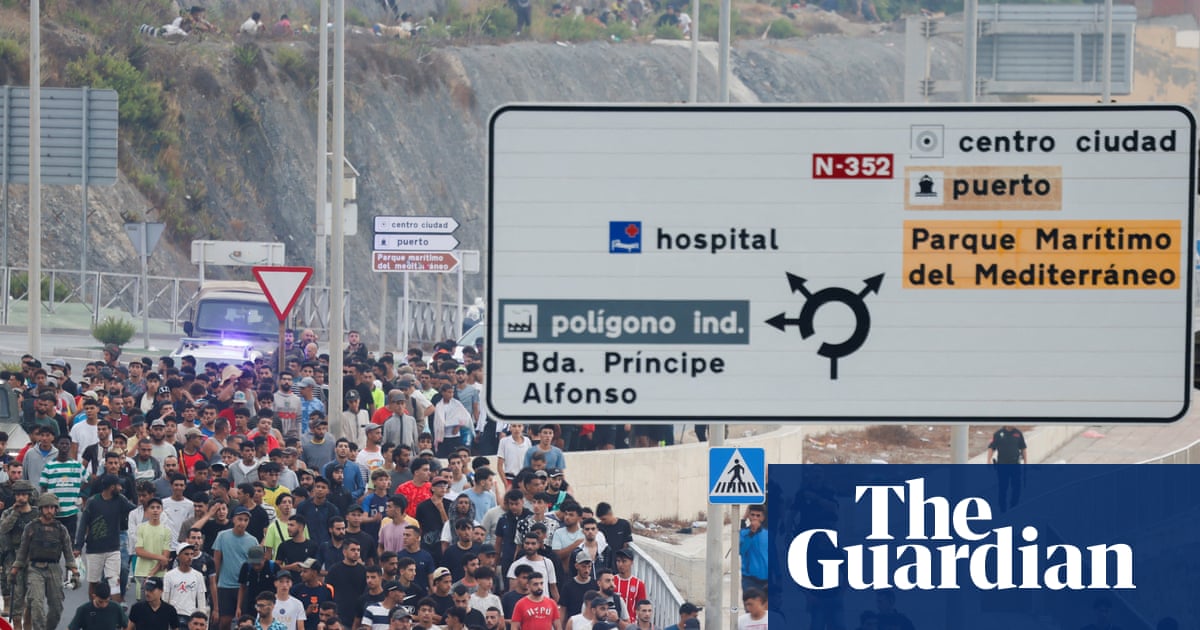
Stronger borders don’t deter desperate souls fleeing war zones, the climate crisis or economic hardship. Not when they can be circumvented. As a travel journalist, I cross borders for a living. In the Spanish exclave of Ceuta, I saw how African migrants risked death to swim around the razor-wire fences and watchtowers guarding the EU’s land border with Morocco. Mexican cartels have carved long and sophisticated tunnels beneath Trump’s wall.
It could even be argued that stronger borders encourage migrants to stay on longer than they might do otherwise. Through much of the 20th century, Mexicans crossed the porous border into southern US states for seasonal work. Once the harvest was in, they’d go home. Now, having endured a dangerous and expensive passage into the US, they’re more likely to want to stay permanently.
It was when I travelled the 300-mile length of the Irish border that I really understood the absurdity of hard borders. There, I visited communities and even farmhouses that Ireland’s partition had cleaved in two a century ago. The concrete barricades that once blocked roads are now gone, but the trauma still reverberates. Not simply as a result of the loss of life during the Troubles, but in the border regions’ ongoing economic disadvantage compared with the rest of Ireland. The threat of this hard border returning after Brexit prompted many of the people I met there, regardless of their personal politics, to believe that Ireland’s future lies in reunification rather than continued division.
The havoc wreaked by border walls should serve as a warning. Instead, political leaders seem only to promise to build higher ones. Why is that? Because walls project political will and ambition. They’re powerful symbols. They appeal to a natural desire to mark our territory and defend our homes.
Yet the vision of a borderless world is perhaps too lofty an idea. Borders are, in some respects, inevitable. We need some boundaries to define ourselves as a people or nation. These purposes, however, can be served by cultural, linguistic or historical demarcations, as we see in the borders between the UK’s home nations.
What is clear is that it’s simpler to erect a thousand-mile barrier of barbed wire than it is to tackle the roots of a nation’s problems and anxieties; easier to build walls and blame the “barbarians” than to build an economy capable of funding decent public services. Equally, if the aim of hard borders is to halt the flow of refugees, curb illegal economic migration or counter terrorism or instability, then surely a better solution is to tackle the conditions driving people from their homes, or towards extremism, in the first place. Sadly, as the ruins of ancient border walls show, politicians are unlikely to think that ambitiously. Instead, they’ll probably just build more walls.
Richard Collett is the author of Along the Borders: In Search of What Divides and Unites the British Isles (Doubleday).
Further reading
Prisoners of Geography by Tim Marshall (Elliott & Thompson, £9.89)
How Migration Really Works by Hein de Haas (Penguin, £12.99)
Everyone Who Is Gone Is Here by Jonathan Blitzer (Penguin, £14.99)