3 months ago
90
3 months ago
90
Every day I meet strangers who share intimate details with me. It’s called reading. In a newspaper piece a former sex addict recalls her need for BDSM (“when a sexual partner hurt me, I felt seen”) and how she conquered her dependency. On Substack an actor describes her grief on losing a baby (“After the miscarriage, I became convinced my daughter was backstage. I would push back the costumes on the rack and almost expect to find her”). And then there are the published memoirs, first-person stories of trauma, displacement and heartbreak. It’s not just women who unburden themselves, of course. As Martin Amis says in his memoir, Experience: “We are all writing it or at any rate talking it: the memoir, the apologia, the CV, the cri de coeur.”
Recent memoirs have upped the ante, though. What was once a geriatric, self-satisfied genre (politicians, generals and film stars looking back fondly on long careers) is now open to anyone with a story to tell – “nobody memoirs”, the American journalist Lorraine Adams has called them. Candour is the key, no matter how fraught the consequences. “Most writers I know,” Maggie Nelson writes in The Argonauts, “nurse persistent fantasies about the horrible things – or the horrible thing – that will happen to them if and when they express themselves as they desire”. But she takes that risk, addressing the book to “you”, her fluidly gendered husband Harry (who’s angry when she shows him a draft), while exploring identity, pregnancy, motherhood and sexuality.
“The words I love you come tumbling out of my mouth in an incantation the first time you fuck me in the ass, my face smashed against the concrete floor”; this appears in the first paragraph of The Argonauts in 2015. It’s hard to imagine an author volunteering that 30 years ago, or being allowed to be so passionately upfront (and violently facedown) at the start of the story. I remember the embarrassment I felt in the 1990s, walking into the office one morning, after a reviewer in the Sunday papers had noted a passage in the memoir of my father I’d written in which I describe masturbating in the bath around the time of his death. What possessed me to disclose that? What would my colleagues think of me? I wouldn’t need to be so blushingly shy about it today.
Shock is an integral part of memoir and sometimes the facts are shocking, without embroidery. Thomas Blackburn’s autobiography, A Clip of Steel, takes its title from the mechanical device sent to him at boarding school by his father, in order to discourage involuntary ejaculation or self-abuse: “The instrument had an outer clip of thin firm steel whose inner edge was serrated with spiked teeth … if you had an erection then your expanding penis pressed into the sharp teeth of the firm outer clip.” Ouch. But this isn’t a contemporary memoir reaching new levels of explicitness. Blackburn’s book came out over half a century ago, as did JR Ackerley’s two memoirs My Dog Tulip and My Father and Myself, which are frank not only about his homosexuality and his father’s secret second family, but describe canine love (his sensual arousal when touching his pet alsatian) in astonishing detail.
In literature the mode used to be called confessionalism. These days, pejoratively, it’s called oversharing. At best it prompts welcome recognition: Wow, great, here’s someone who’s had the same experiences, thoughts and feelings that I’ve had. But there’s often resistance as well: Ugh. TMI. I don’t need to know this. When the divulgence is sad-fishing on Facebook, curated self-glorification on Instagram or out-there revelation in a memoir, readers may feel irritated or affronted. Enough of this me-me-me-ism; they won’t take the proffered hand. When I wrote a book about the murder of James Bulger by two 10-year-olds, some reviewers liked the personal approach; others hated how I’d brought in my own children when I brooded on the age of responsibility.
It’s not essential for writers to bean-spill, after all. They’re not victims on a talkshow, outmanoeuvred by Jerry Springer or Jeremy Kyle; they’re writing on their own terms and in control of what’s committed to print. “I think it’s too easy to recount unhappy memories when you write about yourself,” Margo Jefferson says in her memoir Negroland. “You bask in your own innocence. You revere your grief. You arrange your angers at their most becoming angles. I don’t want this kind of indulgence.”
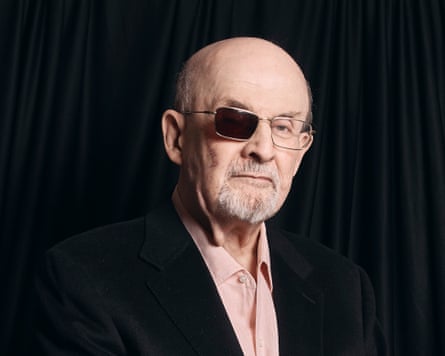
It’s not even compulsory to use the first person in memoir. In Bone Black bell hooks uses “she” and “we” as well as “I”. As one of six children, she has chapters written in a collective “we” voice. And in key emotive episodes, whether it’s masturbating or being beaten by her father, she presents herself, at a distance, in the third person, as if she were looking at another person, the self that hasn’t yet grown up to be bell hooks. Salman Rushdie uses “he” not “I” in his fatwa memoir, Joseph Anton, an expression of his weird displacement into a religious hate figure he doesn’t recognise; so does JM Coetzee in his two childhood memoirs (“Whoever he truly is, whoever the true ‘I’ is that ought to be rising out of the ashes of his childhood, is not being allowed to be born”). There’s even a case for “you”, which makes the reader complicit, as if what happened to the author could happen to anyone.
Such discretion is fine if it’s not evasion. There’s no point in telling a personal story if you censor yourself and hold back too much. Be brave, I’ve urged life-writing students terrified by what their ex will think, or their siblings, or their grouchy uncle: get that monkey off your back; it’s your version of events and if people close to you object, never mind – let them write their own memoir.
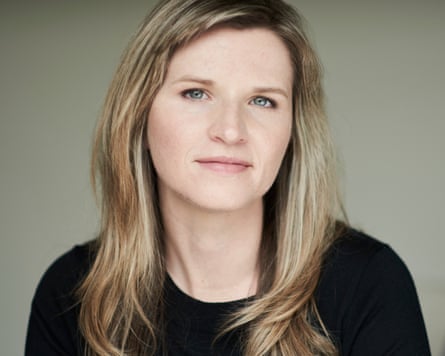
But candour takes art: what works as an anecdote told in the pub won’t work on the page. It needs compression, structure, the right tone of voice. The task is to set down what happened, not parade extremes of feeling. An author can be open without closing the space for readers, who need room to interpret and explore. Tara Westover’s Educated is a heartfelt account of a violently dysfunctional Mormon family in Idaho. But at the end she adds notes that acknowledge how other people in the family remember things differently.
Giving offence is always a risk. Readers are no less sensitive than they ever were, just sensitive about different things – racism, homophobia and child-beating, say, where a generation or two ago the stigma was around abortion, illegitimacy and homosexuality. Push it too far – My Life As a Drug Dealer, The Joys of Stalking, Confessions of a Copro-, Zoo-, Formico-, Stygio- or Necro-philiac – and there might be a social media storm and public backlash. It happened to Kate Clanchy, who wrote warmly in a memoir about the children she taught but who upset some readers because of alleged racist, classist and ableist tropes (the publisher recently apologised, four years on, for the “hurt” it caused her and “many others” in mishandling the row). Writers can’t afford to ignore the moral climate of the times. But they don’t have to kowtow. Someone on X might x-rate them. But if they’re writing truthfully, someone else will give them an A-star.
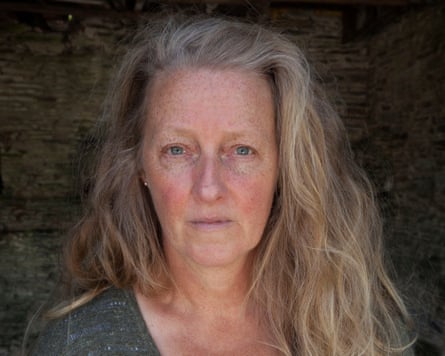
Truth-telling is the measure of memoir, and it’s not the same as autofiction. Readers will allow an author wriggle room, for comic exaggeration, say, but where there’s knowing fabrication they’ll feel cheated, even outraged. Hence the scandal last year following the Observer’s claims that Raynor Winn’s The Salt Path had omitted and obfuscated key material. Why no mention of the alleged embezzlement that lay behind the loss of her family home? Was her husband Moth’s condition (CBD, corticobasal degeneration, a rare degenerative brain disease) as serious as she claimed? Did she really undertake her 630-mile coastal walk in the manner described? Winn keeps going; her sales haven’t suffered; another memoir is scheduled for January 2028. But as I write she’s in trouble again for having claimed that The Salt Path was her debut (and for winning a £10,000 prize awarded to a first book) when she had written a previous one under a pseudonym. And since its honesty has been questioned can The Salt Path really be considered – as the Sunday Times acclaimed it – one of the top 100 books of the past 50 years? (Winn has published a response in which she denies many of the allegations.)
When readers feel that memoirs can’t be trusted, the genre suffers and the publishing industry comes under fire. Nonfiction sales slumped last year. Memoirs also now face the risk of being sidelined by social media outlets, not least Substack, which feeds the same market in smaller doses. If you want a quick fix, not to trawl through a whole book, it’s the ideal platform. And it aspires to the same kind of intimacy. As Naomi Alderman puts it: “I’m actually really surprised by the kind of writing Substack is unlocking in me, that I basically didn’t know I had in me before. And it’s the paid subscribers who make it possible: the fact that I don’t feel I’m shouting into the void but that there are people who are telling me that this work has value.”
Where Instagram highlights the glossy upsides of life, Substack memoirs acknowledge the down. The writers are troubled, not least about writing. They let you in on their woes, whether broken relationships or family trauma. A quick whiz-through brings me Ros Barber (“In the eighteen months after leaving my ex, I lived in a state of fear. I was tailed by a series of men that I suspected he had hired as part of his promise that I wouldn’t live very long if I left”), Kevin Jack McEnroe (“My mom was a heroin addict, and I always worried about her, and still do. I became one, too”), and Dorothy O’Donnell (“My daughter’s no stranger to depression. Or thoughts of suicide. She was in kindergarten the first time she told me she wanted to die”).
When writers like these hit their stride you want more than snippets. And there are cases of someone posting a full-length work on Substack, as Bowen Dwelle has done with the story of how he survived “growing up in San Francisco in the 80s, lived through years of depression and addiction, and eventually found my way back”. His 66,000-word piece comes in 28 chapters “as a work in process … in pre-publication form”. Many writers do use Substack as a pre-publication try-out, though as far as I know, Dwelle hasn’t yet had his memoir published, despite serialising it in 2023.
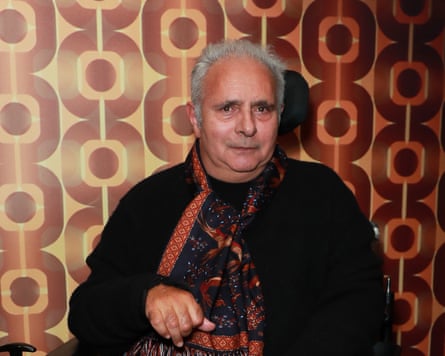
Is it better to keep try-outs under wraps rather than making them public? Perhaps not, if you’re already established with a terrifying story to tell. What became Hanif Kureishi’s book Shattered, chronicling his experience following the accident that left him quadriplegic, originally appeared on Substack, where it was less a rough draft made public than an earnest engagement with readers, made possible with the help of his son Carlo, who took dictation. Many other writers use Substack, including Margaret Atwood, George Saunders, Elif Shafak, Howard Jacobson and Miranda July. You can see why publishers regard the platform both as an opportunity (the chance to spot new talent) and as a threat. If memoirists can make a living through online snippets (with enough subscriptions, Substack pays well), why worry about publication in print? What’s so sacrosanct about a physical book?
For myself– no social media junkie – I think published memoirs have plenty to offer that social platforms can’t, not least the rewards of a full-length story with a narrative arc, a set of characters, and an approach that doesn’t depend on sensational self-exposure, allowing room for reversals, surprises, digressions, complications and a tussle between adversity and reprieve. At their best, memoirs develop with a subtlety unavailable in a short extract and the writer faces bigger issues than how much to share – which tense to use, what stretch of time to cover, how many points of view to accommodate, and what resolution to offer, if any, since a life story written by a living person won’t have ended. Far from exulting in the drama of the tale they’re telling, memoir writers face the worry that it’s humdrum and inconsequential. Success lies in the quality of the telling, not in the shamelessness of the tale. Can the life of a ghost writer be remotely interesting? Yes, Jennie Erdal’s Ghosting is a comic masterpiece. Can a book about immobility move readers? Josie George’s A Still Life does.
Maybe it’s a matter of two kinds of writing: flash nonfiction on one hand versus book-length memoir on the other. Under the tag “Memoir Junkie Someday Author”, Claire Tak writes well about this on – where else? – Substack, making the distinction between a “moment” and a “season”: “A writing ‘season’ means you’re in a stretch of time when writing is a big focus,” she says. “You’re in a groove, maybe working on a project, maybe just showing up regularly. There’s a rhythm and you know what you’re doing and where you’re headed.” At times when you’re less fluent, she observes, you have to rely on moments:
After giving myself a break from my memoir, it felt like I was falling behind, or like I had given up. But I’ve realized I don’t need to be in a full season to stay connected to writing. I just needed to pay attention and take the moments when they came.
What I’ve found is that those moments still move things forward. Not always in a linear way, but they add up. A Substack post here. A thought there. It’s slower, but it’s not wasted time … You don’t have to be in a full-on writing season to keep going. Pay attention to these moments and take what you can.
Moment v season. Episode v story. Online post v full-length book. There’s room in the world for both. Substack does well by memoir, including “a weekly curation of the best personal essays from around the web”, and I enjoy dipping in. But what would my life be without the memoirs published in recent years by (among others) Annie Ernaux, Deborah Levy, Hisham Matar, George Szirtes, Rebecca Stott, Maggie O’Farrell, Tabitha Lasley, Miriam Toews, Lea Ypi and Leslie Jamison?
O’Farrell’s story of her 17 brushes with mortality in I Am, I Am, I Am is at least as engaging as Hamnet, and Ernaux’s diaristic Getting Lost, an account of an affair she had, is more powerful than the brief fictional version of it she gives in Simple Passion. By the same token an online fragment from a journal can’t hope to rank with the 700-plus pages of journals in Helen Garner’s How to End a Story, which offer the ultimate justification for authorship: “writing about my life is the only thing that makes it possible for me to live it”.
Sure, when the author is a bumptious blabber or a catastrophiser loading every rift with gore, published memoirs can be as much a turn-off as online snippets. But where the self-disclosure is nuanced and the writing compelling, you go with the flow, happy to eavesdrop, willing to follow wherever the memoir takes you.