3 months ago
91
3 months ago
91
Gabriella Marcella felt something in her brain click when she first used a risograph printer. “The process, the immediacy – it resonated,” says the Scottish-Italian designer. “A lot of my aesthetic comes from that machine.” Many artists and creatives share that reaction, and now Marcella has curated an exhibition of international art showcasing their work at Glasgow’s Glue Factory Galleries.
The risograph, created in Japan in the 1980s, is a nifty printer that looks like a photocopier but creates work like a screenprinter. The company that produced it, Riso Kagaku, was founded by Noboru Hayama, a businessman whose goal was to make intuitive and affordable printing products. Using soy inks to produce small print-runs of products with a handmade feel and distinctive style, the risograph print – or riso – has become synonymous with zines, activism and independent creatives.
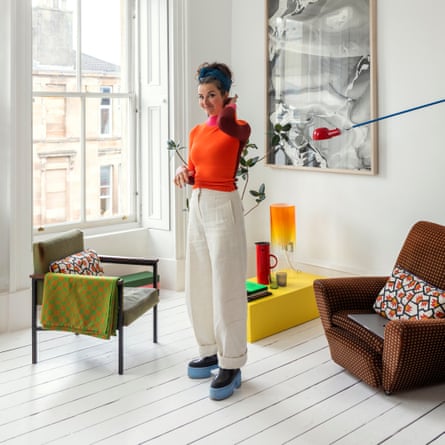
“I bought my first riso off eBay for about £200,” says Marcella. “As soon as the auction was won, my dad drove me round to the house to collect it from a pair of pensioners who used it to print their grandsons’ football gazettes.”
Marcella first fell in love with the printer when she studied for a year at New York’s Pratt Institute, before returning to Glasgow to set up her own design practice called Risotto Studio in 2012. The vivid colours and bold shapes associated with risographs became signatures of her work for clients including Stüssy, Apple and Swatch as well as her own prints and products.
In 2017, Marcella founded Riso Club, a non-profit programme to promote artists around the world and specifically those dedicated to risographs. “I’d always wanted to promote places away from the big cities like London and New York, where illustrators and creatives still work. There’s a niche but global riso community who I’ve got to know over the years. I wanted to profile that.”
For a yearly membership fee, club members received an issue of four postcards from four riso artists each month. Each issue showcases work from a different international city, so Riso Club members have received art from Lille, Lima and everywhere in between. Sending the art as postcards was also important for Marcella: “Physical things land differently. A postcard through the door has a weight, texture and intimacy that digital communication doesn’t – especially in the social media age – where we can scroll past hundreds of amazing images a minute.”
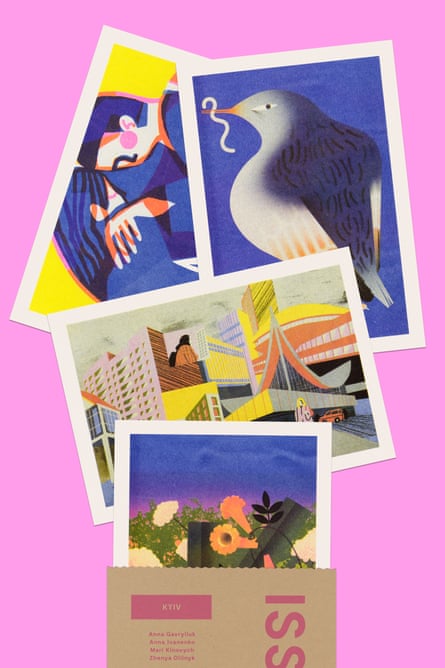
A postcard is also a simple way for people to learn about different cultures. “This is a way of discovering places through artists rather than through tourist cliches,” Marcella says. “Plus, due to their location, some cities have more political or diasporic weight for artists and club members, such as Kyiv and Damascus.”
Marcella thinks this is also true to the origins of this particular print practice. “The riso has roots as a political printer – old machines often come from political parties or schools – as it was a fast and affordable way to share ideas and information.”
Designer Mari Kinovych curated the Kyiv issue of Riso Club which was a fundraiser for the charity Razom for Ukraine. She says she wanted to portray Kyiv as a vibrant city while acknowledging the reality of life during a war. “I chose a piece by Anna Gavryliuk,” she says, “featuring tank traps and flowers to illustrate this duality. For my own contribution, I chose an illustration that reflects the tender feelings of love, acceptance and care that defined the city during the second year of the war. I have never felt a stronger sense of community and wanted to convey that.”
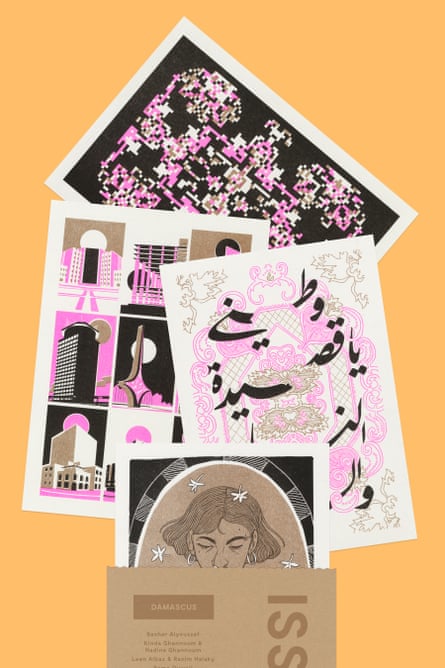
Kinda Ghannoum, who curated the issue dedicated to Damascus, also wanted to show Syria in a different way from its typical media representation. “Each artist contributed a personal reflection on the city,” she says, “and the nostalgia many of us carry while living away from home. The results were even more beautiful than I imagined. I felt proud that together we could represent the spirit of Damascus in such a meaningful way.”
To celebrate 100 issues of Club Riso, Marcella put together her own issue featuring her design heroes: Memphis Group founder Nathalie Du Pasquier, artist Peter Shire and architect and designer Barbara Stauffacher Solomon. Now all 400 postcards are going on display in Glasgow, to bring the joy of risos to a wider audience. “I hope they see that design can be generous, accessible and social,” says Marcella, “and that print can still connect people in a very direct, everyday way.”