3 months ago
84
3 months ago
84
Angelo Cijntje can look back now and smile. It was September 2023 and Curaçao’s trip from Trinidad to Martinique for a Concacaf Nations League game had been complicated on matchday by the lack of a charter flight. “A small propeller plane had to shuttle back and forth, flying players over in groups of six,” Cijntje, the performance coach, says. “The starting XI made it on time, but the subs came in while the game was under way. Their luggage didn’t make it, so they had nothing but their boots, shin pads and maybe a pair of socks.”
Wouter Jansen, Curaçao’s team coordinator, was also part of that trip. “It’s worthy of a film,” he says. “Those are the kind of adventures you never forget.”
Curaçao are about to embark on unforgettable adventures of a very different kind. Remarkably, less than three years after that propeller plane made its way across the Caribbean Sea for the team to lose 1-0 in front of 913 people, they face Germany in Houston on Sunday in their first World Cup match. It marks the end of a long and not always smooth journey.
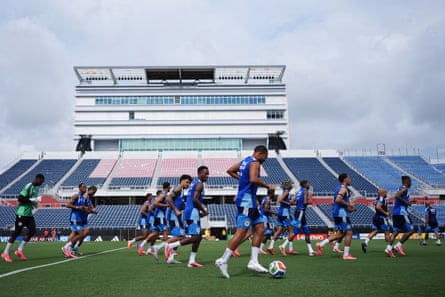
It is one that began in earnest in about 2003 when Cijntje and Jansen, then playing in the Dutch second division, got a call from the president of the Netherlands Antilles football federation, which included Curaçao as a Dutch colony. Jean Francisca had been scouting players with Curaçaoan roots and spotted that Cijntje and Jansen were born in Willemstad, the capital. On the phone he outlined an ambition to qualify for a major tournament. Both signed up but what they found in Willemstad on their first call-up offers another indication of how far things have come.
“The hotel wasn’t properly arranged, the sessions weren’t structured and we didn’t have training kits,” Cijntje says. “I’d be training in red socks, the player next to me in blue, one in red shorts, another in something else – one wearing Beltona, another maybe Nike. It was a bit of everything. Those were the first steps.”
The project gathered pace when Curaçao left the Netherlands Antilles in 2010 to become an autonomous country within the Kingdom of the Netherlands. The following year Curaçao became a Fifa member and from 2015 several Dutch coaches were appointed, starting with Patrick Kluivert, whose mother is Curaçaoan. More Dutch-born players joined, including Netherlands youth internationals such as Eloy Room, who had a deep connection with Curaçao, his father’s country.
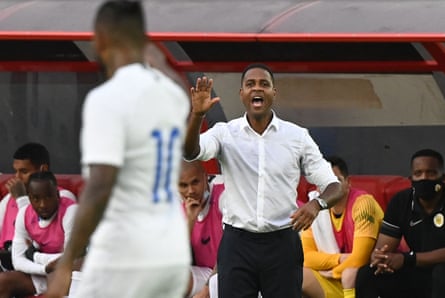
When Room was young, his mum gave him a book about Curaçao’s sporting history that featured Ergilio Hato, a goalkeeper who in 1952 was part of the first Netherlands Antilles team to play at the Olympics. “I would read that book every night,” says Room, an aspiring goalkeeper then and his country’s World Cup No 1 now. “I told my mother: ‘It would be great if I could become a legend for Curaçao too.’”
He has managed that. Hato inspired generations – the national stadium in Willemstad bears his name – and Room made Hato’s nickname, Pantera Negra (Black Panther), his first tattoo. “Every time I look at it, it gives me a boost,” he says.
Curaçao is the smallest nation, by population (about 156,000) and land area (171 square miles), to have qualified for a World Cup. Cijntje and Jansen joined the backroom staff in 2022, but their spell has not been without hiccups. That year the former Feyenoord and Ajax player Dean Gorré, whose son Kenji is part of the World Cup squad, became the technical director and he says a period of board instability created problems.
“Hotel rooms were sometimes not paid, with players occasionally even having to pay for their flight tickets upfront,” he says. “It was a low point, but it also made the squad more resilient and tighter as a group. Nothing could faze them any more.”

Dick Advocaat’s appointment as head coach in January 2024 marked another turning point. “More resources were invested in the national team,” Cijntje says, “with sponsors involved and better conditions as a result, which had positive knock-on effects, such as attracting more players like [PSV’s] Armando Obispo and Tahith Chong [of Sheffield United, the only player in the squad born in Curaçao].”
Curaçao were well prepared for World Cup qualifying and had an advantage with the co-hosts, the United States, Mexico and Canada, taking places automatically. “That became a real trigger for all of us, like: ‘If there’s a chance to reach the World Cup, it’s now,’” Room says.
Qualification was secured via a 0-0 draw in Jamaica, with Gorré in temporary charge while Advocaat was absent for family reasons. Players and staff celebrated with a few hundred supporters who had travelled to Jamaica and were welcomed back in Willemstad on an open-top bus that carried them through streets lined with tens of thousands of fans.
The squad is close-knit, embodied in how they honour Jairzinho Pieter, a goalkeeper who died of a heart attack while away on international duty in 2019. “He was the one who always brought the atmosphere,” Room says.
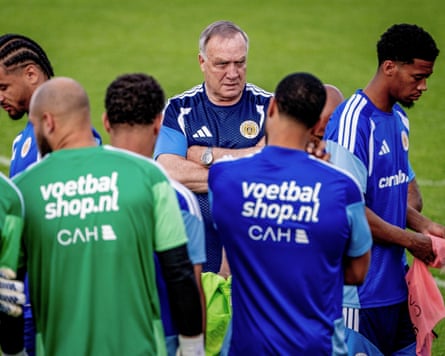
Room explains that Pieter led their daily prayer, something they do now with the captain, Leandro Bacuna, laying a necklace that belonged to Pieter in the huddle. “His passing was very heavy at the time and it is still very difficult,” Room says.
“That made the dream of reaching the World Cup come even more to life, because it was also truly his dream. It gave us even more motivation.
“I truly believe that in the deciding match against Jamaica, Pieter was with me, because the ball hit the crossbar and the post – it just wouldn’t go in. People in Curaçao also say that Pieter was there, alongside Ergilio Hato. We basically had three men in goal.”
The team’s spirit is rooted in humility. “We just take regular commercial flights and wait at the baggage carousel for our suitcases to arrive,” says Jansen. In hotels, the players like to mingle with other guests, so when Advocaat once suggested a specially prepared meal in a meeting room, they opted to join the all-inclusive buffet. “They don’t mind when people want to take photos with them either,” says Jansen. “That’s part of who we are.”
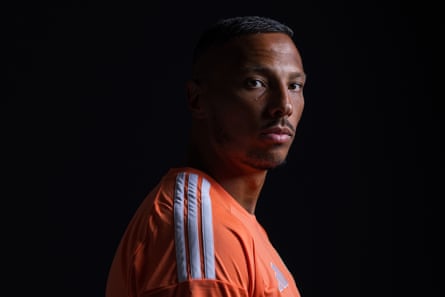
The openness became clear when Fifa asked Curaçao what requirements they had for their World Cup stay. “We don’t have any,” was Jansen’s reply. He was told a separate entrance could be arranged at the hotel and room keys prepared in advance. “I said: ‘All of that isn’t necessary,’” Jansen says. “We’re just used to walking in through the reception in the lobby and if we have to wait a bit, that’s no problem. We’re used to hotels where the rooms still need to be prepared. And nobody complains. That took them [Fifa] a bit by surprise.”
But what about security, Fifa then asked. “Security?” Jansen responded. “We really don’t need security; we’re more than happy to give out an autograph.”
Curaçao sprung another surprise when Fifa inquired about when open training sessions for media and fans should be planned. “Honestly, everyone is welcome with us,” Jansen replied. “And the public can even come on to the pitch after training.”
At Curaçao’s base in Boca Raton, Florida, family and friends are allowed to stay. “Because it will be such a unique moment, we wanted to allow everyone to bring their relatives,” Jansen says. “We go there with a smile and leave with a smile. We’ve already won the World Cup just by being there. Some people think our setup is unprofessional but I’m like: ‘No, within our own limitations, we are actually very professional.’ Because we truly do everything together. That’s what makes it great.”
In February Advocaat stepped down to be with his ill daughter and was replaced by Fred Rutten. But when her situation improved, a push gathered momentum to bring Advocaat back and he returned in May.
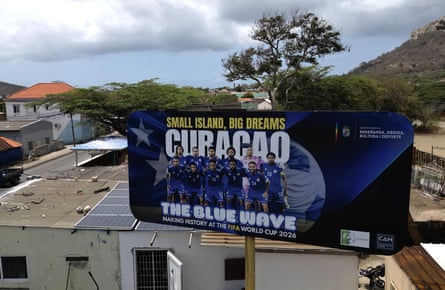
Reaching the World Cup will have a significant impact for Curaçao. Gorré, who is focused on developing high-performance structures, says it will lift football development and much beyond. “It has already had an impact on tourism and that will only increase,” Gorré says.
Cijntje also expects wider benefits, saying: “The realisation may start to sink in that the impossible is possible, if you go for it and work hard for it. I think it will be an inspiration for the next generation.”