3 months ago
69
3 months ago
69
My record for making ricotta and lemon ring cake is three minutes and 42 seconds. That doesn’t include heating the oven or baking, or finding a recipe, which is in my head. It does include getting out the utensils (bowl, spatula, grater, scale, ring tin) and the ingredients (ricotta, olive oil, flour, sugar, baking powder, eggs, lemons), then speed-mixing everything in one bowl, scraping the batter into the tin and getting the tin in the oven via a discus throw. The timer is stopped as the oven door is closed. This is not relaxing cooking, it is entertaining cooking. And it is gratifying, having proved my partner wrong when he said it would take me at least five minutes.
I was disappointed, then, to find myself on terrible form the other day, when a chocolate-chip version of the same ring cake took me five minutes and 19 seconds. In my defence, I had difficulty getting the glass bowl out of an impractical stack, and we had run out of chocolate chips, which meant I had to find a knife and chop up a bar instead. Even so, it was an absymal performance. There was some consolation in the cake itself, which is not only the quickest, but one of the best cakes I know. The ricotta adds creamy depth and the olive oil provides fat, and together they make for a tender, moist, everyday cake that is best eaten warm, when the bits of chocolate are still hot enough to be little pools.
This cake is just one reason to get a tub of ricotta out of the fridge: creamy, light, spongy, with a savouriness and sweetness that recalls fresh milk, there are dozens more uses for this brilliant, useful, accommodating ingredient that moves with ease between savoury and sweet.
Often described as a cheese, ricotta is more of a milk product. A resourceful one, too, being made with the leftover whey from cheese-making (commonly sheep’s milk, but cow’s and goat’s are used, too), which is heated again (hence the name ricotta, meaning cooked twice) with an acid coagulant and extra milk. The coagulant causes the whey to curdle further, resulting in wobbly, delicate curds of fresh ricotta that seem a cross between clouds, junket and soft scrambled egg, an ephemeral substance that needs to be eaten as soon as possible. Preservation is possible if the ricotta is pasteurised, producing the long-life product we find in supermarkets.
There is no doubt that fresh and pasteurised are different creatures, and I feel glad to have both. Fresh is full-flavoured, with a pleasant saltiness and unique, granular texture, while processing creates a more regular product, creamy with a smoother texture, though with adequate seasoning and care, it’s suitable for everything. If you want fresh, producers such as Westcombe in Somerset make rich ricotta from whey left over from cheddar production. Alternatively, a form of ricotta is relatively easy to make at home: Anna Jones has great advice on that.
Soft and cool, ricotta can be spread on garlic-rubbed toast, maybe with a slice of tomato on top or simply a zigzag of olive oil. It can also be beaten with a spoonful of grated parmesan or pecorino and lots of black pepper or lemon zest for a more piquant spread; the same mix can be loosened with a bit of milk and served as a dip.
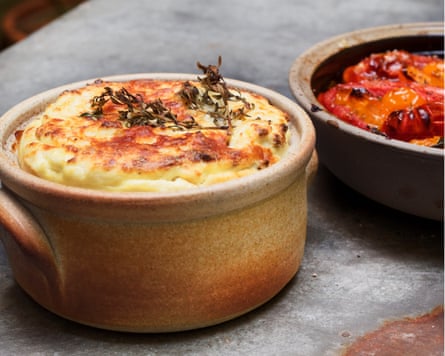
What to cook? Ricotta makes the most brilliant frittata: fry courgettes in olive oil with salt until soft and slightly golden, then mix with beaten eggs, salt, pepper and a handful of ripped mint. Or fritters, which also pair courgette and ricotta, as well as chickpea (gram) flour and parmesan, which produces a thick, sticky batter that’s spooned into hot oil to make a Sicilian snack that’s not unlike pakora – great as a light meal with tomato and salad, maybe, or with caponata, or even with boiled potatoes with sweet red onion and capers. Moving from the stovetop to the oven, ricotta bakes well – such as in Nigel Slater’s baked ricotta with thyme, or this quite gorgeous, Richard Olney-style aubergine, tomato and ricotta gratin.
Which brings us to the vast universe that is ricotta and pasta. At this time of year, pair ricotta with rigatoni and greens such as spinach, rocket, chard, radish leaves or leafy sprouting broccoli. Or with peas, spring onions and a large hollow pasta, such as lumaconi, conchiglioni or paccheri for a baked pasta. Another dish that uses ricotta beautifully is pasta alla pecorara, which translates as “shepherd’s-style pasta” – pici or fettuccine with ricotta, pecorino and guanciale.
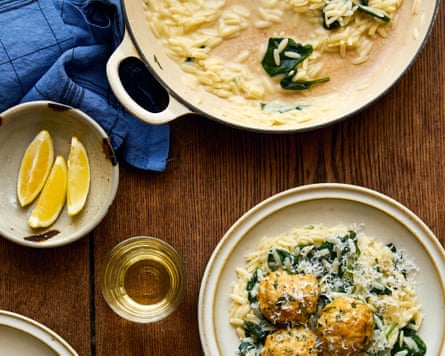
The combination of ricotta, wilted spinach and parmesan is a typical and delicious filling for ravioli. Simply mix 250g well-drained ricotta with 250g wilted spinach, an egg, a big handful of grated parmesan and a good grating of nutmeg, then use it to make parcels from fresh egg pasta – Oliver Rowe’s instructions for pasta-making are great. An alternative shape for a similar filling is Ruth Rogers’ spinach and ricotta roll or rotolo, my version of cannelloni, or Thomasina Miers’ recipe for four-cheese greens lasagne. Or skip the pasta-making and wrapping, and shape the green-and-white-speckled filling into naked balls, AKA gnudi, also known as gnocchi di ricotta or malfatti (“badly formed”).
Moving back to sweet applications of ricotta, it is good on toast with honey or golden syrup, or mixed with lemon zest and a little icing sugar to go beside cakes or on top of strawberries. A particular glory of ricotta cooking is crostata di ricotta e visciole (sour cherry and ricotta tart) from the Jewish-Roman tradition, the template of which can be used for a fig and orange version. Alternatively, how about Meera Sodha’s Christmas ricotta semifreddo, using Hobnobs, ricotta, chocolate and amaretto? Not forgetting, of course, the queen of ricotta desserts, Sicilian cassata, a layered construction of sponge, sweetened ricotta, marzipan, icing and candied fruit, which doesn’t take three minutes and 42 seconds to make, but which does bring bling, beauty and joy to the table.
My week in food
Winner, winner chicken dinner | It is hard to believe that Ed Smith’s On the Side, his clever sourcebook of side dishes that can happily take centre stage, is nine years old. I think his latest book, Peckish: An Inspirational Collection of Winning Chicken Dinners, will become a classic, too – the recipes are inspirational, and they are backed up by Ed’s accessible approach. The book is helpfully arranged by the different cuts of chicken (drumstick, thighs, breast, wings, etc), as well the whole bird, including a sublimely simple and good honey and mustard roast chicken.
Whey to my heart | In my ignorance, I thought it was just Italian novels that contained romantic descriptions of whey leftover from cheesemaking. It turns out that one of the best passages is in George Eliot’s Adam Bede, when Mrs Poyser offers Adam a drink of warm whey and he notes it is as good as ale. There are also great descriptions of actual ale, broad beans, sweet scented butter, luscious strawberries and hyperbolic peas.
What I’m watching | While I wasn’t sure to begin with, Vladimir, the eight-part adaptation of Julia May Jonas’s 2022 novel, gets better with every passing episode. Rachel Weisz, in the words of Lucy Mangan, is unswervingly brilliant as the tenured English professor dealing with the fallout after her husband, another tenured academic on the same campus, is suspended for sleeping with students. It also makes you reconsider what dish to take to a potluck – next time I’ll contemplate growing lettuce for a harvest salad croquembouche.
If you want to read the complete version of this newsletter please subscribe to receive Feast in your inbox every Thursday.