3 months ago
100
3 months ago
100
Political parties in France are hastily attempting to negotiate strategic alliances ahead of the final round of local elections this weekend, after a strong showing by the far right and the radical left.
This Sunday’s final-round vote for mayors and local councillors in major cities including Marseille, Lyon and Paris will be close.
The municipal elections run-offs are seen as a crucial test of political strategy and alliances before next year’s presidential election. Emmanuel Macron’s two terms in office come to an end in spring 2027 and there is uncertainty about who will next lead the EU’s second-largest economy.
In Paris, after the first round at the weekend, the Socialist Emmanuel Grégoire was solidly ahead of the former culture minister, Rachida Dati, who nonetheless said she still hoped to win control of the capital for the right after the left’s 25 years in power.
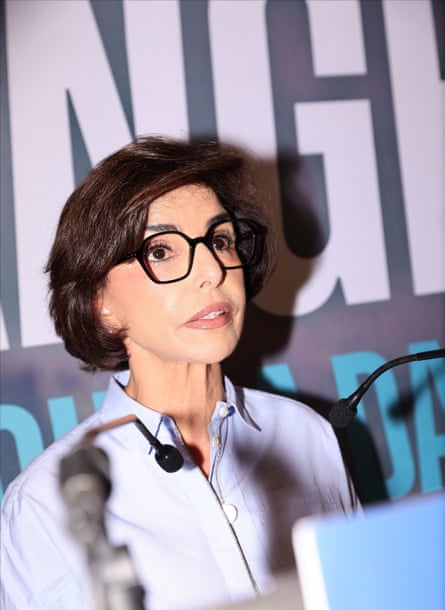
Dati spent Monday trying to negotiate a form of alliance with the centrist candidate, Pierre-Yves Bournazel, to boost her chances, despite the two of them exchanging bitter criticisms while campaigning. In a book published during the campaign, The Battle for Paris, Bournazel described Dati during her time as justice minister as being “inebriated with narcissism”. She said he was the “physical incarnation of the stupidest right in the world”. He later said he was against the “brutalisation” of politics. It was uncertain whether they could achieve an alliance and in what form.
In September, Dati will go on trial in Paris for alleged corruption and abuse of power. She is accused of lobbying for the Renault-Nissan carmaking group when she was a member of the European parliament. She has denied all wrongdoing. Grégoire on Monday highlighted the trial and warned that Dati represented the “Trumpisation” of political life, saying an alliance between her and Bournazel “made no sense”.
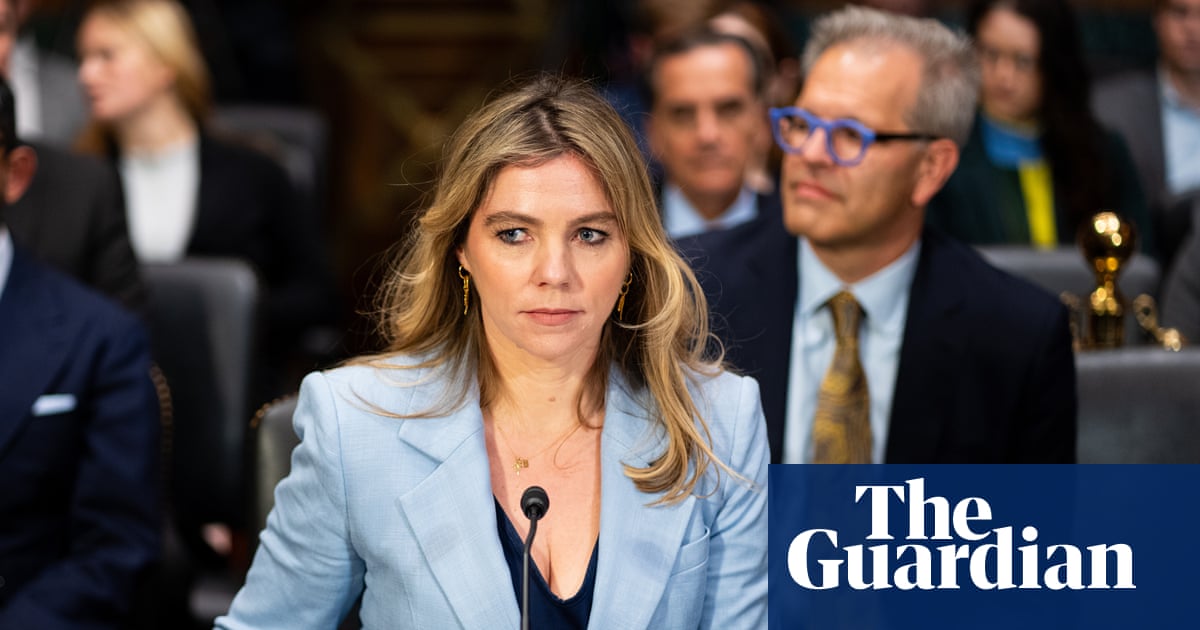
Meanwhile, Sarah Knafo, a European parliament member for the far-right anti-immigration Reconquest party made significant gains in wealthy areas of the west of Paris, scoring 10%, enough for a place in the second round. This was a first for Paris, which has traditionally not registered significant scores for the far right in local elections. Knafo’s partner is the TV pundit Éric Zemmour, who founded Reconquest and has convictions for inciting racial hatred.
Sophia Chikirou, candidate for the radical left Jean-Luc Mélenchon’s party, La France Insoumise (LFI), also made it to the second round in Paris and said she was waiting for a call from Grégoire about how best to block the right. But Grégoire, who is running for a “left union” between parties including Socialists and Greens, has ruled out any alliance with Chikirou.
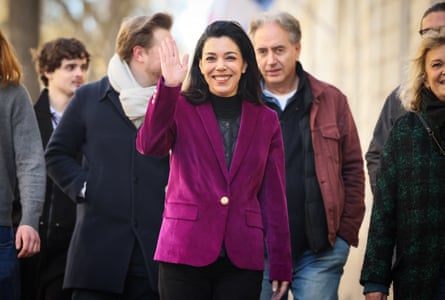
Mélenchon’s party, which over the past decade has not pushed for a strong local presence, fielded more candidates this time and is likely to gain local councillors. Bally Bagayoko won the mayoral race for the LFI in the first round in Saint-Denis, the second-largest city in the Paris region – beating the Socialist Mathieu Hanotin, who was one of the faces of local politics during the 2024 Olympics.
The LFI is also on track to take Roubaix, a symbol of France’s post-industrial north. In Toulouse, after the LFI scored higher than expected, its candidate made an alliance with the Socialist representative, hoping to beat the right-wing incumbent mayor, Jean-Luc Moudenc, who called it “the alliance of shame”. The LFI and Socialist candidates also joined forces in Avignon in the south-east.
The centre-left Raphaël Glucksmann, seen as a potential presidential candidate for 2027, criticised any alliances between the centre left and the LFI, saying Mélenchon’s party had done well in cities such as Toulouse and Limoges but that the centre left had done broadly far better across France.
In Marseille, Marine Le Pen’s far-right the National Rally (RN) saw a strong score for its mayoral candidate, Franck Allisio, in the first round, coming just behind the incumbent Benoît Payan, who leads the Printemps Marseillais left grouping which includes Socialists and Greens. Capturing Marseille, France’s second-largest city, would mark a major breakthrough for the RN, which has traditionally struggled to gain ground in large cities. The close-run final round for Marseille mayor will be one of the most keenly observed this weekend.
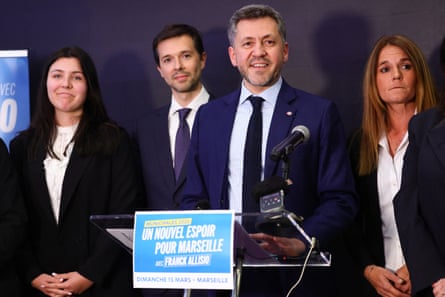
Payan on Monday refused to join up with the LFI candidate who also made the final round. Payan said he wasn’t up for “compromises” or “arrangements” and instead called for “clarity” on the left to vote to keep the RN out of power.
The RN saw 24 mayors elected in the first round. Some second-round run-offs will now be difficult, including the southern city of Toulon, where other parties may move to try to block the RN.
In Nice, France’s fifth biggest city, the RN ally Éric Ciotti is well placed for the final round, largely due to his long local experience in the French Riviera city. He did not run on the RN ticket, but any victory would be claimed by the party as a sign of a new form of alliance between the traditional right and the far right.
Ciotti quit as leader of the traditional right’s party, Les Républicains (LR), to join forces with Le Pen in 2024.