3 months ago
122
3 months ago
122
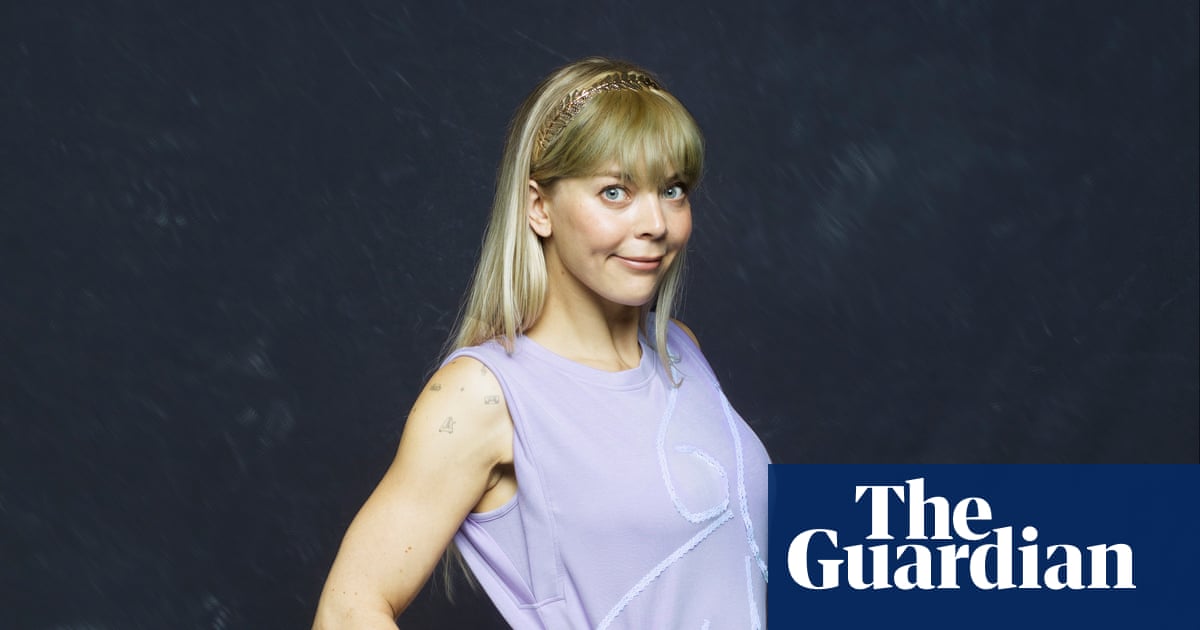
In a video posted to TikTok, where Katie Whitney has 2.5 million followers, she says to camera, bluntly: “This video is for Cynthia Erivo. If you’re not Cynthia Erivo … you can keep on scrolling.” Her demeanour then shifts, her voice becomes softer; more the way a person might talk to their puppy: “Hi Cynthia. Hi baby. Hey baby. How are you?” It’s toe-curling – or, in modern parlance, cringe – to watch. “I feel traumatised,” says one commenter. Others post photos of a stunned-looking Erivo and imagine: “What if the Wicked star were to actually watch this video?” Cringe!
Now 25, but having started making this kind of content – “weird skits” – at 20, Whitney is part of what is known online as CringeTok, a subsection of the internet that deals in content designed to make your toes curl. It’s in many ways a reaction to a fear of being “cringe”, which is seeping into all parts of life – from social media to classrooms to the workplace.
Embarrassment is nothing new, and comedy has been revelling in secondhand shame for decades, from Fawlty Towers to Curb Your Enthusiasm, The Office to Amandaland. But cringe has been identified by some working in mental health as a relatively new form of shame. It is now so prevalent that it has been studied by academics, discussed, lamented and, crucially, blamed as a reason so many people – and particularly young people – aren’t living their lives to the fullest.
According to a Yahoo/YouGov poll this year, the fear of coming across as cringe has stopped more than half of gen Z (those born between the mid-1990s and early-2010s) from expressing themselves freely online and 55% of those surveyed said it had stopped them from opening up emotionally. New York University professor and writer Ocean Vuong raised concerns that his students are becoming “more and more self-conscious about trying”. In an interview with ABC News, he said: “There’s a surveillance culture around social media. And they will say: ‘I want to be a poet, I want to be a good writer, but it’s a bit cringe’ … this ‘cringe culture’ is ‘I don’t want to be perceived as trying and having an effortful attempt at my dreams.’”
So what is “cringe”? According to Roger Giner-Sorolla, a professor of social psychology at the University of Kent, it has become a slang term for the feeling of “vicarious shame”. This, he says, places a person who has done something embarrassing or even morally shameful “under the dim regard of other people”. Mark Beal, a professor of communications at Rutgers University who has written several books about gen Z, would “put it in the bucket of feeling awkward, feeling embarrassed, feeling ‘uncool’”.
A key aspect of “cringe” is a lack of self-awareness. “The implication of cringe is that if you had any self-awareness, you would realise that this reflects really poorly on you,” says Giner-Sorolla. “A good example,” says Dean Burnett, a Cardiff-based neuroscientist, “is when the older generation try to get involved with younger generations’ trends, behaviours; that’s cringe”. A boomer saying someone has “rizz” or is “delulu” without irony, say. It’s the act of “trying to do something and failing, but not knowing you’re failing at it”.
The catalogue of things that gen Z finds cringe is huge: sincerity, trying too hard, enthusiasm; any behaviour that isn’t nonchalant. But, paradoxically, also inauthenticity. Then a big one is millennials – pretty much anything they do, say, think or wear. Skinny jeans, the crying-laughing emoji, “the millennial pause”, trainer socks and referencing which Harry Potter house they would be in.
Natalie Soibatian, 24, a visitor experience coordinator at a museum in the US, made a TikTok video last year about her worries that cringe is “crippling an entire generation”. Has she ever felt held back by a fear of being cringe? “Definitely,” she says.
She remembers going to a club in Los Angeles a few years ago, where, she says: “No one was dancing.” It’s not how she expected nightlife to be when she was growing up, but she gets it. For a generation under constant surveillance, she says: “It’s a fear of being seen and being perceived.” She is not immune to this herself – and used to feel similarly: “You look to your friends,” she says. “Are they participating?
“Everybody is afraid of being recorded,” she says. “And whether it’s their dancing abilities or just being able to participate and looking goofy, nobody is willing to participate unless somebody else starts, and nobody’s willing to start any more.”
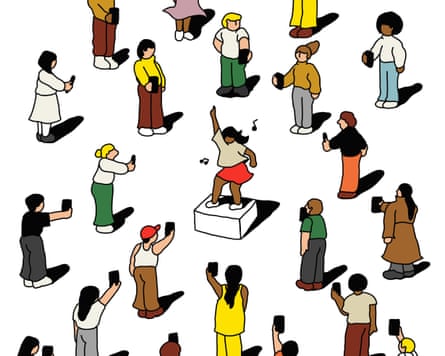
A creator of fashion content online, Soibatian also identifies a fear of being cringe as the root of more conservative style choices she sees in those around her. “People are far less likely to be experimental with their fashion,” she says. It’s not hard to see why that might be – even for older people, it’s easy to look back at the sartorial experimentation of your 20s in hard-copy photos and feel deep shame. Imagine if those boob tubes and ill-advised blue mascaras were there, online, for the whole world to see for the rest of time?
Beal likens the gen Z experience to the film The Truman Show. Except it is not just Truman whose life is up for consumption, but pretty much everyone’s. However, unlike Jim Carrey’s Truman, who is unaware that he is the main character in a reality show of his life, gen Z are hyper aware of it. “They are the first generation who, starting at a very young age, have joined platforms like Snapchat, TikTok and Instagram, where … every pose, every look, every smile is either being judged, or they might feel it is being judged.”
And it is not just a problem for those with follower counts akin to the capacity of the Emirates Stadium. Soibatian has a few hundred followers and struggles with the idea that people she knows personally will see her posts. “I think it’s always a presence that’s going to be over my shoulder,” she says.
For others, a larger follower count makes this easier. “It was harder for me when I had a bit of a smaller platform, because the comments and the engagement felt louder,” says Whitney, who began posting YouTube videos of herself at eight. She recalls a shift at about the million-follower mark. “You start reaching those numbers and it all kind of mutes,” she says. “It feels more separate from me than when I had this smaller personal following, where I recognised certain people commenting and coming back, and it felt like a community, but as I’m at the scale I am now, it kind of just rolls off me a little bit.”
Humans aren’t psychologically evolved to be subject to the judgment of so many others. “Biologically or culturally, we’re adapted to relatively small group living,” says Giner-Sorolla. “We’re not adapted to live where millions of eyes are on us.” When we lived in smaller, entirely offline communities, we could adapt to fit in with those around us – or choose not to. “But when you have not only a million pairs of eyes, but 1,000 different standards, 1,000 different subcultures judging you, that can be very overwhelming.”
The gap between your on- and offline personae can be a source of potential cringe. “Your profile is you in a way,” says Whitney. For her, if you have a “cool person” persona that you’ve carefully constructed online, it is “a lot scarier to go out to concerts, or gigs, or restaurants, or dates, and to be yourself, because there’s always that risk of someone having a phone on … it’s almost like a constant red button flickering of people recording you.” It can have an impact on some people, she says, to the extent “where you almost don’t feel safe going outside”.
What is and isn’t cringe is, of course, dictated by who you are talking to. “It’s all from your point of view,” says Giner-Sorolla. “It’s like you have these norms about how someone should comport themselves, how someone should be cool.” When 26-year-old Stefania Marzelia started to upload stories about founding her coffee company, Sips, in Chicago, she noticed a post from someone from her home town who published a comment along the lines of: “Oh my goodness, there’s this girl that went to my high school that’s uploading this barista content. It’s so cringy, it’s so embarrassing.” She remembers cringing herself, and thinking: “I shouldn’t be doing this.”
But then she came around. “When people don’t follow the status quo, or they put their hearts into something that they create … I think gen Z is very quick to jump on that and to call it cringe.”
Marzelia, who has almost 600,000 followers on TikTok, is very exposed. “We are now so connected to everyone’s thoughts, feelings and concerns.” There is also the fear of going viral for something unintentionally cringe. “You can be made a laughing stock to millions of people by just one post,” says Giner-Sorolla.
Georgie Gee, a child psychotherapist based in London, says that before the internet: “Identity was formed by hanging out with real people that you liked, and you identified with their values.” Now, she says: “there are so many different voices … if you’re exposed to that from a very early age it can interfere with your normal adolescent development of identity.”
So can gen Z get over the fear of cringe? According to Giner-Sorolla, the way to survive is to “narrow your focus … have a reference group of people you can be authentic with, and even if other people think your authenticity is cringe, at least you’ve got your people.” Burnett is of a similar mind. “Having connections, having friends, having people you can relate to and share with, that’s good for the brain,” he says. What about thousands of connections online? “That’s not a healthy default, and that’s what I think holds people back.” While everyone would benefit from having a community, he says, “not everyone benefits from an audience”.
Gee recommends questioning who is the voice inside your head, warning you not to do something for fear of being cringe. Ideally with the help of a good therapist, look at that judgmental, bullying part and start to interrogate it. There might also, she says, be some solace in the idea that “we’re not a fixed entity – that’s quite a nice feeling, isn’t it? And that we learn through our mistakes, we grow and develop.”
Another fairly obvious option for those feeling stymied online might be taking themselves off – or at least being a little bit less on – line. Beal has heard from his students that planned daylong digital detoxes have sometimes turned into a week or month-long “respite from content”. He recommends “getting away from that phone altogether, and just hiking, walking, exploring life.” This is what Whitney refers to in more twentysomething lingo as “touching grass”.
Luckily, there does seem to be a shift to reclaiming the coolness of enthusiasm. For Giner-Sorolla, it might be about choosing “your object of passion – that is itself cool”. Burnett says: “It’s important for people to be able to say, ‘Look, this is what I like, this is what I enjoy,’ and at some point you have to put your own needs, your own desires, your own wellbeing ahead of other people’s vicarious negative judgment.”
There is also freedom in being outright cringe – as Whitney has discovered. Online, an idea has gained traction that is known as “climbing cringe mountain”, a concept that the New York Times described as “an inescapable step of adulthood for the members of gen Z who grew up with their entire lives – even the embarrassing stuff – being documented online”. And there is a meme-mantra: “to be cringe is to be free”; it has been embraced as a rallying cry. As Marzelia says: “The world opens up for you on the other side of cringe.”
The first time Whitney posted her cringe content, she describes a weight being lifted. “It was like: ‘Oh, who cares, now it’s out there, it’s out there … now I just get to do whatever.’”
For Soibatian, she has found a reframing that might help anyone stuck at the base camp of cringe mountain: mountain. “If somebody is clearly judging another person for doing something that they deem as cringe, that, for me, is cringy.”