3 months ago
62
3 months ago
62
In the new Netflix series Unfamiliar, two spies working for Germany’s foreign intelligence agency are trying to gauge the intentions of a Russian agent who has recently arrived in Berlin. They come up with a creative solution: hacking into his taxi’s dashcam and seizing footage of the spook as he shakes hands with a well-known hitman.
The six-part show revels in such flagrant disregard for red tape – the kind of brazen derring-do that Germany’s notoriously rule-bound Federal Intelligence Service (BND) can only dream of in real life.
Unfamiliar appears to gone down well with audiences. With more than 20m global views since its release in February, the show has become one of the most-watched non-English series on the US streamer over the last month.
The title refers to a married couple, Meret and Simon Schäfer (Susanne Wolff and Felix Kramer), two former BND agents who run a secret safe house in Berlin under new identities. The arrival of a GRU agent, Josef Koleev (Samuel Finzi), however, brings to light secrets – state and marital – the couple believed had been laid to rest.

One key way in which the show differs from many others of the genre is in its portrayal of the Schäfers’ employer, which is seen as slightly hapless, gaffe-prone and hamstrung by parliamentary oversight compared with its more glamorous equivalents in the US, Britain or France.
The first series to be filmed partly on location at the BND’s Berlin headquarters, Unfamiliar shows analysts liberally using facial recognition software to track down enemies and agents missing in the field – a method that would in reality clash with Germany’s stringent data protection laws.
The Schäfers, meanwhile, are well-versed in the darker arts of spycraft, hacking into hospital databases, breaking and entering into a sheikh’s palace in Morocco, and using a hammer to extract information from a captive source.
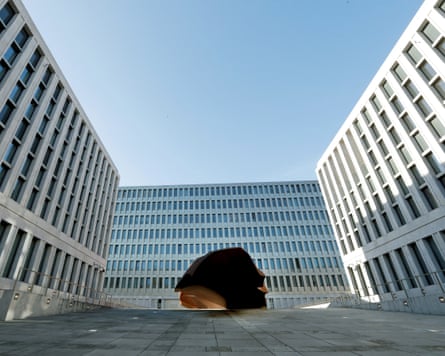
The show’s portrayal of a less cautious BND coincides with calls in the real world to roll back postwar restraints on the intelligence agency in the face of Russian hybrid warfare and a fracturing alliance with the US.
Friedrich Merz’s government has increased the agency’s budget by about 26% to €1.51bn (£1.3bn) this year. Changes to the law regulating the BND’s activities are also expected to be put to the parliament in the autumn, where they will require a two-thirds majority.
Drafts of the legislation leaked to German press foresee the BND being equipped with powers to actively retaliate against cyber-attacks, fend off suspect drones by “appropriate means”, use facial recognition software and hold on to collected data for longer periods.
Under the current law, the BND would be allowed to infiltrate the IT system being used by a foreign power to prepare a cyber-attack on German authorities, but not sabotage it by deleting data, switching off servers or diverting data streams.
“As an intelligence agency, we have to be careful that we don’t become too predictable, or otherwise our enemies only have to study German law to know exactly what we are up to,” a BND spokesperson, Martin Heinemann, said.
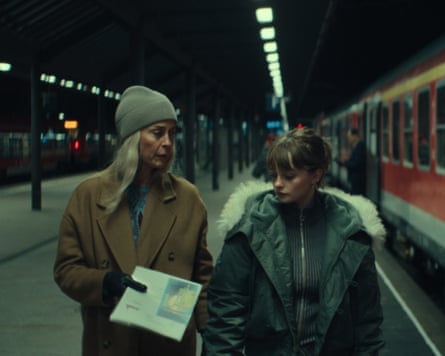
Unfamiliar’s makers rejected speculation they had conceived the series at the BND’s behest, saying the show’s concept had been written two and a half years before they approached the intelligence agency for access. The BND said it had advised but had not had a veto over the content.
The BND’s peculiarly limited remit stems from its origins. Founded in 1956 in West Germany, it grew out of a predecessor agency, the Gehlen Organisation, that was set up by US occupying forces to keep a watch on Soviet activity.
Amid fears over a restrengthened Germany and the involvement of former Nazis, the BND’s activities have been restricted ever since to collecting informationthrough human sources, wiretaps or analysing satellite images that it then passes on to the government.
“Due to our historical experience there has been a reluctance to grant too much power to the secret police, and postwar Germany has required a strict separation between the police and the intelligence agencies. It’s not comparable to the situation in other countries with different histories,” said Bodo Hechelhammer, a longtime employee and former chief historian of the BND who is adjunct professor at the University of Southern Denmark.

More recently, the BND has also been accused of incompetence of its own making. Its former chief Bruno Kahl had to be extracted from Kyiv at the start of Russia’s invasion of Ukraine, his agency apparently blindsided by the Kremlin’s plans. This week, a former vice-president of the organisation, Arndt Freytag von Loringhoven, was reported to have fallen for a Russian hacker-linked phishing attempt on messenger service Signal. To foil domestic terror attacks, Germany has been heavily reliant on allied agencies such as the CIA.
“As my background is writing for spy shows in the UK, I had to learn that things are done differently in Germany,” said Unfamiliar’s British scriptwriter Paul Coates, who has written screenplays for Red Election as well as Casualty, Holby City and EastEnders.
“I definitely had to be told a few times that spies in Germany wouldn’t be allowed to do something. Not just from the BND, but from my own producer,” Coates added.
Due to contemporary German spycraft’s staid reputation, portrayals in film and fiction have tended to reach back further into history to tell dramatic stories set in the ranks of the Nazi’s Gestapo or the East German Stasi, such as the Robert Harris’ book Fatherland or Florian Henckel von Donnersmarck’s 2006 film The Lives of Others.
A 1967 film designed to glorify the BND along the lines of James Bond’s MI6, called Mr Dynamite in German and Spy Today, Die Tomorrow in English, was a critical and commercial failure. The German agency is notable for its absence from the films in the original Bond franchise.

Unfamiliar may end up modernising the BND’s image in the public eye. But to create suspense, the show still relies on the agency’s reputation for unreliability. The series revolves around Koleev having a mole in the BND he can tap for information. “Our allies will go back to ignoring us and not sharing with us for years,” complains one senior officer in the show.
It is a plotline with a solid historical foundation. The KGB agent Heinz Felfe infiltrated the Gehlen Organisation and then the BND and went undetected for 10 years, largely due to his Nazi past. Another high-ranking BND officer was charged with treason for passing on state secrets to Russia in 2023.
“We are in a new era where Berlin is becoming a place for spies again,” said Andreas Bareiss, Unfamiliar’s producer. “It feels a little bit like a new cold war.”