3 months ago
84
3 months ago
84
When South Korea’s biggest online retailer revealed last year that a data breach had compromised tens of millions of customer accounts, it appeared to be a corporate crisis. But five months later the issue has grown into a diplomatic storm, threatening to further degrade relations between Seoul and the Trump administration.
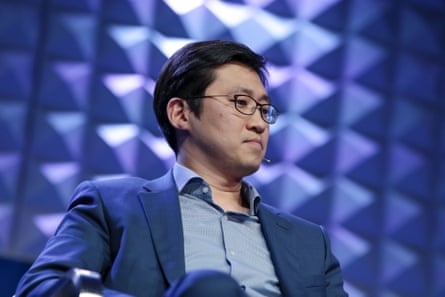
Coupang – often described as South Korea’s answer to Amazon – is nominally a Korean company but operates from Seattle, is listed on the New York Stock Exchange, and is run by Korean-American billionaire Bom Kim. In November last year the company disclosed that a former employee had stolen an internal security key, enabling unauthorised access to data from 33.7 million users.
The breach triggered a widespread movement to abandon the service and a sweeping government response. Police raided the company’s Seoul headquarters, tax authorities launched a special audit, and parliament summoned executives for questioning. Kim refused to travel to Korea for hearings, citing his role as a global chief executive and Korean police have requested that immigration authorities notify them if he enters the country.
Reports suggest that the strength of Seoul’s response may have jeopardised relations with the US, adding to tensions in an alliance which is vital to South Korea’s national security.
Korean broadcaster SBS reported this week that Washington had signalled it would not proceed with high-level diplomatic and defence consultations unless South Korea guaranteed Kim would face no legal consequences in connection with the data breach.
South Korea’s foreign ministry has not denied the report but said in a statement that “security discussions should proceed separately from the Coupang matter” and that investigations of the data breach would continue under Korean law.
The US embassy in Seoul refused to comment on the matter.
The dispute has affected talks on US support for South Korea’s development of nuclear-powered submarines, SBS reported. Korean officials say a scheduled visit from a US delegations has been postponed.
The issue over Coupang is one of several tensions that have emerged between Seoul and Washington under the Trump administration. In September, an immigration raid at a Hyundai-LG battery plant in Georgia detained more than 300 South Korean workers, sparking public outrage.
The US has also reportedly partly restricted intelligence sharing after South Korea’s unification minister publicly identified a suspected North Korean nuclear site. In January, Trump threatened to raise tariffs on South Korean goods from 15% to 25%.
Coupang spent over $3m lobbying the US government in 2025, bringing its total spending since 2021 to more than $11m, according to public data compiled by OpenSecrets, a non-profit that tracks lobbying.
In the first quarter of 2026, Coupang doubled its spending on Washington lobbying compared to the same period in 2025, with filings showing outreach to the White House, including the executive office of the president and the vice-president’s office.
In January, vice-president JD Vance raised the Coupang issue when South Korean prime minister Kim Min-seok visited Washington, expressing hope it could be “resolved fairly to avoid tension”.
On 21 April, 54 Republican members of Congress wrote to South Korea’s ambassador accusing Seoul of “discriminatory actions” against US companies and of launching a “whole-of-government assault” on Coupang over what they characterised as a “low-sensitivity data leak”.
It remains unclear why Congress and some members of the Trump administration have taken up the Coupang issue so strongly.
Five US investment firms that hold Coupang shares filed notices earlier this year of intent to pursue arbitration against South Korea under the US-Korea free trade agreement, claiming Seoul’s enforcement response was disproportionate compared to similar cases involving Korean companies. The arbitration process remains active.
Jaechun Kim, a professor of international relations at Sogang University in Seoul, said the fundamental issue is not whether South Korea has the legal right to regulate companies in its jurisdiction but how such actions are perceived and politicised within the alliance framework.
The Trump administration’s tendency to blur economic and security issues into a single transactional framework means disputes like Coupang could spill over into areas that were previously insulated from retaliation, including nuclear cooperation agreements, advanced technology sharing, or even defence procurement decisions, he said.
“There is a growing sense that the US-ROK relationship may be approaching a critical threshold of strain.”