3 months ago
68
3 months ago
68
In 2005, Antonio Somera was cleaning out the basement of a building in Stockton, California, when he discovered 26 steamer trunks stacked together, seemingly untouched for decades. Their contents, he would soon learn, belonged to Filipino migrants who arrived in the United States as early as the 1910s.
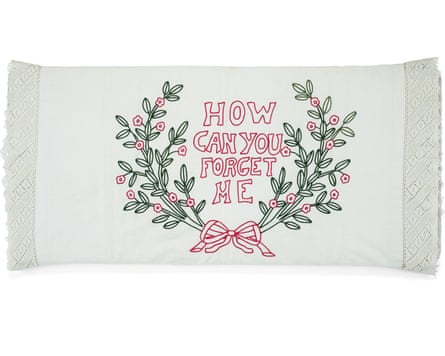
Among the items was a white pillowcase embroidered with the words “HOW CAN YOU FORGET ME” in red thread. Though small and decorative, it gestures toward a larger meaning: a reminder of the lives these migrants left behind and a marker of the new ones they were forging across the Pacific. The same pillowcase is also the namesake of the exhibition How Can You Forget Me: Filipino American Stories, currently on view at the Washington DC’s National Museum of American History.
Presented by the Smithsonian Asian Pacific American Center, the exhibition displays the contents of these steamer trunks, offering an intimate look into the lives, communities, and activism of the so-called Manong Generation. The term manong means “older brother” in Ilocano, a Philippine language, and here it affectionately refers to the early wave of laborers who settled in California and Hawaii. Made up primarily of young, single men, these laborers had left their families and hometowns to work in agricultural fields in the US, which at the time held imperial control over the Philippines.
On the surface, the exhibition might seem to be about labor history or American agriculture. At its core, however, it is about people and community. “The goal is to have visitors not only see fragments of these migrants’ lives but their full humanity as well,” says Sam Vong, the exhibition’s curator. “The previous stories – because they were farm workers – have focused on them being economic subjects rather than people in all their complexities.” That fullness is also reflected in the portrayal of the community they built. “This cohort created a very vibrant community in Stockton, and it became an important hub for future generations of Filipinos who came to the US.”
Through its layout, the exhibition traces the settlement of the manongs, beginning with the steamer trunks that unexpectedly became time capsules of their lives. “I wanted to take the visitors through a literal and metaphorical unpacking of the trunks,” Vong explains. And as the show unfolds, it presents visual and material evidence of their backbreaking agricultural labor, their advocacy for farm workers’ rights, and their efforts to make America their home.
Additional objects on loan bring further nuance to the original contents of the trunks. Notably, a beauty pageant dress used for fundraising events reveals how – even though the migrants were mostly men – women played an invaluable role in supporting and uplifting the community.
When Vong first opened the trunks, which had been preserved for decades by the Legionarios del Trabajo, a Filipino American fraternal organization, he expected to find artifacts such as agricultural tools. Instead, he discovered items such as three-piece suits and Stetson hats, which seem at odds with the lives of meagerly paid farm workers. “[It tells] us that these men understood the politics of presentation. They saved their money in order to look respectable in a time where they’re seen as people who were just made to farm.”
These men also faced the realities of being Filipino during a period of racial exclusion. In California, anti-miscegenation laws prohibited marriage between whites and Filipinos, while the California Alien Land Law of 1913 barred many Asian immigrants from owning land.
Despite the difficulties, these young men made great efforts to maintain their sense of dignity, respectability and masculinity. They took highly stylized studio photographs of themselves with their three-piece suits prominently on display. “They wanted to send these as postcards to their families back home,” Vong says. “They wanted to present themselves as successful.”
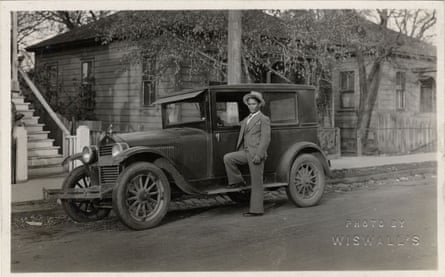
Their careful self-fashioning was also a way for them to look and feel more American. “It became a kind of visual culture, a way for them to engage with American culture and the mass consumerism that they encountered,” Vong adds. “There’s even some studio shots where they’re smoking cigarettes, trying to emulate the movie stars they see on the big screen.”
It is not lost on Vong that this migration-centered narrative is being exhibited at a particularly volatile moment. Although immigration has long been politically fraught, current debates around national identity, border policy, and mass deportations have brought that tension into the forefront. Over the past year, the Smithsonian has faced sustained public pressure from the White House. Notably, in March 2025, the Trump administration issued executive order 14253, stating, in part, that the Smithsonian Institution has “come under the influence of a divisive, race-centered ideology”.
Perhaps guided by his training as a historian, Vong maintains that these narratives still need to be told fully, regardless of the political climate. “The executive order has not shaped the way I tell this story, which is a story of people trying to achieve the American Dream.”
Rather than an obstacle, he appears to see the current moment as more of an opportunity, one in which he can use exhibitions to explain complex ideas like colonialism or imperialism without having to use the terms themselves. As he notes, this makes history more accessible and helps a broader audience engage with it.
In the end, it seems that the thoughtful championing of these stories has paid off. Their reception, particularly among descendants of immigrants, has been especially positive. Many visitors gravitate to the steamer trunks and recall the objects their own families brought with them to the US.
“I love responses like that. Because when people are engaged, when they connect to the objects and stories in the exhibition, they feel inspired to become their own historians.”
-
How Can You Forget Me: Filipino American Stories is at the National Museum of American History in Washington DC, until 28 November 2027