3 months ago
79
3 months ago
79
I don’t know why this classic French dessert isn’t more popular online, given how pleasant it is to watch a softly set custard jiggling seductively on screen, or to admire the way the light bounces off its glossy, caramel top. Worse still, it’s also increasingly hard to find on menus, too. Well, you know what they say: if you want something done well, do it yourself.
Prep 15 min
Cook 50 min
Cool 4 hr+
Makes 6
For the custard
Soft butter, or neutral oil (eg, sunflower, vegetable or groundnut), for greasing
500ml whole milk (see step 2)
1 vanilla pod, or 1 tsp vanilla extract
2 whole eggs
100g caster sugar
4 egg yolks
For the caramel
60g caster sugar
40g soft dark brown sugar (see step 3)
1 pinch salt
1 Get all your kit ready
Lightly grease six dariole moulds, small pudding bowls or smooth-sided ramekins.
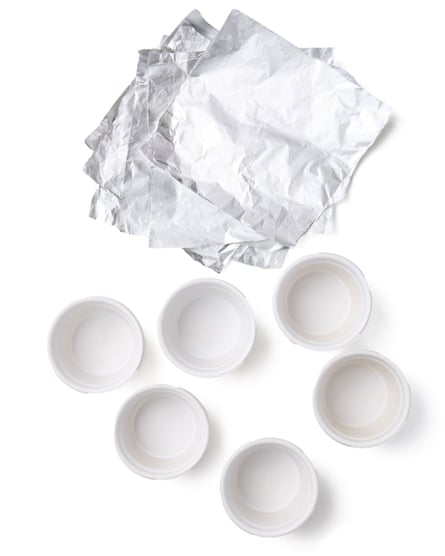
Arrange these on a baking tray or shallow tin, preferably one just large enough to hold them all without too much room around the edge, and put it within easy reach of the hob. Cut out six pieces of tinfoil that are large enough to fit over the top of each pot later.
2 Infuse the milk
Pour the milk into a small pan – you could, of course, use semi-skimmed, but I’d recommend whole milk, especially if you’re buying it specially for this.
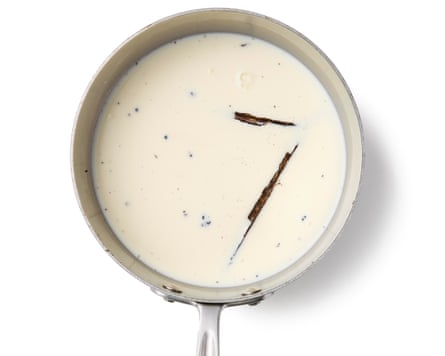
Slit the vanilla pod down its length and scrape the seeds into the milk (or stir in the extract). Add the empty pod, bring to a simmer, cover, take off the heat and leave to infuse while you make the caramel.
3 Start on the caramel
Mix the sugars and salt for the caramel in a smallish, deep saucepan, and preferably one that’s light in colour so you can better see the sugar caramelising (note that, if you prefer, you can just use 100g caster sugar, which will be easier to judge when it’s ready, but I love the rich, treacly flavour of dark brown sugar).
4 Reduce to a syrup
Have a small heatproof plate ready by the hob. Put the sugar pan on a fairly low heat, so the sugars melt into a rich, glossy, brown syrup – if it blackens, or begins to smell acrid, it’s gone too far and you’ll need to begin again, so watch it like a hawk.
5 Pour the caramel into moulds
Once you suspect the syrup is ready, take it off the heat and put a small blob on the plate – it should set almost immediately (if it doesn’t, put the caramel pan back on the heat).
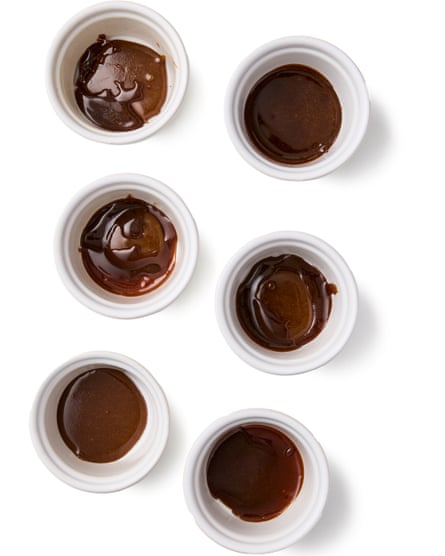
Working quickly before the syrup in the pan hardens, divide it between the six ramekins, swirling so the bases are completely covered.
6 Mix the whole eggs, egg yolks and sugar
Crack the whole eggs into a heatproof bowl, then add the sugar and yolks (freeze the whites for use in meringues, mousses, marshmallows or cocktails, or in an omelette, or feed them to the dog).

Beat to combine until you can no longer see any streaks of yolk or white, but without incorporating too much air.
7 Finish the custard
Lift the vanilla pod out of the milk (don’t chuck it, though; instead, wash and dry it well later, then put it in a jar of sugar to perfume it), then slowly pour the infused milk into the egg bowl, stirring constantly. Leave to settle for at least 15 minutes, during which time the caramel in the moulds should set. Meanwhile, heat the oven to 150C (130C fan)/300F/gas 2 and boil the kettle.
8 Fill the moulds
Skim any foam off the top of the custard, then divide the custard evenly between the ramekins, ideally pouring it through a sieve to catch any bits of shell or stringy egg white.
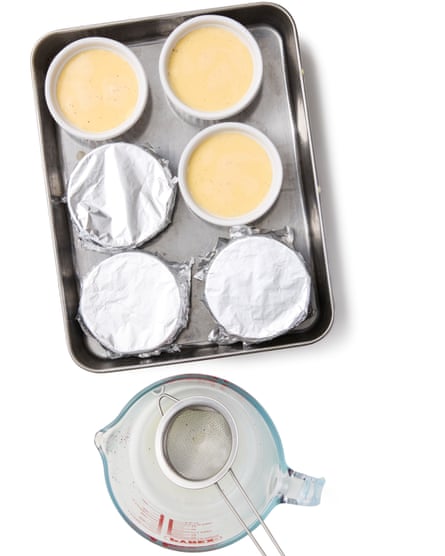
Cover each mould tightly with a piece of the foil, then pour enough hot water from the kettle into the tray to come two-thirds of the way up the sides of the ramekins.
9 Bake, cool and serve
Very carefully transfer the tray to the oven, bake for 15 minutes, then remove the foil and bake for another 30-40 minutes, until just set but still slightly wobbly at the centre.
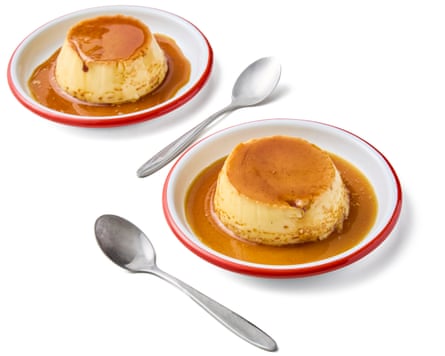
Lift the ramekins out of the tray, leave to cool, then refrigerate for four to 24 hours. To unmould, run a butter knife around the sides, invert on to plates and tap the tops sharply.