2 months ago
75
2 months ago
75
It is the summer of 2005, and we are staying on the sun-kissed shores of Busua, a coastal community in Ghana. The sand here is made of crushed pink shells. Annabel and I pick up handfuls and scrub our stained feet in the shallows. We’ve been wearing flip-flops for months, trailing through the rich red dust at the refugee settlement where we work. The Atlantic is rough and alive. Its tumbling motion and the wind are making me feel euphoric. Annabel is smiling to herself, too, and jumping in and out of waves.
“Mori,” she shouts, “it’s like being beaten up by an old friend!”
That afternoon in Ghana, her eyes are flashing turquoise. Her tan is deep, her nose freckly, her hair bleached at the ends with gold. We feel so free. So connected. To our purpose. To each other. We are lucky, privileged young women who want to make our precious lives count.
I didn’t know then I was storing up memories that would need to sustain me for the rest of my life. Because 12 months ago, Annabel was stabbed to death in her own living room by her partner, and the flame of my life went out.
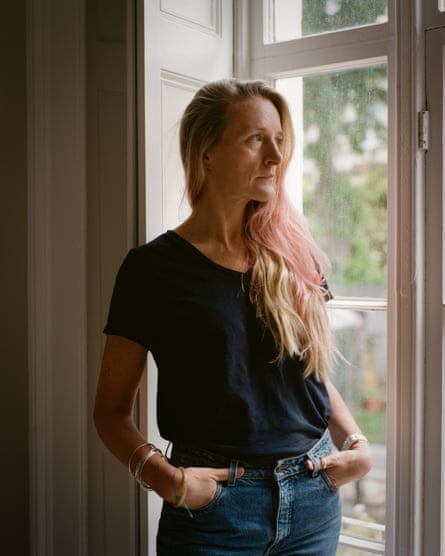
I wake up shocked every morning now; to drink afresh the distilled version of the moment I first heard the news. Losing someone you love to senseless violence is the raw edge of the human experience, that can sometimes feel too deep for everyday life to hold. She was my first love. My life partner since I was eight years old. We are so tangled up together that I feel like part of me has been erased. I used to call her Joybell, because she made me so cheerful. She always called me Mori. I can’t remember why. On the day she died, my husband said: “I feel like you’ve lost your spouse.”
The cold hard facts spin around my head all day, every day, in a desperate attempt to make sense of them. But answers are nowhere to be found. Not in the evening when I look up at the sky for the brightest star. Not in the freezing water of London’s Hampstead ladies’ pond, where I jump in every week to feel brave. Not in the dream I have when she leans into my ear and whispers over and over, incredulous: “He killed me, Mori. He actually killed me.”
I might one day be able to accept she’s gone. But I’ll never be able to accept the way it happened.
We met aged eight at a small private primary school, above a bookshop in Tufnell Park, north London. We were both a little different from the other alpha kids with successful parents. We were late developers, dyslexic, creative, tentative. We found each other and felt stronger as a unit.
We used to pull shiny pink ballet leotards over our woolly blue school tights and “ice skate” around her parents’ living room pretending to be Torvill and Dean. She always wanted to be Dean so she could lead. Fine by me – she always did anyway. Later on, we had a brilliant Dirty Dancing-style routine to Jennifer Rush’s The Power of Love. Now, I wish she had never heard that damn song. I don’t want her childish self to believe that her love is worth any form of sacrifice.
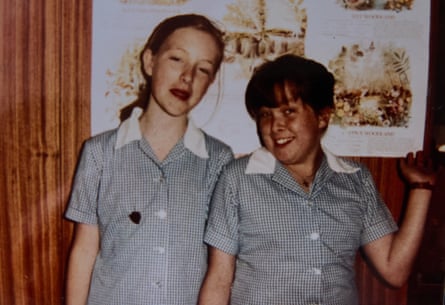
We became wild teenagers – staying out all night in the park, magic mushrooms, riding skateboards, boyfriends, dancing at the London club Whirl-Y-Gig, swimming in the Thames in nightdresses, jumping the fence and waking up at Glastonbury festival aged 15 with giant beads in our hair. It was a wild and beautiful young life. We were so lucky.
In our mid-20s in Ghana, we worked at the Buduburam refugee settlement with 42,000 people displaced by the Liberian war, with an African NGO called Children Better Way in partnership with the UNHCR, the UN refugee agency.
One weekend, all the other workers had gone away, so it was just us in what Annabel called the gingerbread house. We went to have our daily bucket bath in the lean-to cubicles at the back. It was so hot that day, and as we didn’t need to share the water, I suggested we get inside a water barrel each rather than just standing and scooping as we normally did. It felt so decadent and soothing. We chatted through the wooden slats about what was important to us and the sort of lives we hoped for.
We both wanted to be able to look back when we were old and say we had lived an unselfish, meaningful, love-filled life. To be creative and give something back. Joybell said it was wrong if people who really did care about other people did nothing about it. I remember thinking she had this clarity of purpose that was rare, especially in those so-called “selfish years – our 20s”.
On that Sunday morning, we went to a ramshackle church near our house. Everyone was in their best lappa-printed cloth, babies jiggled to singing and drums. We were so ashamed to be seen in our stained, old cotton shorts and T-shirts. Suddenly, all the women rose up and started dancing around the walls of the church and they grabbed our hands and made us join in. It aroused tears from us both. The women were so unjudgmental and welcoming to us, and grateful for all they had.
Our experience in Ghana shaped us. Years later, we would co-found the London-based MamaSuze community together – a grassroots organisation supporting women and mothers who are survivors of gender-based violence and displacement.
We both passionately believed access to the arts and creativity are integral to being human and can reach places that therapy can’t. We wanted to create something inclusive and holistic, which could support all aspects of women’s needs. Annabel poured everything into it. She was, by this point, an experienced community leader, radiating warmth, playfulness and compassion. Everyone who met her felt it and everyone who came to the community wanted to come back. We were well funded and took referrals from the main refugee charities. We were unique, offering expert-led, trauma-informed creative workshops to marginalised women, with the bonus of a well-staffed creche facility and travel money, so there were no barriers to attendance. Women who lived in extreme deprivation in asylum hotels and had no access to childcare could join every week and begin to build a life outside their daily struggles and trauma.
I used to meet Annabel before the group every Thursday at the coffee truck nearby. Flat white for her, latte for me. She always arrived first and would beam up at me as I approached. I loved watching her manoeuvre through life, making people smile, making people warm. We used to communicate silently. One look was all it took.
I had just arrived in Crete with some girlfriends for three days’ break from family life when it happened. Strolling the winding backstreets of Chania, pausing to capture photos of aged turquoise doors, of pink bougainvillea petals sprinkled on doormats, I didn’t know that she was begging for her life 2,000 miles away. I woke, restless, in the early hours and stumbled to the roof terrace to film the sunrise and the swifts dancing and shrieking with what seemed like joy. By then, she was already dead.
How could I let this happen to her? Why did I believe her when she told me it was all going to be OK? Why did I go to Greece and leave her behind?
I had shared my worst fear – that her partner could physically harm her – with my husband. “That won’t happen,” he said firmly, reassuring. Because Annabel and I worked closely with vulnerable women, we knew that leaving a relationship was statistically the most dangerous time. I was worried enough that I had raised it with her and we had discussed it on the phone. “I know that, Mori,” she said, tense and exasperated. But her voice was flat. She had said her guts were twisted with worry. I now think her body knew what her mind refused to accept: she was in danger.
The only real argument we had as adults was about him. I think it was 2013. We went out for dinner. I hadn’t seen her for a bit, as we lived in different neighbourhoods and I had baby twins. She told me he was moving into the house she owned. I said I thought she didn’t know him well enough, that they had to have more in common than just having a good time. She was upset with my bluntness and the evening never quite recovered. She was desperate to become a mother, and I think she felt time was running out.
After their first baby was born, she started expressing real doubts about his inability to love and show up as a parent, but she was always holding it together and they struggled on. She cherished her two children. He kept the minimum bases covered: he worked consistently as an electrician, was meticulously tidy, did his own washing, and liked cooking for the family. They had a group of shared local friends yet very different temperaments. But sometimes opposites can work.
He told her that his childhood had been filled with neglect and trauma. I think the compassionate side of her, which cared so deeply about people and started MamaSuze, was also the side that felt great empathy towards him and all he had been through. She wanted to help him heal. She hoped that by loving him, giving the kids all the things he had missed, that he might flourish and the bond between them might just keep growing. During one of the last conversations we had about him, she castigated her younger self for her naivety.
He killed her on a Monday evening. He had been away partying all weekend with a group of guys in Barcelona. He knew their relationship was in dire straits – a week before, she’d told him they should separate, and he had seemed to agree. She messaged me saying she planned to avoid him all day and not bring up their relationship until he got over the hangover and was back at work. That morning, she cycled to a meeting I had set up about an Afghan women’s project we were planning. Her brother lived on the same street and she decided to work on her laptop at his kitchen table.
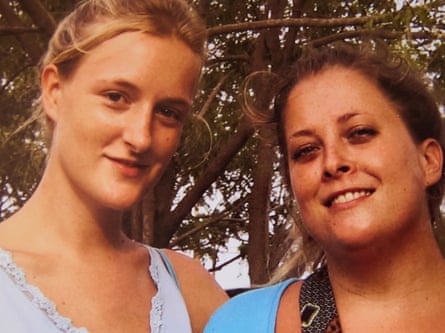
She pottered-off to pick up her kids from after-school club and then went home. I’ve heard that they were arguing. She put their children to bed and he wanted to talk. He wanted her to sell the house and give him half. She planned to help him financially, but she did not want to move and uproot the children. It ended with him punching her repeatedly in the face and trying to strangle her. She screamed, the neighbours heard it. He then left her injured in the sitting room and went to the kitchen to get a knife from the drawer. The rest doesn’t bear description.
When the police and ambulance arrived in the early hours of Tuesday morning, they found her on her sitting room floor where she had lain dead for hours. He had attempted to kill himself with a knife and then tried to spark a gas explosion. Eventually he succeeded.
Her pretty bay windows had blown out, the white shutters in splinters on the pavement. The sound of the explosion was so loud it woke up the whole street, including Annabel’s brother and his family. Her children had run away to a friend’s house nearby.
I went to her house a few days later. As we pulled up outside I had an out-of-body experience – watching myself struck dumb by the sight of her lovely home in that state of devastation. A massive lump formed in my throat that I could feel for six weeks afterwards. I knew I wanted to react in my truest emotional form – to exorcise it, not be poleaxed in shock. It felt performative, but important. On the drive home, I did some anguished screaming and shouting, followed by much heartbroken weeping. I can’t remember if it made me feel any better. But I’m pleased I did it.
I must be very firm about not blaming myself. I know it’s not my fault, and yet … of course, I could have done more. The truth is, I always felt I was treading a line. I was honest with her, always, but I also didn’t want to appear too harsh or judgmental. I wanted her to keep talking to me. I didn’t want her to be isolated. I used to repeat: “I don’t know what you are waiting for – there is never going to be a good time to leave him.” These words will echo around my head for ever. I remember saying to her a month or so before the end: “I would never, ever let a man speak to me like that.” Did she finally stand up to him, with my words ringing in her ears? Is that why he killed her? My head knows ruminating on these words is pointless now, but my heart can’t forget.
Friends tell me they had no idea how awful her life was. This makes me so upset, because it really wasn’t. She loved her life and she lived it so well. My mum used to say she had the happy gene. This was the woman who had hosted a wonderful birthday buffet party not two months earlier, when everyone had sat in the sunny garden and worn a silly hat. The girl who had once stood on the table to make an impromptu speech at her 18th birthday dinner and fallen off, to be caught by adoring boys. Who was fascinated by history and art, and was beginning to get into gardening. Who loved live music and people, and had a multitude of friends. She applied the same energy to her working life, cycling all over London to back-to-back meetings, writing excellent funding applications into the night, making meaningful partnerships and connections. She was effervescent. She was determined. She was powerful. She was not a victim.
Yes, her relationship with him was deteriorating. Yes, there was stonewalling, coldness, isolation, cruelty. But with him, the violence had not been physical but emotional. It resided in the silences, the contemptuous remarks, the degrees of separation between them and the void that grew as she realised who he really was. The loss of control over her that he felt when she said she was leaving him is, we believe, one of the reasons he killed her.
But she was beginning the process of flourishing in deep and profound ways. She was becoming more discerning and making bold steps forward, the first of which was asking him to move out. I was feeling so proud of her, so excited about the next stage. We had arranged a summer holiday to France, so my girls and I could be with her and her kids. In my birthday card she had written: “Here’s to embracing even more of ourselves and each other, always.” She wasn’t waiting to be rescued. She was rescuing herself.
I found a letter she had written to him that was never sent. It was so kind, so measured, so resigned, yet so forgiving. This was who she was – someone who was inherently generous and moral, who poured all her hopes into life, believing things could always be better than they were.
Yet her nature was exploited and she was destroyed for it.
Day after day, I receive messages and phone calls from the women Annabel supported throughout her career. They are heartbroken at her death. She wasn’t just a community leader – she was a lifeline for isolated women who needed support, who needed someone to believe in them.
Her father went alone to her derelict home. This gentle, deeply moral man, sorted through her special things that survived the fire, bringing them back to his house, box by box. Her African paintings. Her collection of art books. Her wooden jewellery boxes and trinkets. Her makeup. Her colourful knitwear. The children’s toys.
Her kids have lost both parents and their home. The incredible outpouring of love for them has been a tonic, a testament to the quality of her relationships with people. But still the ripples of destruction spread outward, wounding everyone who loved her. Her life was a universe, now shattered into a thousand shards.
Because she was murdered by the man she lived with, it felt like an attack on all of us at MamaSuze. On the safe space for women we’d created together, on everything we’d spent years building. I will never forget the psychotherapist we work with describing it as “an attack from within”. I now think Annabel’s role as a revered women’s group leader exacerbated her partner’s desire to control and destroy her. He could not stand how loved and celebrated she was. He could not stand her independence. Her success. Her lack of reliance on him. He hated women that he could not dominate.
Annabel’s death left me reeling, not just for myself but for the women in our group, many of whom were already survivors of male violence. How could I continue providing a supportive space for vulnerable women who effectively have been retraumatised by our organisation, when I could barely stand upright myself? How could I keep MamaSuze alive when its co-founder was dead?
The answer, I’m learning, is in tentative, curious steps forward and lots of time to reflect. The continuity of coming back together is an act of resistance. The women in the group all want to support me and Annabel’s mother, who comes to the group every week. It has felt like a role reversal, but we now have more in common than ever before. One woman from Afghanistan told me that she was used to stories like this from her homeland but never imagined it could happen in London. Most of the women knew of women who had been murdered in their countries. We are facing the reality that there are no safe spaces. It has been a struggle at times to keep the upbeat essence of the organisation and not let it deteriorate into a bereavement support group. We have found that getting physical and faking it a little helps. We sing, we dance, we laugh, we do clowning workshops. We make bright colourful art. Our joy is visceral and resides alongside our tears.
The irony of supporting traumatised women and then being deeply traumatised myself is not lost on me. I recognise now that, before her death, the capacity I had for holding the space for women came, in part, from my privilege and psychological strength at not having really suffered.
I will never forgive Annabel’s murderer. But I will also not hold on to the hate he perpetrated and let it destroy me, or worse, spread. His contempt for women and lack of respect for her right to a life, for her children’s right to have a mother, for her parents’ right to have their daughter, for all of us who loved her – is unfathomable. But he wasn’t born this way. Yes, he suffered abuse as a child, but he could have sought help and thought about the impact his life could make. He was emboldened by society and his peers. Of course, there are men who try hard not to let sexism or misogyny go unchecked. But it also seems there are plenty of men without the courage or emotional intelligence to question what surrounds them – to stand up for women in tiny, everyday moments.
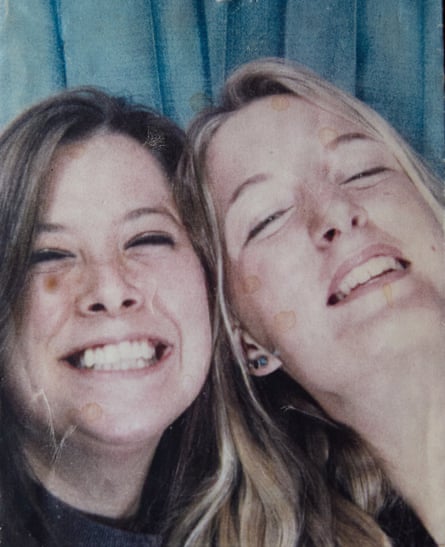
Men and boys’ lives also suffer greatly when women and girls are abused. Women can’t do this alone. What can we change in our society so that some men don’t feel so entitled, so arrogant and so embittered that they kill us? How can men be encouraged to explore these deep-rooted problems, yet still be allowed to feel like men? Annabel’s brother-in-law has started a men’s group. Her little brother sings his heart out in a choir set up for men affected by her death. More of this would be good.
Femicide affects women from all social spheres, across all definitions. Where is the collective outrage? These atrocities happen every week in the UK. In the month when it happened to us – June 2025 – 11 other women were killed by men around the country. A total of 113 women were killed by men in 2025. Violence against women and girls is now accelerating. We can’t change anything if we don’t acknowledge there’s a cultural problem first.
His denial of what he so evidently did wasn’t just cowardly, it was callous – dragging us through the emotional warfare of a long and costly trial. In court, Annabel’s younger sister and I scoured his face for signs of remorse, for even a quiver of guilt about what he had done. But we couldn’t even sense regret. He seemed to have swallowed his own narrative that he was the victim and she was the perpetrator.
Court 1 at Snaresbrook is surprisingly intimate. When, giving evidence, he referred to me in relation to something Annabel had said, the sound of my name in his mouth made me shudder – but it really wasn’t how I thought it would be. For months leading up to the trial, I thought I would feel rage when I saw him; I wanted to see his face and stare him down. But on seeing him I just felt such sadness. There wasn’t even any satisfaction in watching him squirm under cross examination. Just near pity. He must truly hate himself, to do what he did.
On the way to court to wait for the verdict, I was panicking. I counted 12 people in my train carriage and thought about how random it was that a collection of the same number of strangers on the jury would decide the outcome of something that meant so much to us.
I started to prepare myself for the worst, as a not-guilty verdict would shift my world on its axis and I felt I would never have faith in humanity again. When the jury came in after only a few hours’ deliberation and the foreman declared him guilty, he looked him straight in the face. We all exhaled collectively in the public gallery and wept. But it was an empty win. All I felt was, “OK, that’s over, so can we have her back now, please?”
Compared with many of the women at MamaSuze, I feel lucky to live in a country where the criminal justice system can crank into action and many crimes against women are not left unpunished. Our justice system isn’t perfect, of course, but it was there for us when we needed it, and it worked. However, I do wonder if the tariff for domestic homicides needs to be increased. He was given life with a minimum term of 23 years because he killed her at home. That would have been much longer had he killed her in the street.
What I find most agonising, when I think about that night, is that I can’t tell Annabel that everything has worked out OK. As she died, she must have felt such anguish for her children and what was going to happen to them. Sometimes, I allow myself to imagine that I can reach her, hold her in my arms in that moment, and soothe her, telling her everything’s going to be all right: because violence reverberates, but love does much more; because her wonderful kids live on, her blood pumping in their veins; that they adore their new family and have a good new life; that they still make us laugh and are as entertaining and warm as she was; that her parents and siblings are coping as best they can and trying to rebuild their lives; that MamaSuze is going strong and the women who come still feel supported and joyful. So nothing she did, nothing she was, nothing she created, was ever or will ever be wasted. She led a meaningful life full of love and nobody can ever take that truth away.
I’m not a religious person, but I feel Annabel’s energy woven into the fabric of this beautiful universe: in the warmth she added to rooms; in the chemical bonds of every breath she exhaled; in the memory-forged tapestries of every brain she touched. Energy persists. Nothing is lost, only transformed. Am I transforming, too? Into what? I must accept I don’t know yet.
I gaze up at the full moon rising near my house. I’ve escaped my teenagers and climbed up the hill to lie on a bench. The dog lies guarding me nearby. Suddenly, I am back in Camden Town, where I grew up, outside the tube station, circa 1998. I’m waiting in the snow to meet her. The ground is sparkling. A Rasta wearing a big, brown crocheted hat is banging a djembe.
“You are waiting for the moon lady?” he asks me.
“Yep,” I say. “I am.”
And then she comes, sweeping out of the station, in a long patchwork skirt, her trademark black eye makeup twinkling, dangly earrings, lustrous hair, radiant, moonlike face. Total Joybell.
“Here she is,” he says. “Moon Lady, meet Earth Girl.”
We both laugh with him. It’s just a Camden Town moment. But now, years later, perhaps it makes sense.
If you or someone you know is experiencing domestic violence, call the UK national helpline on 0808 2000 247, or visit womensaid.org.uk. In the US, the domestic violence hotline is 1-800-799-SAFE (7233). In Australia, the national family violence counselling service is on 1800 737 732. Other international helplines may be found via befrienders.org.
Catherine Milne is the co-founder of MamaSuze, a community organisation supporting women who are survivors of forced displacement and gender-based violence.