3 months ago
95
3 months ago
95
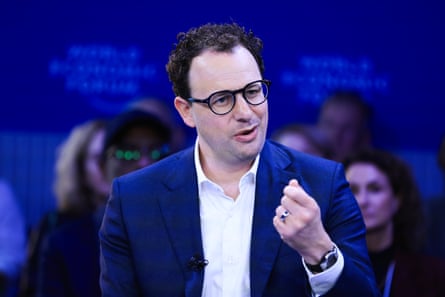
Canberra rolled out the red carpet this week to one of the AI overlords whose technology is driving the world down the path of creative destruction. Anthropic’s CEO Dario Amodei, the putative “good” tech oligarch, was spinning his version of a machine-driven future with the elan of a man who has untangled the mysteries of the universe – or at least built a predictive text model that can scrape the output of humanity and spit out compelling summaries of our collective consciousness.
He regaled the prime minister, assorted elected officials and the tech sector’s glitterati with his pitch for good AI that would transform the economy, before becoming the first to sign up to the government’s new datacentre principles, conveniently released just a week earlier. It was compelling shill and, to be fair, Amodei is not the worst of the gods. He created Anthropic after leaving Open AI when the company dispensed with its not-for-profit, “safety first” mission. He regularly shares thoughtful essays on the path of technology and has been open about his fears for the impact of his own products. He broke with the Trump administration over the limits to how his technology would be used to spy on citizens and enable autonomous weapons, turning himself into an enemy of the state.
But as Toby Walsh, a scientia professor of artificial intelligence at the University of New South Wales, reminds me: there is no “good AI” because AI is both good and bad. It can unlock new connections and knowledge by synthesising huge amounts of information, but it depends on the extraction of huge amounts of energy to create tools that replace human workers with machines. Like other models, Anthropic has been trained on the stolen work of creators. Indeed the company settled a $US1.5bn claim by authors in the US. Amodei has blithely predicted his technology will see up to half of all white-collar entry level jobs destroyed, yet carries on regardless.
It’s been instructive to watch the reception Amodei has received from our government, which has proclaimed itself to be all in on AI and its siren song of a fast track to productivity, albeit based on industry-sponsored modelling. This despite the concerns of its core union constituents, the righteous outrage of artists and the well founded concerns of parents. As the government wrestles with these contradictions, the idea of a “progressive AI” appears manna from heaven. The memorandum of understanding struck with Anthropic ticks all the right boxes from “tracking frontier AI progress and promoting safety” to “supporting a vibrant domestic ecosystem”.
But watching from the cheap seats, I can’t help asking myself: is this really a progressive vision of progress?
I have always seen myself as progressive. My dad was a river gauger and honorary union leader, my first political memory is of the Dismissal, I came of age at the ascension of Bob Hawke and found my way into journalism and then the back rooms of progressive politics where I have spent the last three decades. I’ve had the privilege of working across most parts of the movement, unions, political parties, climate change, First Nations and disability. I’ve struggled to find a cause that didn’t excite my passion for progress.
But while I wore the T-shirts, “progressive” was not a term that I spent the intellectual energy to define. I was more driven by the conviction that with enough momentum the world was moving to a fairer, more just future. This reflects Hegel’s path to mutual recognition that would see society settle in a state of balance; as Martin Luther King Jr famously observed: “The arc of the moral universe is long, but it bends towards justice.” So long as we keep moving, we would get there.
I believed social democratic government would be the driver of these advances, responding to the pressure of mass movements for positive change to laws, regulation and funding that would reflect this heightened consciousness. Progressive governments would redistribute wealth, fund the safety net, tax people based on their capacity to pay. Where the private sector could not be trusted to deliver essential services, the government would act in our interest. Where the nation required moral leadership, government would reflect our unique values.
Three things have happened in recent years that make me question what I always regarded as self-evident. First, progressive cultural movements got stuck in their own bubbles, at the same time progressive economics got seduced by the right; and then technology shoved its vision of progress down our throats. It is these waves of progress that are driving the populist movements that threaten to upturn liberal democracy both globally and here at home.
The rise of One Nation has been turbo-charged by a backlash against so-called identity politics. Their “Super Progressive Movie” shows that they see the cultural agenda of the left as its achilles heel. Progressives have long accepted as an act of faith that racism and sexism were sins and that systemic injustice should be resisted as part of our collective expression of humanity. But as the breadth of causes has expanded, these movements have been portrayed by their opponents as exclusionary and moralistic, and seen as undermining the collective at the expense of the individual.
The broader consequence of a politics dominated by individual identity is that the notion of class has been erased. As union density declined in the last quarter of the 20th century, working-class battlers became disenfranchised from the progressive movements which they had built. Working people established a political party, won power, drove an Australian social contract that shared the nation’s economic resources and provided stable industry. Embedded in this settlement was a trade-off between growing and distributing the pie, but with industry protection and centralised industrial system it seemed possible for Australian workers to have their cake and eat it too.
The conclusion of the cold war summoned Francis Fukuyama’s The End of History, where the world would be united in a system of global trade and cooperation underpinned by an international rules-based order. In Australia, Paul Keating attempted to channel these global winds of change, signing up to the global currency markets, the removal of tariffs and the privatisation of government services. And despite the pain of the early 1990s recession and the human cost of whole industries being obliterated, the greater national wealth delivered on Robert Reich’s promise in The Work of Nations where knowledge work would grow better and smarter jobs. Economic progress was still progressive.

But the new millennium has seen the concentration of that wealth, both between nations and within them, that globalisation unleashed has accelerated, while trust in the system has collapsed. The University of Sydney’s Terry Flew identifies 2007 as an inflection point, the bailout of banks that were deemed too big to fail in the wake of the financial crisis they engineered proved the global financial system ran on power rather than justice. The rise of corporate tech behemoths has resulted in an intensification of these trends, with the global embrace of a technology built on the idea of centralised power.
While the internet seemed like a free resource that would drive a more liberal world, the business models built around the extraction of our attention has taken us on a journey from hope to despair. From “Yes we can” to “Drain the swamp”.
Out of this broken model has emerged a new accelerant to the concentration of wealth and power. It is in this context I feel myself questioning my instinctive progressivism. A business model based on user surveillance and manipulation, structured to replace human thought with machine outputs, powered by reckless commitment to move fast and break things is not the path to mutual recognition Hegel imagined, nor the march to justice MLK invoked.
The risk for the government is that if AI does what the sticker says then it will displace so many jobs and some entire industries; it will fill our public spaces with cultural slop; it will be used to undermine faith in democracy and expose not just children but anyone looking for companionship to harm. And if this happens and a populist party seizes on this as further proof that the system has stopped working for ordinary people, the government will have no one to blame but itself.
While our leaders are itching to flick the switch on datacentres, the doyens of progressive America, Bernie Sanders and Alexandria Ocasio-Cortez, are calling for a moratorium. In a very public education process, Sanders has spent the past few months interviewing everyone from the Nobel prize winner Geoffrey Hinton to a robotic version of Anthropic’s Claude, doing the hard thinking that too many others have dodged. He is not just canvassing the clear and present dangers but also asking the more fundamental questions about where this is taking us. Why are we being told we need to move so fast? Why is a technology that is so rapacious and exploitative so inevitable? Is this really the road we want to be on?
Because here’s the truth: progress has always been conditional. The direction of change, the velocity of change, the distribution of the costs and benefits of change all determine its final impact. If I am still progressive, it’s like the Luddites were progressives, actively challenging the inevitability of technology’s exploitative trajectory, breaking machines and threatening the power structures that accelerated their ascent. Rather than non-binding MOUs with tech lords, the only viable course I see right now is to do everything we can to slow the train down by building the guardrails and establishing the red lines that are our only tools in pushing back. At least that would be progress.