2 months ago
50
2 months ago
50
Looked at one way, the modern longevity narrative is an inspirational story of human scientific and social progress. Looked at another you could say that we are now condemned to longevity – our own and other people’s. It’s placing a massive economic, social and psychological burden on us as individuals and as a society.
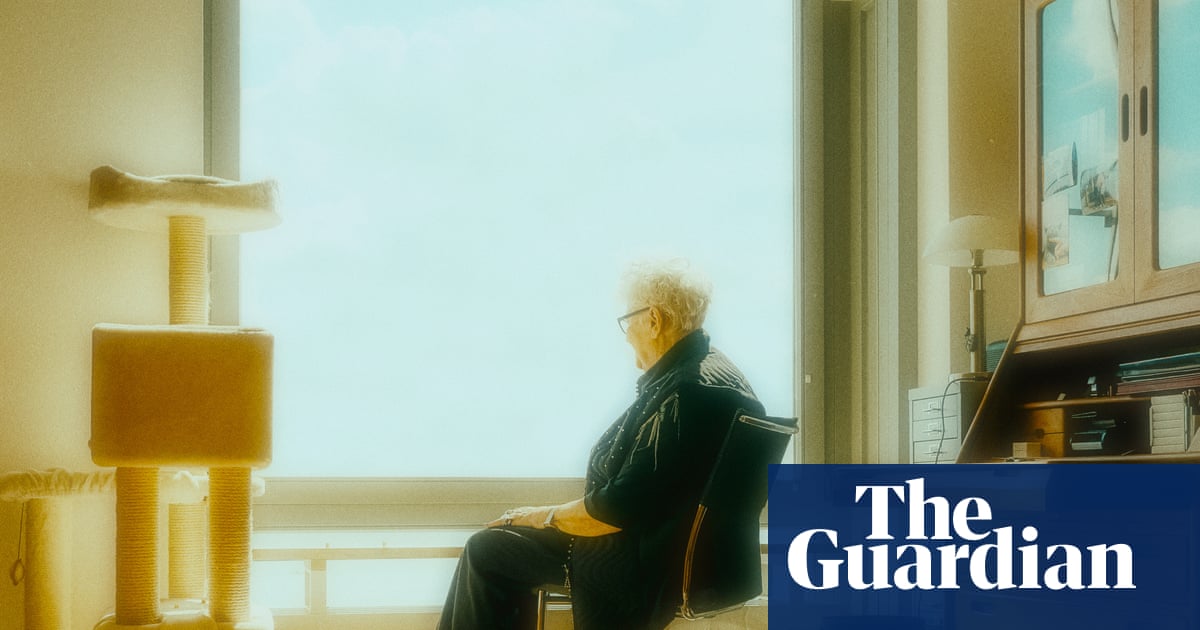
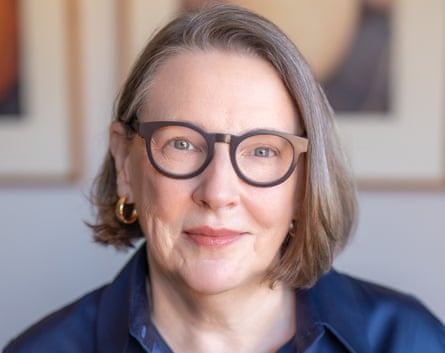
There are now so many old people that new categories of demographic definition have been created to describe them. Those considered the “young old” are aged between 55 and 65. That’s me: At 63 years of age, I’m a young old. By all the rules of human history, I should have been dead for years. Instead, when I look 20 years into the future, I foresee an even older me who will need to plan for the outside possibility that I may have another 20 years to go. This is not necessarily, in my view, a glorious prospect.
Sometimes I see myself becoming one of the ancient crones at my own family reunion – the one wearing the garish makeup and the outdated scarf – telling the same self-serving stories of her misspent youth that she has been telling everyone for 60 years. Boring not one, not two, but three younger generations: a multi-generational bore.
But I need to be honest here and admit that this scenario is still rather too optimistic, because I am probably imagining myself as a crone who can still get around, put on lipstick and talk too much. The fact is people can be kept alive for many years in a state of severe infirmity. I’d rather that wasn’t me.
For those in or near retirement right now, advances in medical science and public health mean that we are better educated about the health risks we face and certainly better equipped to protect ourselves from those risks. But whether or not we protect our good health, there will still be all those medical interventions to keep us alive in poor health when the time comes.
It’s bad enough for those enduring it themselves, but it’s even harder for others. We can see this unfolding in domestic tragedies right now. Lives and dreams are curtailed as the children of long-lived elders shoulder the emotional and physical burden of their seemingly time-unlimited duty to their parents, even as they juggle various other duties, including jobs, spouses and children. And, in the process, they now accrue the scars of sad, stressful and sometimes horrific experiences.
It is mostly women who shoulder the caring burden. As Atul Gawande writes in Being Mortal, having “at least one daughter seems to be crucial to the amount of help you will receive” in old age. Haider Warraich backs this up in Modern Death, noting “the overwhelming majority of caregivers are female and 85% of them are related to the patient”.
I see so many of them: mature women who feel they can’t travel, can’t move cities or countries, can’t even slow down and grow old themselves, because of their prolonged duties to their parents. More than a few of them don’t know that they are subconsciously waiting until their mother or father dies before they can finally come out or quit their job or get divorced or even just dye their hair pink. Their parents will need to die before they can fully live.
What I want to say to women feeling guiltily resentful about their onerous daughterly duties is that this is a new phenomenon. People wrongly imagine (or are encouraged to believe) that their own mothers and grandmothers provided the same level of care for their parents as they declined, living on for many years in increasing frailty before they died.
But that’s not quite true. In the past, older people tended to be quite well until they fell ill, in which case they either recovered or died: quickly. They endured a sad but relatively brief decline, not the 12 long years of end-of-life debility confronted by elderly people and their carers today.
My mum and dad did not have their parents live with them, nor were they by their parents’ side at their deathbeds. Nanna was still running her farm near Coonabarabran in central New South Wales when she took ill, I think in her early 70s. She came down to the Royal Prince Alfred hospital in Sydney for an operation and died there three weeks later, possibly of a heart attack brought on by complications after surgery. My paternal English grandfather, a pipe smoker and survivor of two world wars, “dropped dead” – as they once used to – of a heart attack. I recall no evidence of guilt or self-torture about these events, just pragmatic acceptance that this was how life and death unfolded.
My dad, Michael, worked as a butcher until he was 70 years old. He was always kindly, vague, modest and lovable. When he turned 85, his personality started to change. By then he’d been treated for, and survived, several bouts of cancer, a stroke, a heart attack, water on the brain, a broken pelvis with a bout of delirium caused by the morphine, a few more falls, life-threatening sepsis and encroaching peripheral neuropathy that turned his feet and hands into cold, clawed, semi-useless appendages.
I loved Dad and he loved me, so perhaps that is why I do not feel ashamed to say that I was relieved when he died. Is it wrong to say this? Dad’s final years were difficult and traumatic for our family as well as genuinely awful for him. When Mum died a few years later, in 2022, it was far less difficult for all of us because she was calm and ready. At peace, as she told me. She gave me a smile of pure love as she lay dying.
What Mum had hated most was the feeling of being dependent, which she certainly was, even when living out her last three years in a perfectly good aged care facility. She needed me and my brother to act as her interpreters, advocates and companions, to take her and Dad to medical appointments, to help them get care for their teeth and ears and feet.
Those in aged care without someone close by to champion their interests and love them as individuals are certainly more vulnerable and, inevitably, lonely.
It is a common human theme that good parents can never really rest for worrying about their children. But it seems to me that a reciprocal burden exists for good children. We are never entirely free from the psychic weight of our parents’ needs, love and ambitions for us in our youth, and increasingly we now find ourselves taking on guardian-style responsibilities for them during their prolonged old age.
I finally understood the accumulated heaviness of the burden I had carried about a year after my mother died. At 59, I was at last an orphan, which meant I could turn off my phone each night. I woke up one day with the most complete feeling of creative liberty and personhood I’d ever experienced. That feeling has not left me since.
I did my best to be a good child to my parents and fulfilled that role for, well, practically a lifetime. I was finally now free; free to write this. And I came to understand fully how hard it is for any child to realise the hopes and aspirations their parents have for them without, in some measure, knowingly or not, suppressing their own.
-
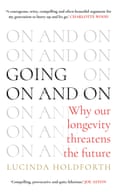
This is an edited extract from Going On and On: Why longevity threatens our future by Lucinda Holdforth, published by Simon & Schuster. Out on 31 March 2026