3 months ago
87
3 months ago
87
What does success look like for developers of online video games? In 2026, the answer could not be clearer: no one has a clue.
Consider Highguard, 2026’s first big flop. Signs were promising on its launch on 26 January, with a peak of 100,000 concurrent players on Steam – plus those enjoying the game on PlayStation and Xbox, which do not make player counts public. As a free-to-play game, the barrier to entry for Highguard was low. And thanks to a prime advertising placement at the end of December’s The Game Awards – a buzzy spot usually reserved for known hitmakers, not free-to-play upstarts – curiosity was high.
But Highguard’s implosion was swift. According to Bloomberg, 90% of the game’s players had abandoned it a week later. After a month, developer Wildlight Entertainment announced that it would end service on 12 March, after fewer than 50 days online. As you read this, it is already too late. Highguard is gone, and the 2 million players Wildlight says logged on to the game could not come back if they wanted to. Two million players. And yet this game is a flop.
Could things have gone differently? In hindsight, there were strategic errors. A refusal to do public play tests before release seemed like a miscalculation. And because Highguard’s developers borrowed liberally from several genres, the shooter had a compelling but complex structure, with multiple phases meant to give matches the ebb and flow of sport: this complexity could have been either tweaked or better introduced.
Yet none of these reasons sufficiently explain why the game didn’t even last two months. That explanation is simple: games are now investments that are meant to deliver immediate and staggering returns.
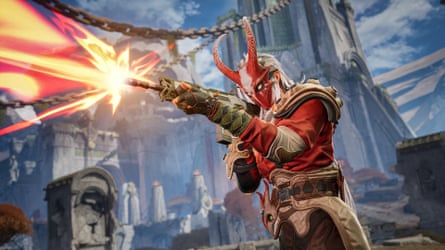
What Highguard really needed, like many other games, was time. Time for players to learn what it was, and time for Wildlight to identify what was working and what was not. Wildlight, however, was not given that time. A significant amount of the studio’s funding came from the Chinese conglomerate Tencent, the largest video game company in the world – something Wildlight did not initially disclose. The same Bloomberg postmortem on Highguard details how the cash infusion came with serious strings attached, and Highguard’s immediate and dramatic struggle to retain players led to its funding being swiftly pulled.
Live service games, meant to be played online in perpetuity while regularly charging players for ephemeral trinkets, are an unforgiving business for even the most talented studios. Executives like live-service games for their potential to provide endless revenue, wanting to emulate the success of genre juggernauts such as Fortnite. As for developers … well, it’s hard to say if developers like them at all. The online commentariat are overwhelmingly negative about this type of game, every available metric for their market share is scrutinised by armchair analysts ready to declare “dead game!”, and the players who do like what is on offer will quickly tear through whatever has been made, expecting a steady cadence of new content to keep them sated and coming back for more.
The mainstream video game industry is increasingly being run like a speculative market, rather than a business in search of customers. New potential forever-games are spun up with the expectation that they will become instant hits, and their window to perform is getting shorter all the time. No publisher has exhibited this attitude more than Sony, which notoriously greenlit a dozen live-service games earlier this decade only to cancel most of them before release, shuttering the studios assigned to them. In 2024, Concord, which lasted just two weeks, emerged from this haphazard strategy, and is still the nadir of the live-service mania.
Sony has had one live-service hit, however: Helldivers 2, which sold 20m and still has a healthy player base. And this month it released Marathon, Bungie’s sensational and stylish new shooter. Like Highguard, Marathon faced tremendous scepticism from the YouTuber/commenter set, particularly after a closed alpha trial run left influencers and critics underwhelmed. But unlike Highguard, the game has become a critical darling.

Bungie has spent the last dozen years maintaining Destiny, a trailblazing online shooter from which others in the live service space learned many lessons. This gives Marathon a huge leg-up over other live-service games, some of which have run on hope and hubris more than experience. Marathon is also part of a hot newish subgenre, the extraction shooter, which had its first breakout hit last year in Arc Raiders. There is also style to consider: Marathon’s art direction is harsh, neon, and unlike anything else on the market. It’s arresting in a way few big-budget games are.
Yet even with this promising outlook, the truth is that Marathon’s fate is about as certain as Highguard’s, because the existential threat facing it is the same: profit margins. There are numbers that Marathon must hit to survive, and we don’t know what they are. It is not a game, it is an investment, and returns are expected – will continue to be expected – for as long as the game’s servers remain live. Perhaps these expectations will be reasonable in the short term. Perhaps they will become outrageous next year, or the year after that. At any point, Bungie may have to endure further staff losses, compounding the talent lost since the studio fired 220 employees in 2024, making maintenance of this exciting new game more difficult.
In competitive video games such as Marathon and Highguard, there’s a metric called “time-to-kill”. It’s a term for how long a player should be able to sustain damage on average, before their character “dies” and they are out of the match. There’s a sweet spot that should be hit: you want the player to feel that their time-to-kill is long enough to react when they come under fire, but not so long that they are emboldened to be reckless. If time-to-kill is too short? That’s when it feels unfair. That’s when you start losing people.
At the internet’s rapid pace, it does not take long for a reputation to solidify, however unearned. The companies currently lighting money on fire in an attempt to hook players into endless loops of play and commerce are also communicating that they will not commit to anything. Damage is being inflicted on an unsustainable level. Why would anyone stick around? The time-to-kill is absolute murder.