3 months ago
72
3 months ago
72
Last week, Meta and YouTube were found liable for creating intentionally addictive products that affected the wellbeing of young social media users. The ruling has supercharged an already growing movement from governments and regulators to restrict or ban social media use for under-16s, as has been done in Australia, to protect children from potential harm.
But there is another way that about 85% of kids and teens congregate online – and that is through video games. It has been suggested that curbs on online gaming should be considered alongside social media restrictions in future legislation. There is some precedent: in 2021, China restricted young people’s online gaming time to one hour a day on weekends and holidays. But I have a lot of questions about how such curbs would work, and whether they should be attempted.
One argument in favour of restrictions is that some online games have proved to be potentially unsafe environments for children. If you are a parent, you will have heard of Roblox – and not just because it’s enormously popular. Roblox claims to have 381 million monthly users, most of whom are children. But it has made headlines because of several cases of grooming and child exploitation that took place on the platform. It’s also notorious for distasteful and age-inappropriate content.
Partly in response to this, Roblox has made a big song and dance about improving its child safety features. Voice chat is now restricted to verified accounts for users aged 13 and over, for instance. But if you have millions of children mixing online in a space that teens and adults are free to enter, can that ever be completely safe?
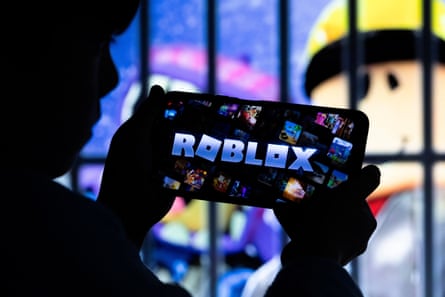
Not every video game has a significant online component. Most do not involve playing with other people. And this is one of the reasons why including video games in any proposed social media ban would be a regulatory nightmare. Roblox and Fortnite, you could argue, are platforms, like Instagram or YouTube: players can create their own games and content, and then they gather online to share it with others. But is Minecraft a platform? People create and share things in Minecraft, but although you can play it online, it has no centralised gathering place.
What about EA Sports FC (formerly known as Fifa)? It’s theoretically possible for children and adults to play matches against each other. How about World of Warcraft? Call of Duty has an 18 certificate (rated M in the US), but we all know that the online multiplayer lobbies are full of young teens – would that have to be included in a ban? What counts as a platform, and what is just a game? Would we need age-verified accounts for every individual product and service, with all the data-harvesting concerns that that entails? Every game would have to be considered on a case-by-case basis, which would make any blanket restriction extremely difficult to enforce – as China’s gaming restrictions have proved, young people will simply get into trouble attempting to circumvent it.
And banning teens from playing games online entirely would be a fundamentally terrible idea. Online games are vital social spaces for many millions of teens especially, who hang out with their friends in virtual places because we keep restricting them in the real world. England and Wales have lost more than two thirds of council-run youth centres since 2010, according to data from the union Unison. Video games are one of the few arenas left where teenagers can enjoy themselves without adult surveillance or criticism. Taking away Fortnite is not going to do anything to ease the adolescent mental health crisis.
This hints at the core problem with all this legislation: the internet is not homogeneous. Games, social media, Discord and YouTube are all online, and all completely different. One young person might derive tremendous benefit from finding an LGBTQ+ community on TikTok or make lifelong friends in their favourite streamer’s Twitch chat, while another gets stuck down a “thinspo” rabbithole or drawn into the manosphere. It is extremely difficult, perhaps impossible, to cancel out potential online harms without also cancelling out the benefits that these things have brought to young people. I suspect that the answer lies in trying to take back the internet from the manipulative, algorithmic, engagement-driven big tech companies that have colonised it, rather than banning young people from engaging with it.
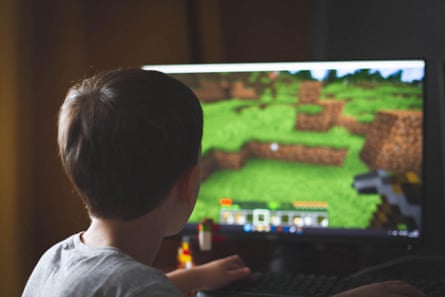
If you are a parent and you’re worried about your children’s safety while playing video games, the good news is that you have options. Everything nowadays has decent parental controls, from iPads to PlayStations to the Nintendo Switch. For younger children, you can turn off the chat and messaging features, set time limits, and ensure that they can’t play anything above the appropriate age rating. With older kids and teens, you could consider setting these features to “friends only” to ensure that they can’t interact with adult strangers online.
These are simple measures that can be taken to allow children to enjoy all of the creativity and fun that video games have to offer, while mitigating the safety concerns of parents and guardians. Such measures already exist. A ban would introduce no further benefit, and a lot of potential damage.