3 months ago
123
3 months ago
123
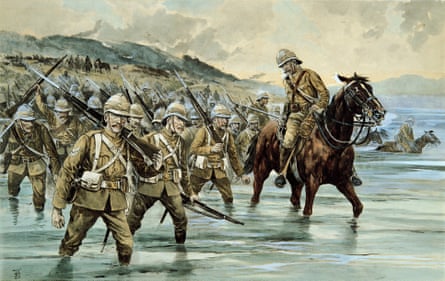
Nobody gave the Boers a prayer when the war in South Africa began in 1899. It was farmers ranged against the might of the British empire, and the expectation was that resistance would quickly crumble.
Eventually, might did prevail. Britain won the Boer war, but it was a hollow victory that took the best part of three years to achieve and came at a high cost. The blow to British prestige – coming at a time when its global hegemony was under threat from fast-growing countries such as the US – was severe. Far from highlighting the extent of Britain’s power, it exposed its limitations.
A century and a quarter later, the US risks being embroiled in its equivalent of the Boer war. What should have been a walkover threatens to become a prolonged conflict. The Iranians are using guerrilla tactics, just as the Boers did, with much success. There is little doubt that, in the end, superior US and Israeli firepower will prevail, but at what price?
The oil market tells its own story. The war in Iran has spilled over into the wider Middle East and shows no sign of ending anytime soon. Fears of a global recession are growing – and they are justified. Oil and gas facilities in the Gulf states have been hit by Iranian missiles. Tankers are unable to pass through the strait of Hormuz. The price of a barrel of Brent crude has risen by 50% since hostilities began. Gas prices are up by a similar amount.
We have been here before. The long postwar boom was brought to an end by the quadrupling of oil prices that followed the Yom Kippur war in 1973, and every subsequent sustained surge in the cost of crude has had serious knock-on effects. The pattern is clear. The initial impact of rising energy prices is on inflation, with the hit to growth coming later. Ultimately, oil shocks cause recessions.
Unless the conflict ends quickly, it will be the same this time. Despite the increased use of renewable energy, oil remains vital to industrial societies. The effects of the conflict are already evident in the price of petrol, aviation fuel and fertilisers. Dearer transport costs will push up food prices. Businesses will lay off workers as they struggle with a combination of weaker demand and rising energy bills.
The idea that the attacks by the US and Israel would be relatively risk-free was based on a series of assumptions, all of which have proved to be questionable. The theory was that Iran would have no answer to a lightning air war. Even if the regime in Tehran clung to power, it would have no choice but to sue for peace. Either way, any disruption to the global economy would be short-lived. Oil prices would quickly revert to their prewar levels.
Financial markets had one further reason to take comfort – namely Donald Trump’s record of backing down at the first sign of trouble on Wall Street. So regular have the U-turns become that there is even an acronym for them: Taco, short for Trump always chickens out.
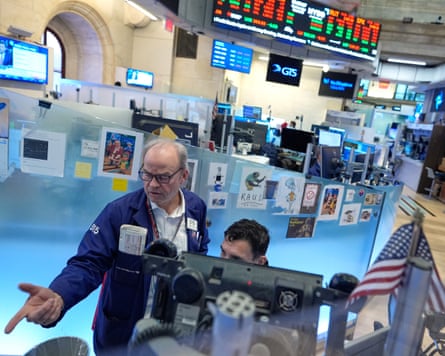
Things, though, have not gone according to plan. To be sure, the US and Israel have demonstrated their military superiority, but Iran is still fighting back. Its attacks on neighbouring Middle East countries have led to cuts in oil and gas production. It knows that the longer the war goes on, the greater the economic damage will be. As the economist Freya Beamish notes, it takes two to Taco. And Iran is currently not prepared to dance to Trump’s tune.
It is not just supplies of energy at risk from the effective closure of the strait. Qatar is one of the world’s leading exporters of helium – used in products such as semiconductors and electric vehicles – and sulphur, used in fertilisers, chemicals and batteries. Supply chains will be affected by bottlenecks, adding to upward pressure on inflation.
The short-term costs of the war can be mitigated if central banks cut interest rates, but in the longer term, the war in Iran reinforces the message from the Covid-19 pandemic: global supply chains are inherently vulnerable. The conflict in the Middle East makes the strongest possible case for greater self-sufficiency, especially in renewable energy.
It is always unwise to write off the US, a country with a seemingly endless capacity to reinvent itself. But the warning signs are there. China is comfortably the world’s leading manufacturing power and poses a growing threat to US economic hegemony. There is no guarantee that the US dollar will remain the world’s reserve currency for ever.
At the dawn of the 20th century, London was at the heart of the global economy. Free movement of capital was based on the gold standard – underpinned by sterling – while the Royal Navy ensured trade routes remained open. But Britain’s days of unrivalled supremacy were numbered, and a new era of protectionism, nationalism and war was about to dawn.
So Trump faces a tricky choice. He can end the war now and claim the US has achieved its war aims, though that would mean leaving the regime in place in Tehran. Or he can prolong the conflict, thereby increasing the risks of economic pain – and a political backlash – at home. The former is the better option, though even then it would be a pyrrhic victory, demonstrating both the US’s strengths and its weaknesses.
-
Larry Elliott is a Guardian columnist