2 months ago
66
2 months ago
66
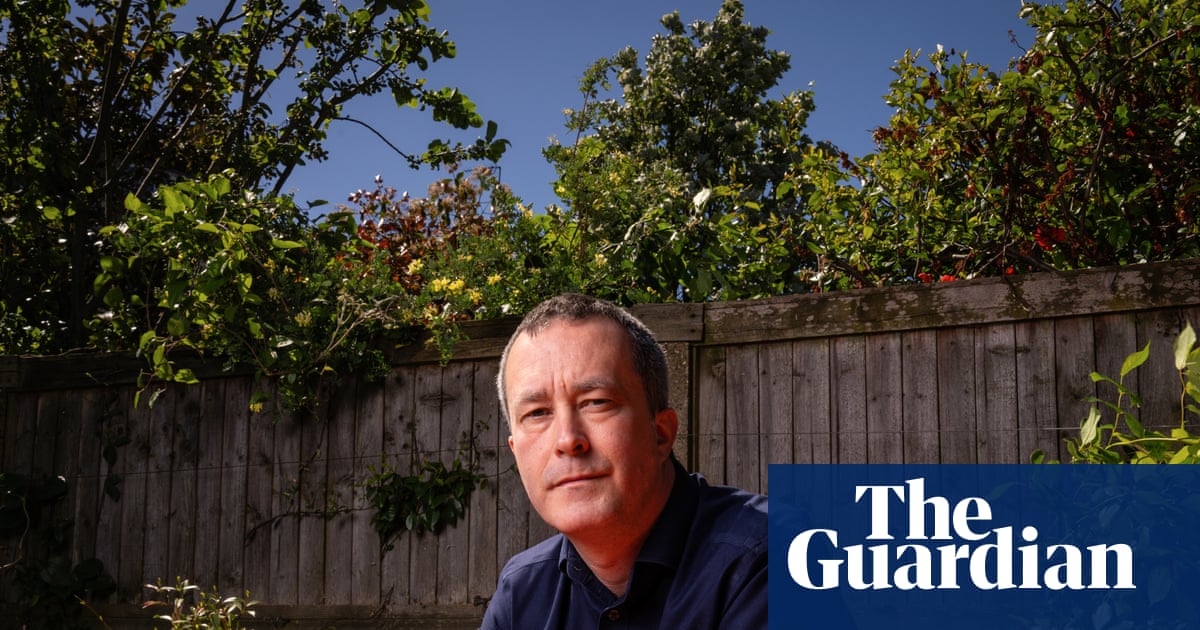
A decade after he suffered life-changing injuries in the terrorist attacks that hit Brussels airport and a metro station, Walter Benjamin has been having sleepless nights. Not only because of the hellish time he lived through on 22 March 2016. Last year, he says, his monthly pension was drastically cut to recoup “overpaid” survivors’ compensation.
Benjamin, now 56, was standing three metres away from the second attacker at Zaventem airport when the bomb detonated. Three suicide bombers killed 32 people that day and left more than 320 people with the kinds of injuries doctors usually find in war zones.
One moment Benjamin was standing in the check-in area preparing to catch a flight to Tel Aviv. The next, he was thrown in the air and found himself lying on the ground in a pool of blood, among the dead and maimed. He lost his right leg and had 17 operations to save the left.
His doctor told him it would take him three or four years to walk again. But three months after the attack, he was standing up and starting exercises, he says, “because I didn’t want to be a burden on society … I didn’t want my daughter [then 16 years old] to have a father she would have to support.”
Physically, he is doing OK, he says. He walks 30-40 minutes every day on a treadmill to keep up his strength and morale. But he cannot leave the house without medication: “Sometimes I can be in the street or anywhere and I have a panic attack. It comes very fast.” He is prone to depression.
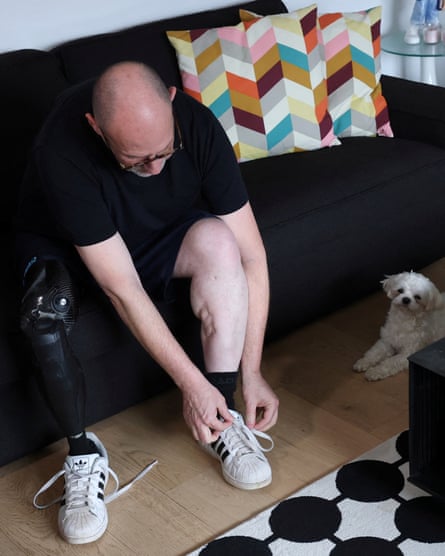
Despite all his efforts to rebuild his life, he is also battling administrative problems.
Last July he was informed he had received too much state compensation: his monthly pension, awarded to him as a victim of a terrorist attack, was cut by 70%, he says. According to his calculation, his pension income will fall by between €130,000 (£112,000) and €150,000 (£130,000). He describes the shortfall as a debt he fears will fall to his next of kin.
“It was a shock,” he says. “Because I have never hidden anything that I have received. And if I die, the debt is there for my daughter. It’s not right. It is a psychological shock. I don’t understand why we are being made to live like this.”
“This is not money I pay to my broker,” he says with grim irony, detailing the extra costs he bears, such as more expensive air tickets and taxis to accommodate life with a prosthetic limb; psychological support; and extra help when he cannot walk as a result of injuries caused by the prosthesis.
A spokesperson for the Belgian federal pensions service said any reduction in compensation would be applied to future pension payments and there would never be a debt recovery claim on an individual or their next of kin.
The terrorist victims’ support group, Life for Brussels, says Benjamin is not alone. “Many victims are living in utter despair,” it said in a statement last week, published before events this weekend to commemorate the 10th anniversary of the attacks. “The state is demanding reimbursement of sums paid out over the years, plunging families into unjustifiable hardship.”
The situation has arisen because under a Belgian law passed in 2017, victims are not entitled to be compensated twice for their trauma. Survivors of terrorist acts are entitled to receive a pension, which is subject to deductions if they have received other payments, such as social security or insurance payments.
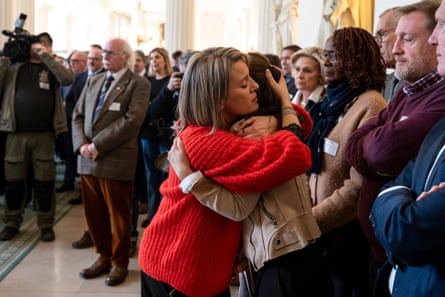
Survivors had the possibility to claim compensation under insurance carried by Brussels airport and the Brussels transport operator, STIB.
Life for Brussels argues that the authorities are making incorrect deductions based on a questionable understanding of the law and failing to respect a principle of non-retroactive deductions.
Aurélie Cardon, a communications specialist, was on her way to work on 22 March 2016 when she was injured in the attack at Maelbeek metro station in the city’s EU quarter. Although she was in the carriage where the bomb went off, “I was very lucky,” she says. “I was sitting down and the blast wave passed above me.” She was left with injuries, including back pain and damage to her ear drums. For a long time she experienced fear and panic when on public transport or in other crowded spaces, which have eased with treatment.
She was awarded a lifelong pension of €126 a month – or so she thought. A year ago, she says, her pension was abruptly stopped without explanation. Then, last December, she received a bill saying she owed the government €1,500.
“What bothers me most – more than the reimbursement – was that this whole story was behind me, because it was 10 years ago,” she says. “But with this letter it all came flooding back. It’s like this story will never end.”
In a statement published on the same day that survivors gave testimony to journalists, the Belgian pensions department issued an apology.
“The pensions service pays compensation pensions to approximately 700 victims of terrorism. As these pensions are considered ‘residual compensation’, the law requires the pensions service to take into account other compensation payments and deduct them from the compensation pension,” it said.
The statement said that in 14 cases, “unfortunately” money had been “incorrectly recovered”, while 43 people had “received a potentially confusing letter”. The department said those people who had been wrongly docked money would be reimbursed, while no “retroactive adjustment” would be made for the other 43.
It added: “The pensions service regrets how events have unfolded and presents its sincere apologies to victims. We are aware that our administrative actions have caused additional suffering.”
Benjamin says he has not received a letter. “The big scandal is, for 10 years there is no follow-up from the state about what happened to us,” he says, arguing for a system where there would be routine checks on survivors’ health or other problems.
The statement was good news, says Cardon, who confirmed she received a letter last week informing her that the demand for reimbursement was an error. But her fight is not over, she says. She continues to press for the reinstatement of her full pension, without deductions.
Understandably, it’s a subject she would rather put behind her. “To always be talking about the attacks, to be thinking about the attacks, to make the calculations, it’s not nice … I would like to move forward.”