3 months ago
82
3 months ago
82
Easter for me immediately brings to mind two things: cracking dyed red eggs together in the style of conkers (a Serbian Easter game that we play every year) and lamb. We always eat lamb at Easter lunch, and I suppose that simply harks back to religious tradition. Today’s lamb shank dish is a wonderfully straightforward and moreish take on a popular Greek recipe. I’ve gone for rhubarb for pudding, because it’s just so representative of this time of year – it’s also very pretty on the eye and a treat to eat, too.
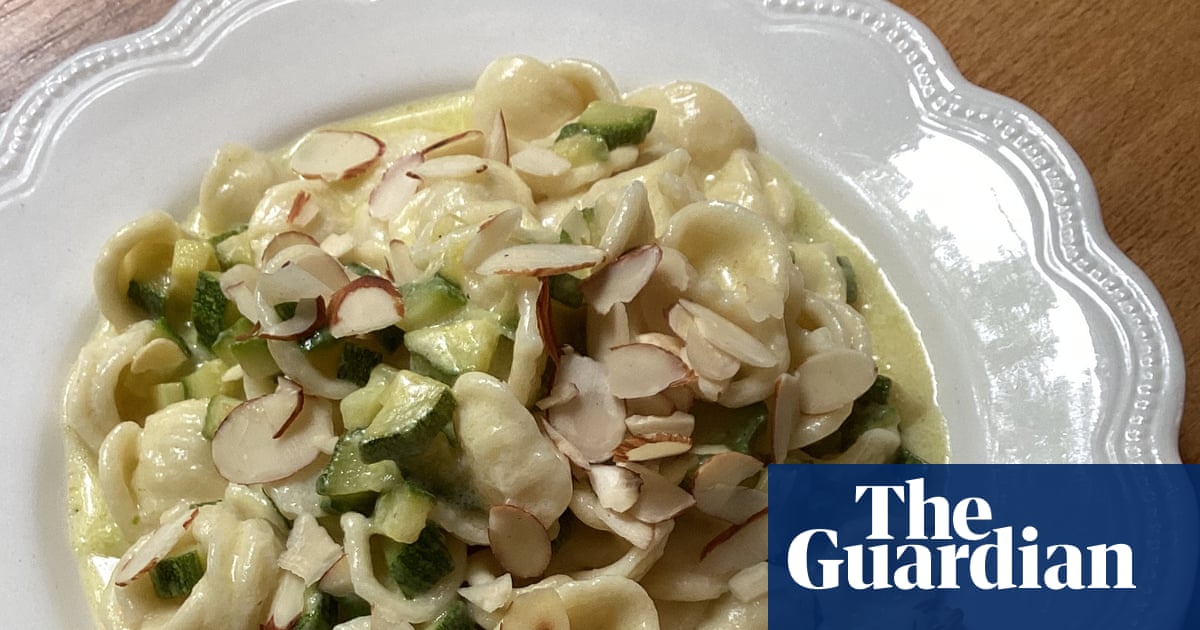
Lamb shanks with orzo (pictured top)
Prep 15 min
Cook 2 hr
Serves 6
50ml olive oil
6 lamb shanks
Sea salt and black pepper
3 sticks celery, washed and finely chopped
2 onions, peeled and finely chopped
3 garlic cloves, 2 peeled and finely chopped, the other peeled
1 tbsp dried oregano
200g tinned chopped tomatoes (ie, ½ tin)
375ml white wine
300g orzo
1 lemon
1 small bunch flat-leaf parsley, leaves picked
Heat the oven to 185C (165 fan)/360F/gas 4¼. Pour the oil into a casserole dish that will comfortably accommodate the lamb shanks, and put it on a medium-high heat. Season the shanks, brown them all over in the hot oil, then transfer to a plate (if you do not have a casserole that’s big enough, brown the lamb in batches, then transfer the shanks to a baking dish in which they’ll fit snugly in a single layer).
Add the chopped celery, onion, chopped garlic and oregano to the pot, and sweat, stirring, on a gentle heat for about five minutes, until soft. Reintroduce the lamb shanks to the pot meatiest side down, then sprinkle over the tinned tomatoes and wine. (Alternatively, pour the sauteed vegetables, tomatoes and wine into the baking dish, if that is what you are using.)
Cover the pot (or baking dish) with a lid or foil, then bake for an hour and a quarter. Flip over the shanks, so they now sit meatiest side up, then pour in the orzo and stir and shake the pot so the pasta falls into the cooking liquid. Return the pot to the oven, this time uncovered, for another half and hour, by which time the shanks should be tender and the orzo cooked. Taste the liquor and adjust the seasoning as necessary.
While the pasta is cooking, make the gremolata. Finely grate the lemon zest and the remaining garlic clove on to a board. Put the parsley leaves on top of the grated lemon and garlic, then finely chop so they end up all mixed together. Sprinkle the gremolata over the lamb and serve at once.
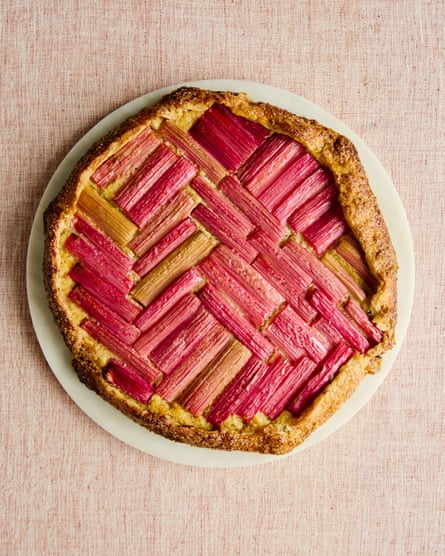
Rhubarb frangipane galette
Prep 10 min
Rest 45 min+
Cook 1 hr 40 min
Serves 6-8
For the pastry
125g plain flour
40g wholemeal flour
1 tbsp sugar
½ tsp salt
115g cold unsalted butter, cubed
50-75ml ice-cold water
For the filling
100g unsalted butter
100g sugar
100g whole shelled almonds, blended to the consistency of fine gravel
2 eggs
500g rhubarb, trimmed and washed
3 tbsp demerara sugar
First, make the pastry. Put both flours in a food processor with the sugar, salt and half the butter, then blend to the consistency of breadcrumbs. Add the remaining butter and blend again, until the second batch of butter is broken down to the size of hazelnuts. (Alternatively, mix everything by hand in a large bowl.)
Tip the mix into a large bowl, add three-quarters of the ice-cold water and mix quickly and thoroughly until everything comes together into a dough; if it feels a bit dry, dribble in a little more chilled water. Shape into a disc, wrap in clingfilm and rest in the fridge for at least half an hour.
Meanwhile, make the frangipane. In a food processor or stand mixer, beat the butter and sugar until pale and creamy. Stir in one of the eggs until well combined, then work in the ground almonds.
Roll out the rested pastry into a roughly 26cm-diameter disc that’s about the thickness of £1 coin (or ever so slightly thicker), and lay it on an unlined baking sheet (not lining the tin ensures a crisper base). Spread the frangipane over the top of the pastry, leaving a 2½cm border all around the edge.
Assess your rhubarb – if some pieces are much thicker than others, split them in half so they’re all of a pretty similar thickness. Arrange the rhubarb neatly on top of the frangipane layer (but not over the naked border), trimming as necessary, so it’s completely covered; some jigsaw skills might be needed to fill the gaps and make sure all the frangipane is covered.
Lift the pastry border up and over the rhubarb at the sides. Whisk the remaining egg to make an egg wash, then brush this all over the exposed pastry. Sprinkle the demerara sugar over the egg-washed pastry, then put the tart in the fridge for 10-15 minutes, to rest again – this will help with the final texture of the pastry.
Meanwhile, heat the oven to 170C (150C fan)/340F/gas 3½. Bake the tart for an hour, but check on the rhubarb after 40 minutes – if it looks as if it’s colouring too much (a few brown edges here and there are fine, but you want the beautiful pink of the rhubarb to shine), cover with a disc of greaseproof paper and weigh it down gently.
Remove the tart from the oven, leave to cool for at least 20 minutes, then slice and serve with creme fraiche or whipped cream.
-
Anna Tobias is chef/co-owner of Cafe Deco in London WC1