3 months ago
94
3 months ago
94
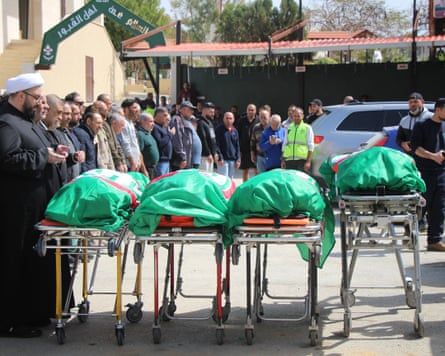
In Lebanon, the dead are usually given one last glimpse of their home town before they are laid to rest. Hoisted high above the heads of the living, their casket is slowly marched through the streets where they grew up.
It is the hands of their loved ones that guide them into their final resting place, already dug, and gently sprinkle dirt on their body.
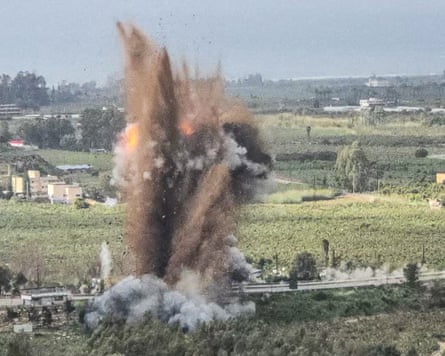
In south Lebanon, war has robbed the dead of their final goodbye. As Israel expands its ground invasion, families have been forced to abandon traditional funeral rites and bury their loved ones in temporary graveyards farther north.
In Tyre, 2-metre-wide ditches have been dug to house the dead. The epitaphs are brief: a number spray-painted in bright red on a thin wooden board to count the deceased.
Rabih Koubaissi has stayed behind in Tyre to supervise the burials, despite the Israeli orders that people have to leave and airstrikes on the city. It is his second war in three years.
In Islam, the imam explained, a body should not be exhumed after being buried. It is typically washed, wrapped in a white shroud and placed directly into the ground without a casket, where it should return to the earth without being disturbed.
But in exceptional circumstances such as war, a special funeral rite can be invoked. In Islamic jurisprudence there is a technicality wherein bodies can be buried in a casket, in a procedure called wadiaa, literally meaning “deposit”. The theory is that it is the casket, not the body, that is being dug up again.
“A Muslim can be buried in any Muslim cemetery. But people have emotional attachment – they want their loved ones buried in their ancestral land. It reflects belonging, heritage and presence,” said Koubaissi.
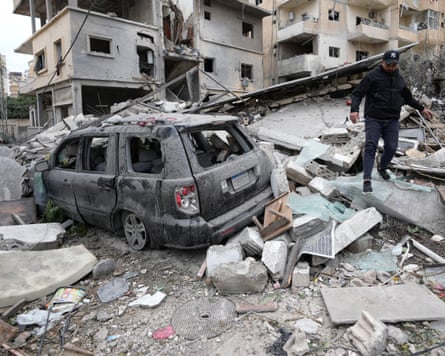
The brutality of war has disrupted every step of the burial process, at times making it impossible to wash the bodies of the dead.
“Sometimes we just receive pieces of bodies,” he said. “In those cases, we just collect what we can, place them in a shroud and a body bag, and then put them in the coffin.”
Though temporary burials gave some peace of mind, they were ultimately a source of pain, Koubaissi said. “It’s very difficult. Families are being forced to bury their loved ones twice.”
People from south Lebanon, however, are worried they may not get the chance to bury their loved ones back home. Statements from Israeli officials that the military will occupy the area south of the Litani River indefinitely have led to fears that it could be months, or years, before Lebanese people could finally lay their loved ones to rest in their ancestral homes.
Even if Israeli soldiers withdraw, people worry what awaits them when they return to their villages.
At the end of the 13-month war between Hezbollah and Israel in November 2024, people from Dhayra, a border village, rushed to rebury two residents who were killed by airstrikes months previously and buried in temporary gravesites in Tyre.
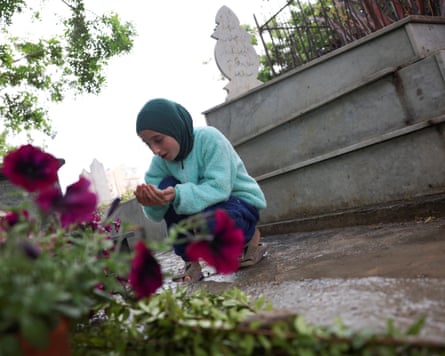
When they returned home, however, they found their village graveyard in ruins. Israeli bulldozers had ripped up gravesites and the local mosque had been destroyed – the bodies had to be buried in an alternative graveyard.
While the dead wait to be reburied, they have few visitors. After attending the rushed temporary funerals, most families have been forced to leave Tyre as the city has come under increasing attack.
A young couple who remained in Tyre, despite the dangers, visited one of the temporary gravesites last week, tending to flowers at the foot of the grave of two young men from the town of Al-Qlailah.
They are the only two graves which have pictures of the departed. The couple, overcome with emotion, consoled each other as they gazed at the photographs.
Standing above the first grave in the row, Hecham Reda, a medic from the border village of Aita al-Chaab, began to cry as he recalled his friend.
“Hadi was always with us, putting out fires, carrying the martyrs. In this war, he didn’t have time. The strike that hit him was fast, brutal,” said Reda, who fears, like many people from south Lebanon, that he will never get the chance to bury his friend back home.
As Koubaissi overlooks the graves, airstrikes thud in the distance. He does not bother to look up when they hit.
“The hardest part is when families ask you how their loved ones looked,” he said. “They cannot see them, but I have seen them. You can’t lie to them, but you can’t tell the truth either. So you try to comfort them.
“It’s a very heavy feeling. We hadn’t even recovered from the last war before entering this one.”