3 months ago
76
3 months ago
76
A building site, but make it chic: that was the set for Chanel’s Paris fashion week show. Cranes in Meccano-bright colours towered over the catwalk, their reflection shimmering sequin-bright on an opalescent floor that was inspired by Monet, according to the designer Matthieu Blazy. Monet has been a backstage buzzword at Dior and Chanel this week, as the two giants battle for bragging rights over French culture.
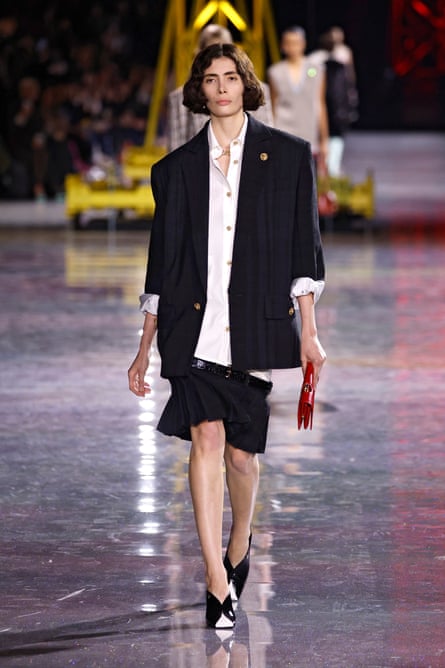
Fashion week loves a visual metaphor. Blazy, who arrived at Chanel last year, is rebuilding the designer, and having fun with it. The invitation for the show was a tiny stainless steel tape measure on a pendant. He has immersed himself in house history – Cocology? – and after the show, greeted reporters clutching a folded printout of an interview Coco Chanel gave to Le Figaro in 1955. Bruno Pavlovsky, president of fashion and a grandee of the brand since 1990, remarked that he had never come across this interview before Blazy brought it to him. Blazy’s kid-in-a-candy-store enthusiasm is infectious, and the city’s Chanel boutiques have been packed all week. A simple cotton shirt embroidered with the Chanel name is sold out, at a price of €3,900. New season bags are limited to one per customer – a policy designed, the company says, to limit resale at even higher prices.
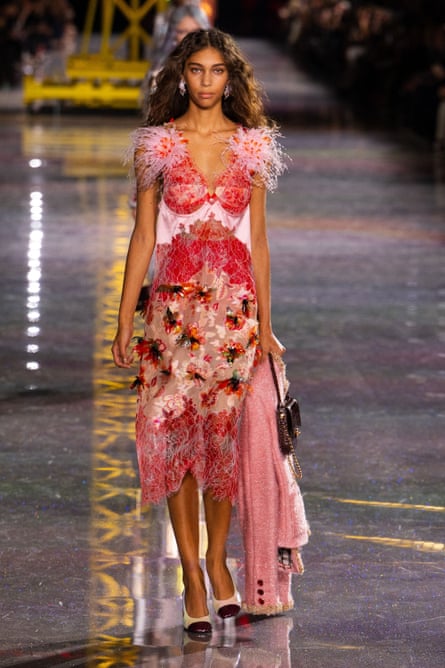
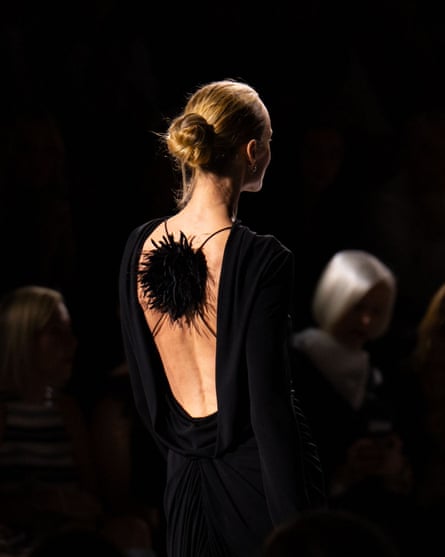
“Chanel is function, Chanel is fiction,” Blazy said. Like Coco, who scandalised Paris by declaring black, the colour of the serving classes, to be the last word in elegance, he presents Chanel as rarefied and real. Take the Chanel jacket, which on this catwalk came in the oversized shirt silhouette of the classic French chore jacket, collar flipped and cuffs turned back, or as a blouson to be worn with trousers. Blazy is updating the handwriting of Chanel – a trace of Phoebe Philo, a more recent female change-maker in fashion with whom Blazy worked at Celine, can be detected in the confident colours, the untucked hems, and a loosening up of Chanel’s strict lozenge silhouettes. The show closed with a soft jersey little black dress, perhaps Coco’s greatest contribution to the wardrobe, confidently reworked with an open back and a single silk camellia as decoration.
“What has surprised me the most is the depth of his research,” Pavlovsky said of his star hire before the show. “With Karl [Lagerfeld], you didn’t know if the storytelling was true or not. That is not at all a criticism – after 30 years here, he had that freedom – but Matthieu is starting again at the roots.”
Chanel has “a lot of requests” for the Oscar red carpet on Sunday, Pavlovsky said, but added that his current focus was on teams in the Middle East. “We have boutiques remaining open at the request of governments. We are following those instructions, but we also have to look after security for our people.”
On the final day of Paris fashion week another luxury giant, Louis Vuitton, held a show in a modernist marquee hidden in an internal courtyard of the Louvre. The designer, Nicolas Ghesquière, was made a knight of the legion of honour, France’s highest civilian decoration, earlier this year.
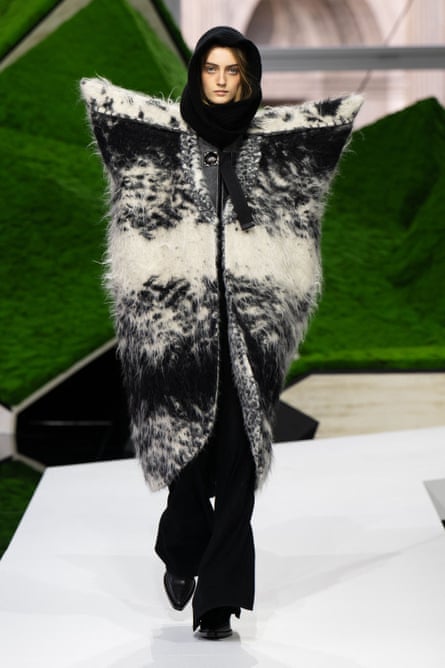
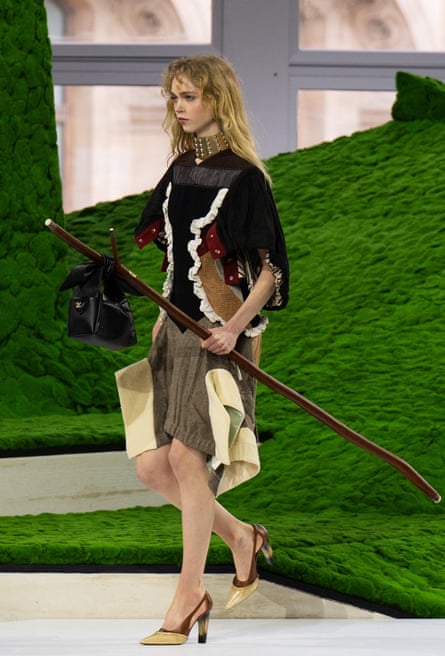
As the jewel in the crown of the world’s biggest luxury conglomerate, the Louis Vuitton name has enormous reach. Because the bread-and-butter of the brand is safely piled high in evergreen-selling bags and luggage, Ghesquière has a remarkable freedom to pursue his avant garde tastes. A cubist landscape of mossy green hillocks framed the catwalk, a collaboration with the production designer of AppleTV’s Severance, Jeremy Hindle. The first jackets had shoulder pads arched and scaled into angel wings, and models carried their bags hooked over staffs, nomad-style.
Backstage, Ghesquière said he was thinking about nomadic life – travel is always on the Louis Vuitton moodboard – and how folklore is “an attempt to explain the forces of nature”.
He said: “Fashion is a kind of anthropology. It expresses different cultures, and collective experiences, all over the world.”