1 month ago
60
1 month ago
60
Trump launches fresh attack on Merz
Donald Trump has launched a fresh attack on Friedrich Merz, claiming the German chancellor should be spending more time on resolving the Ukraine conflict rather than “interfering with those that are getting rid of the Iran Nuclear threat”.
In a post on his Truth Social platform, the US president wrote:
The Chancellor of Germany should spend more time on ending the war with Russia/Ukraine (Where he has been totally ineffective!), and fixing his broken Country, especially Immigration and Energy, and less time on interfering with those that are getting rid of the Iran Nuclear threat, thereby making the World, including Germany, a safer place! President DJT.”
Key events Show key events only Please turn on JavaScript to use this feature
Back to Merz, he got asked about ways in which he has actually improved the lives of Germans as in his first year as chancellor with the anniversary of him taking power coming up next week.
In response, he says “it is too early” for a final assessment; a classic politician’s answer.
But then he goes on to make a big sweeping claim that “in this one year we have managed to save Nato” through increased defence spending, and kept the EU together.
But “you may not regard this as being as significant as I do,” he accepts.
He admits that in general he would want his government to move faster, but “implementation takes time” and he hopes to push ahead with the government’s programme of reforms now.
The event then ends with a quick fire of questions in which he puts jazz and classical music over rock and pop, says he doesn’t use WhatsApp for security reasons, he would love to be able to figure skate on ice, and he prefers to spend time outside big cities.
Oh, he also says he prefers print newspapers over e-paper on tablets (except when it comes to reading European blogs on the Guardian’s website, surely).
And that ends this event.
(Let me, in advance, wish everyone a happy local journalism day next week!)
Trump launches fresh attack on Merz
Donald Trump has launched a fresh attack on Friedrich Merz, claiming the German chancellor should be spending more time on resolving the Ukraine conflict rather than “interfering with those that are getting rid of the Iran Nuclear threat”.
In a post on his Truth Social platform, the US president wrote:
The Chancellor of Germany should spend more time on ending the war with Russia/Ukraine (Where he has been totally ineffective!), and fixing his broken Country, especially Immigration and Energy, and less time on interfering with those that are getting rid of the Iran Nuclear threat, thereby making the World, including Germany, a safer place! President DJT.”
Germany’s foreign minister has said the country is “prepared” for any reduction of US troop numbers there, Agence France-Presse reports, after Donald Trump threatened such a move in a row with Friedrich Merz.
“We are prepared for that,” Johann Wadephul said when asked about the issue during a visit to Morocco.
“We are discussing it closely and in a spirit of trust in all Nato bodies, and we are expecting decisions from the Americans about this.”
Turbulent start to EU entry-exit system as many travellers report disruptions, border issues
Meanwhile, if you are planning your summer holidays in Europe this year and you are from a non-EU country – like, say, erm, Britain – you may face some potential issues during border checks.
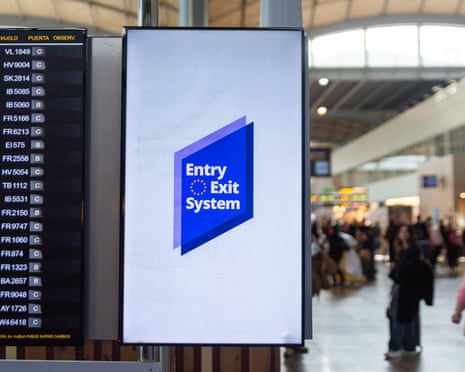
My colleagues Alfie Packham and Nicola Slawson are reporting that some travellers passing through the new EU entry-exit system (EES) have faced huge delays at border checks, with some waiting for up to three hours, airports say.
The new rules have gradually been introduced in Europe since October 2025, and came into effect on Friday in the Schengen countries – 25 of the EU’s 27 states plus Iceland, Norway, Liechtenstein and Switzerland.
Hundreds of people responded to a Guardian online callout to share their experiences of travelling to Europe since the rules came into effect. Though some said they had a problem-free journey, many reported severe delays, which have caused some to miss their flights.
You can read more on this here:
Italy condemns Israel's interception of Gaza aid flotilla
Responding to the interception, Italy has condemned the move and demanded the immediate release of all Italians who have been “unlawfully detained,” Reuters reported.
In a statement, Rome urged Israel to respect international law and guarantee the safety of those on board. It did not say how many Italians had been detained.
“The government reaffirms its commitment to continuing to provide humanitarian aid to Gaza within the framework of our cooperation and in accordance with international law,” the Italian government said in a statement.
Israel intercepts and detains crews of Gaza aid flotilla near Crete
Lorenzo Tondo in Palermo and Caitlin Cassidy
Israeli forces have intercepted and detained the crews of at least 22 boats near the Greek island of Crete from a flotilla that is attempting to break Israel’s maritime blockade of the Gaza Strip to deliver humanitarian aid.
The Global Sumud Flotilla, consisting of about 58 vessels carrying people from across 70 countries, departed from Italy on Sunday.
Flotilla organisers said in a press release:
“Israel’s actions … mark a dangerous and unprecedented escalation, the abduction of civilians in the middle of the Mediterranean, over 600 miles from Gaza, in full view of the world.”
After early exchanges on VAT reductions and digital levies, Merz briefly strayes into a topic of interest for us, as he talks about the situation in the Middle East and the risk of energy shortages in Europe.
He says that “the supply problem is currently not so severe,” as “relatively little of Europe’s supply” comes from the closed strait of Hormuz.
But he says that the focus and all efforts should be on reopening the strait, both diplomatically and through the EU offering military security after a deal can be agreed.
And then we go back to farmers and domestic agricultural policy.
I will keep listening to this event, but in the meantime let me bring you some other news from around Europe.

Jakub Krupa
I am keeping an eye on Merz’s planned appearance at the Local Journalism Day event (11:30), which should be starting soon.
Unlike at the army event earlier (12:44), he is likely to face questions and follow ups, which makes it potentially a bit more interesting – let’s see if some of them stray slightly beyond local journalism.
I will bring you all interesting lines here.
287 candidates for this year's Nobel Peace Prize
In other news, the Norwegian Nobel Institute on Thursday announced that 287 nominations had been submitted for this year’s Nobel Peace Prize.
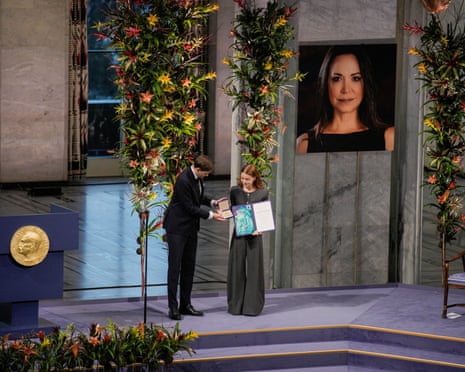
The list comprised 208 individuals and 79 organisations, it said, without identifying them.
“In an increasingly conflictual world, there is no lack of candidates whose principled commitment and innovative action points towards a brighter future,” the institute said in a statement quoted by AFP.
The exact names of nominees are not public, but AFP notes that those eligible to nominate – former laureates, lawmakers and cabinet ministers from any country in the world – may choose to make their candidates public.
And so looking at other people’s statements we can reasonably assume that Ukraine’s Volodymyr Zelenskyy, Sweden’s Greta Thunberg, and – yes – US president Donald Trump are somewhere on that list.
The winner will be announced on 9 October.
Trump-Putin calls always leave lots of questions unanswered, EU's Kallas says
Meanwhile, the EU’s foreign policy chief Kaja Kallas responded to last night’s Trump-Putin phone call, saying that their discussions always appear to leave some questions unanswered.
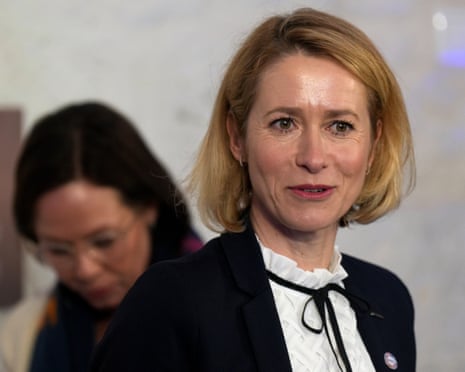
Appearing at the NB8 meeting – that’s Nordic and Baltic foreign ministers – in Estonia, Kallas deeply sighed even before walking up to the podium to answer a question on the phone call, not exactly hiding what she thinks of these talks.
Kallas said that the peace talks on Ukraine appeared to be “stalling,” and she wasn’t clear if any meaningful progress was made in Trump’s call with Putin either.
“When we see these calls between president Trump and president Putin, always there are a lot of questions unanswered,” she said.
She also noted the paradox of these talks given “Russia is openly praising the heroic [fight] of Iran against America.”
She said the EU would like more pressure to be put on Russia and “we didn’t see that in that call.”
Earlier, she said the EU was looking into “what are the requests that we have for Russia for after this war is over” before it can conduct meaningful negotiations with Moscow.
In other Hungarian issues, my Brussels colleague Jennifer Rankin has asked the commission for its response to the European parliament’s blistering criticism of Hungary’s commissioner Olivér Várhelyi (Europe Live, Wednesday).
Várhelyi was nominated for the post by the outgoing government led by Viktor Orbán, and given the incoming administration’s view of such appointments, his future could be uncertain.
But asked if the commission had confidence in him in light of the parliament’s criticism, the chief spokeperson Paula Pinho insisted that was the case.
“I can say that the president has confidence in all the members of the college. So there’s no news.”