3 months ago
90
3 months ago
90
Key events Show key events only Please turn on JavaScript to use this feature
Turkey is hosting a high-stakes forum on Friday bringing together the foreign ministers of Pakistan, Saudi Arabia and Egypt, as Islamabad pushes diplomatic efforts to end the war in Iran.
Pakistan’s army chief met senior negotiators in Tehran on Thursday as Washington and Iran considered a fresh round of talks to end the almost seven-week war.
President Recep Tayyip Erdoğan will address the three-day Antalya Diplomacy Forum when it opens on Friday in the Mediterranean resort of Antalya.
The foreign ministers of Turkey, Pakistan, Saudi Arabia and Egypt are to meet on the sidelines of the forum, with the war and the blockade of the strait of Hormuz expected to dominate, Agence France-Presse reports.
Pakistan has positioned itself as a key mediator in regional diplomacy after hosting rare talks between Iran and the US last weekend which ended without an agreement.
Erdoğan told his ruling AKP party in parliament this week that “the window of opportunity opened by the [US-Iran] ceasefire must be fully utilised”.
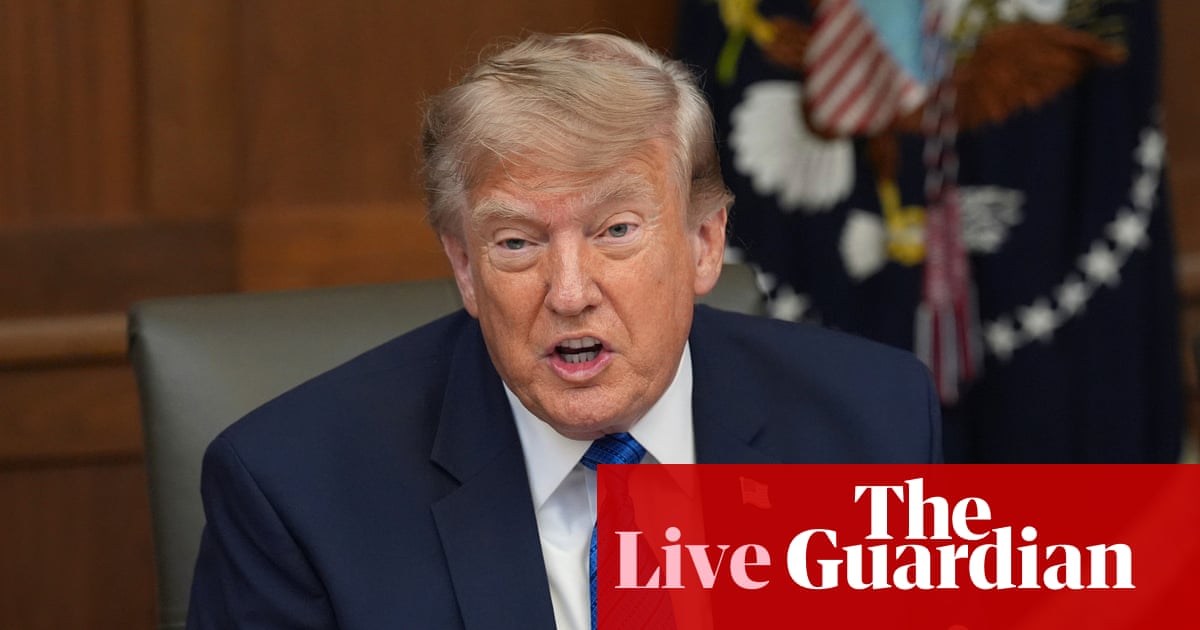
Donald Trump has said the next US-Iran meeting might take place this weekend, while the White House said the talks would “very likely” again be in Islamabad.
Under the ceasefire agreement between Israel and Lebanon, Israel reserves the right to defend itself “at any time, against planned, imminent or ongoing attacks”, the US state department has said.
But otherwise Israel “will not carry out any offensive military operations against Lebanese targets, including civilian, military and other state targets”.
The wording suggests Israel will maintain the freedom to strike at will, as it did in the months after the ceasefire that ended the previous war, the Associated Press reports. This time, Hezbollah said it would respond to any strikes by Israel.
Lebanon’s state-run National News Agency reported that Israeli shelling continued in the villages of Khiam and Dibbine about a half hour after the truce went into effect at midnight Friday local time (2100 GMT Thursday).
Israel’s military said it was looking into reports of shelling and artillery fire in southern Lebanon.
Hezbollah kept firing rockets at northern Israeli towns and communities right up to the start of the ceasefire. Air raid sirens went off in some often-targeted border towns less than 10 minutes before midnight.
Australia’s prime minister has been forced to rebuff another swipe from Donald Trump and reiterate there has been no direct requests from the US – the country’s most important ally – for military support in the Middle East.
As Lebanon and Israel agreed to their 10-day ceasefire, Donald Trump said in Washington that Australia had not supplied military aid to help reopen the strait of Hormuz.
“I’m not happy with Australia because they were not there when we asked them to be there,” the US president said.
They were not there having to do with Hormuz. So I’m not happy. I’m not happy with them.”
Anthony Albanese responded by saying the US administration had not asked for additional assistance in the region. The PM, quoted by Australian Associated Press, told reporters on Friday:
There’s been no new requests at all, and indeed President Trump has himself said that he has got this, and he has made that position clear. There’s been no change.
My job is to engage constructively with the US administration. That’s what we do.”
Stocks gaining and oil under $100 amid peace hopes
Asian stocks were poised for a second week of strong gains and oil prices were pinned below $100 a barrel with investors hopeful for a near-term resolution to war in the Middle East.
With the Lebanon-Israel truce coming into effect and Donald Trump saying the next US-Iran meeting might take place over the weekend, oil prices were pushed lower, with Brent crude futures falling more than 1% to $98.14 a barrel. US West Texas Intermediate crude futures fell 1.6% to $93.15 a barrel.
In stocks, MSCI’s broadest index of Asia-Pacific shares outside Japan was down 0.6% but remained close to its highest since 2 March, the first trading day after the Iran war broke out.
The index is up 14.5% in April after dropping 13.5% in March, Reuters reports. Japan’s Nikkei fell 0.9% in early trading after hitting a record high on Thursday.
Almost all stock markets are back to levels before the war erupted in late February.
However, equity markets needed “some concrete evidence that peace is going to last”, said ATFX Global’s chief market strategist, Nick Twidale.
And to me, that is a full reopening of the strait [of Hormuz], or we could see some substantial corrections in global stocks in the coming days and weeks.”
Starmer to co-chair global summit on reopening strait of Hormuz
The UK and France will chair a meeting of about 40 countries on Friday aimed at signalling to the US that some of its closest allies are ready to play a role in restoring freedom of navigation in the strait of Hormuz once conditions allow.
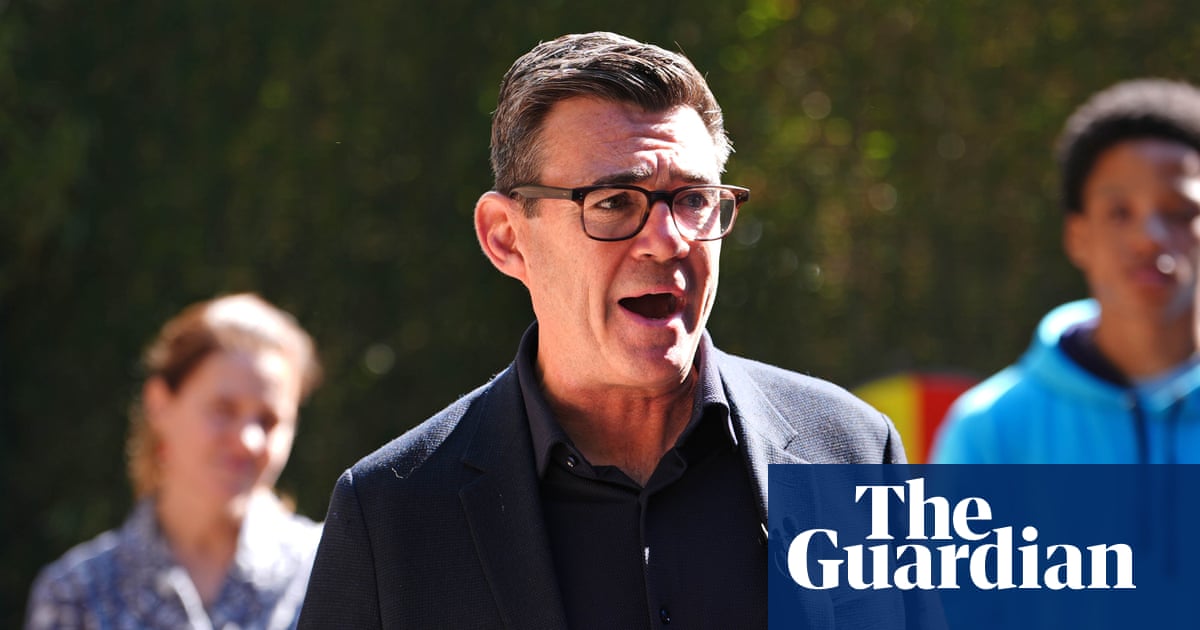
British prime minister Keir Starmer is expected to say the reopening the strait of Hormuz is a “global responsibility”.
The talks come as the 10-day Israel-Lebanon truce agreement could boost efforts to extend the US ceasefire with Iran.
Starmer will reportedly arrive in Paris late on Friday morning to co-host the virtual meeting with Emmanuel Macron and then have lunch with the French president.
Iran has largely shut the Hormuz strait in response to US-Israeli airstrikes and this week Donald Trump imposed a naval blockade on ships entering or leaving Iranian ports. The US president has called on other countries to help enforce the blockade and has criticised Nato allies for not doing so.
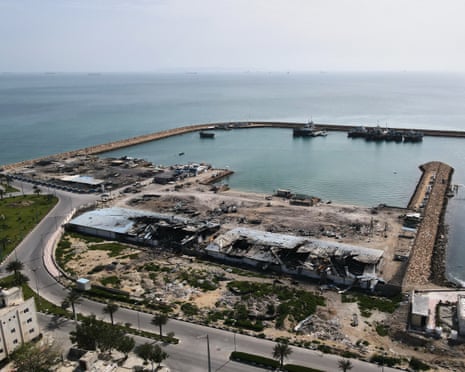
The initiative being discussed on Friday doesn’t yet include the US or Iran, but according to a note sent to invited nations and cited by Reuters, the meeting aims to reaffirm full diplomatic support for full freedom of navigation through the Hormuz strait and the need to respect international law.
The meeting will also address economic challenges facing the shipping industry and the safety of more than 20,000 stranded seafarers and trapped commercial vessels.
Starmer is expected to tell the summit:
The unconditional and immediate reopening of the strait is a global responsibility, and we need to act to get global energy and trade flowing freely again.
Emmanuel Macron and I are clear in our commitment to establish a multinational initiative to protect freedom of navigation.”
PA Media also reports that British foreign secretary Yvette Cooper and defence staff chief Richard Knighton will join Starmer.
The energy shock from the Middle East crisis and higher commodity prices are increasing production costs in the world’s biggest manufacturing country, trade data from Beijing this week and anecdotal information from Chinese manufacturers indicates.
Before the US-Israeli war on Iran, China’s export sector was performing strongly , having weathered Donald Trump’s tariff hikes by targeting new markets and achieving a record trade surplus last year.

But overseas orders are now slowing at the same time as the cost of plastic, copper and aluminium is surging, according to manufacturers who spoke to Reuters this week at China’s largest trade exhibition, the Canton Fair.
Donald Trump has posted a short statement about the 10-day ceasefire between Israel and Lebanon.
“May have been a historic day for Lebanon. Good things are happening!!!” Trump wrote on Truth Social, signing off as “President DJT”.
Welcome summary
Hello and welcome to our live coverage of events in the Middle East.
United Nations chief António Guterres has welcomed the ceasefire announced on Thursday between Israel and Lebanon, urging “all actors” to fully respect the truce.
“The secretary general welcomes the announcement of a 10-day ceasefire between Israel and Lebanon, and commends the role of the United States in facilitating” it, Guterres spokesperson Stephane Dujarric said in a statement, adding he hoped the temporary halt to fighting would “pave the way for negotiations”.
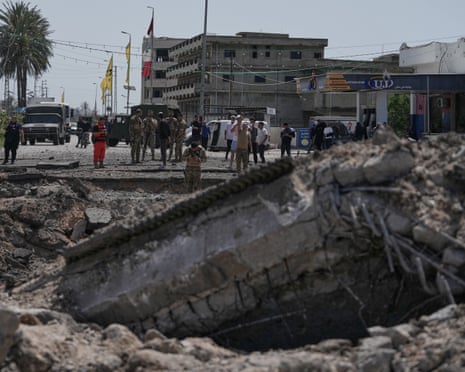
The ceasefire took effect at midnight on Thursday (2100 GMT) in Lebanon, where Israel has been conducting devastating airstrikes aimed at wiping out the Iranian-backed Hezbollah militia.
The Lebanese army warned people displaced from southern Lebanon about returning home because of intermittent shelling that was reported after the ceasefire came into effect.
The terms of the truce, as provided by the US state department, prohibit Israel from offensive military actions in Lebanon. But they appear to leave more room for “self-defence”, including “against planned, imminent or ongoing attacks”.
We’ll bring you more on this soon. Here is a summary of key developments:
-
A 10-day ceasefire between Israel and Lebanon has come into effect, pausing fighting in a devastating conflict between Israel and Hezbollah that has killed more than 2,100 Lebanese people and displaced more than 2.1 million. The agreement was announced earlier by Donald Trump, who said he had spoken with Israeli prime minister Benjamin Netanyahu and Lebanese president Joseph Aoun, and invited both leaders “for meaningful talks” at the White House. Both leaders welcomed the agreement. But how long the ceasefire will hold is the key question, as both Israel and Hezbollah have maintained their right to defend themselves if the truce is broken. Here’s our report.
-
Netanyahu called it a “historic” opportunity for peace, though he refused to withdraw his troops from southern Lebanon during the pause in fighting. “We are remaining in Lebanon in an expanded security zone,” he said, due to the “danger of an invasion” and to prevent fire into Israel. “That is where we are, and we are not leaving.” The Israeli prime minister maintained that his key demand was dismantling Hezbollah. He has previously declared his intention to occupy southern Lebanon up to the Litani River – about 30km from the border – while Lebanon demands the complete withdrawal of Israeli forces and for displaced residents to be able to return to their homes.
-
Iran’s foreign ministry spokesperson Esmail Baghaei welcomed the ceasefire and stressed it was already part of the original Iran-US agreement brokered by Pakistan. Baghaei said Iran emphasised “from the outset” the need for a “simultaneous ceasefire throughout the region, including Lebanon”, and expressed his “solidarity” with the people and government of Lebanon. He called for the return of displaced residents to their homes and emphasised the necessity of the “complete withdrawal” of Israeli forces from the south of the country – which, as mentioned, Israel has refused to do.
-
The Lebanese army urged residents to “exercise restraint” in returning to their villages and towns in southern Lebanon ahead of the ceasefire coming into effect. The army added that even then residents should avoid areas that remain occupied by Israeli forces. It was followed by a similar statement issued by Hezbollah, urging caution amid Israel’s history of “breaking covenants and agreements”.
-
The Israeli military issued an urgent warning to the people of southern Lebanon not to return south of the Litani River despite the ceasefire coming into force.
-
In the hours before the truce took effect, Israel and Hezbollah continued to exchange fire. Just as the ceasefire came into force, the Israeli military said it had hit more than 380 Hezbollah targets in southern Lebanon in the past 24 hours, including rocket launchers, headquarters and Hezbollah members themselves. Meanwhile, Israeli strikes on Lebanese towns and villages killed dozens of people, including an attack on the town of Ghazieh which killed at least seven people and wounded 33, the health ministry said on Thursday.