3 months ago
81
3 months ago
81
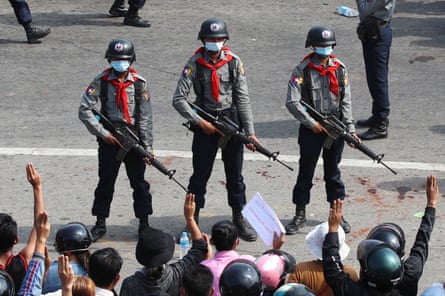
When even two weeks of torture could not force Aung Thu to betray his fellow anti-coup activists, his military interrogators in Myanmar tried something different: they asked a Norwegian telecoms company, Telenor, then the largest one operating in the country, for its data on him.
The company – whose majority shareholder is the Norwegian government – had first entered Myanmar in 2013 as it was transitioning to democracy, promising to connect users who had been isolated from the world.
Aung Thu and other activists now feel they were betrayed, and a new class-action lawsuit alleges that the data of more than 1,200 customers, including addresses and last-known locations, was passed on by the company to the regime.
They believe Telenor played a role in propping up the military junta that runs Myanmar by helping it to arrest dissidents who were jailed – and in some cases tortured and executed.
The lawsuit, filed in Norway, argues the company did not protect the victims nor inform them of the requests by the military. A parliamentary inquiry is also expected later this year into the role of the Norwegian government.
Telenor’s own transparency reports reveal it complied with 96% of the 153 data requests it received. Documents obtained by the Norwegian state broadcaster, NRK, and shared with the Guardian show that Aung Thu’s number was listed in one of these requests made in September 2021, when he was already in prison.
Aung Thu told the Guardian: “Some of the people I worked with have disappeared; I can’t find any trace of them. Some are untraceable; some were among those arrested – people who were in contact with me.”
He was first jailed in September 2021 and charged with incitement by the military for his role in the “spring revolution” – a movement that emerged in resistance to the February 2021 military coup that ousted the elected government of Aung San Suu Kyi.
Aung Thu was released in a prisoner amnesty in October only to be re-arrested at the prison gates and charged under counter-terrorism laws. He says this followed the release of his data by Telenor in late September, despite an internal assessment by the telecoms company acknowledging that the order was likely to lead to arrests.
The Justice and Accountability Initiative (JAI), a Swedish rights organisation, with support from the Centre for Research on Multinational Corporations (Somo) and the Open Society Justice Initiative (OSJI), launched a class-action legal case against Telenor on 8 April that represents all 1,253 customers who allegedly had their data passed on (unless they opted out), demanding a minimum of €11m (£9.6m) compensation. Telenor had 18 million customers before it exited Myanmar in 2022.
“Telenor went into the country saying you should trust us – they did that and that trust was breached and they’ve faced severe consequences,” says Joseph Wilde-Ramsing, Somo’s advocacy director. “Even those not physically harmed have had to go underground, they’ve had to run.”
NRK has reported that the customers the company passed information on for include Aung San Suu Kyi, the country’s deposed leader, and Phyo Zeya Thaw, a former MP of her party who was executed by the military. Phyo Zeya Thaw’s wife, Tha Zin, is another complainant in the case, saying that her husband was arrested in a safehouse they had been hiding in only three weeks after his data was requested from Telenor.
Telenor’s own website lists orders it complied with, including blocking social media platforms such as Facebook, Twitter and Instagram; blocking websites; and shutting down the network altogether.
Digital rights activists have accused Myanmar of imposing a digital “iron curtain” through these orders, which have been targeted at dissidents and opposition politicians, as well as blocking the flow of information around conflict zones.
Nini Sandborg, a human rights lawyer who worked for the UN in Myanmar, says the company breached the trust it had built with customers in Myanmar, where it had portrayed itself as “wholesome” with adverts focused on how its services helped people connect with friends. She says activists probably believed Telenor, as an international company, would have protected them.
“[Instead] they sent every second, every little detail of every telecom data they had on the users. To the point that it was days and hours from the details that the junta received to them coming to actual houses, picking up young politicians, and detaining them.”
A spokesperson for Telenor says the company complied with orders to share historical metadata but not the content of calls or messages, which it was legally obliged to do.
“Our employees were working under extremely difficult and uncertain conditions, with direct pressure from the authorities and a highly volatile security situation. We could not take risks with our employees’ safety – their lives were at stake.”
Telenor claims that there was no established direct link between how it handled the military’s requests and human rights violations.
In Norway, there are also calls for accountability and greater transparency on the government’s role. The government says it had 27 meetings with Telenor officials from the time of the coup until Telenor’s withdrawal from Myanmar. It has said that operational decisions are made by the board, which is expected to respect human rights.
Per Willy Amundsen, a Progress party politician and former justice minister, says Telenor and the government’s potential complicity in human rights abuses is concerning and damaging to how the country sees itself.
“A lot of people see that this does not fit the image that we have of ourselves and, at least used to have, abroad, as a defender of peace and human rights. It’s really important that this cannot happen again.”