3 months ago
80
3 months ago
80
Rachel Waters was in her apartment in Queens, watching food reviews on YouTube, when a nurse called: her mother was dying.
She needed to get to the memory care facility in Evans, Georgia, immediately. A physician had said Marsha could pass within hours.
The call was devastating, but not unexpected. Marsha Foster, 74, had advanced Alzheimer’s disease and multiple myeloma, a rare blood cancer. She had been in hospice care for nearly eight months and weighed just 80lbs. Her spine was so weakened by the disease that she was permanently hunched over at a 90-degree angle.
When Rachel arrived at Marshall Pines Assisted Living and Memory Care, she found her mother nearly unresponsive. Marsha’s eyes wouldn’t close, her mouth was drooping, and her toes had started to turn black – the result of reduced blood flow as the body begins to shut down. In accordance with her “do not resuscitate” order, she had not been given food or fluids for about a day.
When aides repositioned her, Marsha’s face crumpled into what Rachel described as “one of those Greek tragedy masks”.
She begged staff to give her mother morphine, an opioid commonly used to treat severe pain in palliative care settings. They refused and told her Marsha was comfortable.
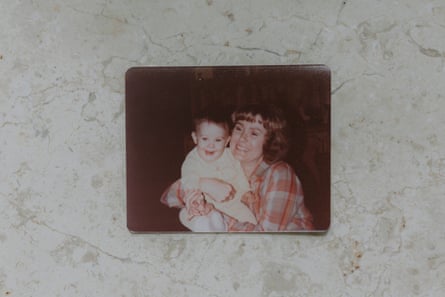
Rachel could not stand to see her mother in agony. Marsha had been clear about how she wanted to die. Before her cognitive decline, she had told Rachel she wanted to die naturally, but without unnecessary suffering.
“I was committed to that with every fiber of my being,” Rachel says.
She told her partner to go to her car and retrieve the morphine that had been prescribed when Marsha first entered hospice, to be used in emergencies, then dabbed the liquid opioid along the inside of her mother’s dry, cracked lips – a decision that would soon come under scrutiny.
This was not the first time Rachel had clashed with staff. Later, a nursing aide named Casey Sheppard would tell an investigator, referring to Rachel: “She told me she did not fear death like most people. She said a lot of things.”
Just before 7am on 12 July 2023, Marsha died.
That should have been the worst thing to have happened that day. But four hours later, Rachel got a call. It was the funeral home. They couldn’t pick up the body, because it had been sent to the Georgia bureau of investigations in Atlanta.
Rachel’s blood ran cold. She could only come up with one reason a body would be taken to a crime lab – someone alleged a crime had occurred.
“All I could think was: ‘Oh my God, did someone accuse me of killing my mom?’”
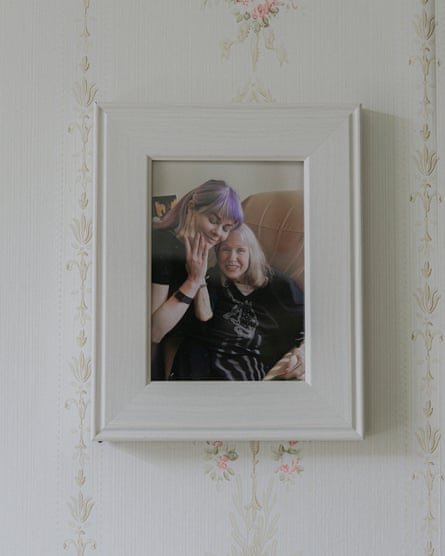
Within hours, police cruisers pulled up outside her childhood home.
By the end of the day, officers had executed a search warrant, seizing her electronics and the medical equipment she had used to care for her mother.
Rachel secured an attorney. Then, nothing. For more than a year, she was left in limbo – no charges, no explanation, no way forward. Without a death certificate, she couldn’t settle her mother’s estate, sell her house, or even cancel her bills. She couldn’t grieve.
Her lawyer told her he didn’t think a case would come of it. Marsha had been in hospice, he said, “and there’s only one way people come out of hospice”.
Eighteen months after Marsha’s death, the charges came down: felony murder and malice murder. Both are capital crimes in Georgia, meaning Rachel could face the death penalty.
Rachel’s case quickly spread across local news sites and tabloids, becoming something of a Rorschach test. Some people saw a devoted daughter trying to ease her mother’s suffering. Others saw something far darker.
Most people, Rachel believes, misunderstood what had actually happened that day.
“I lost everything,” she says.
“And a huge chunk of people believe I’m a murderer.”

The morphine had been given to Rachel almost casually.
When Marsha first entered hospice in 2022, she was given a “comfort-care kit” – a box of medications to be used in emergencies. It included morphine and lorazepam, a sedative.
Also known as an eKit, it is meant as a stopgap – something caregivers can use until a nurse arrives. The drugs are typically administered in liquid form, so they can be absorbed even when a patient can no longer swallow.
Rachel kept it in a drawer at her mother’s house. When she later switched hospice providers, she says she was told it was fine to keep it.
After getting the call from the nurse, Rachel raced down to Georgia and set up an inflatable mattress in Marsha’s room. The day of her mother’s passing, Rachel was woken by a sharp clacking sound. Marsha was gasping for air, her jaw snapping open and shut. It looked “like torture”, Rachel recalled later.
She knew that in palliative care, low doses of morphine are often used to ease this kind of respiratory distress. She ran into the hallway and asked the aides on night duty if they had morphine on hand. When they said they didn’t, she announced she was going to use the morphine from Marsha’s old comfort-care kit.
The aides balked.
“I don’t want any part in this,” Rachel recalls one saying.
Their response was confusing. Rachel had been by the sides of her grandparents and her partner’s father as they passed. All had been given morphine drips to help manage their pain.
Staff had also refused to administer Marsha morphine the day before, despite Rachel’s assertion that her mother was in pain. According to the Marshall Pines logs from that day: “hospice nurse stated at this time she doesn’t see any reason to start resident on morphine.”
The nurse had also contacted Dr Kelli Carter, a family medical doctor in the area who consulted for Marshall Pines.
Per the logs, Carter stated that she “WILL NOT start morphine at this point” – the refusal recorded emphatically in all caps. The entry did not explain her reasoning.
To experts such as Angela Novas of the Hospice Federation of America, this resistance is baffling. “It is a critical part of the hospice mission for those [emergency] packs to be in place,” she says. She also pushes back on the idea that morphine hastens the death of hospice patients. “It’s not like we gave the patient morphine, so therefore they died,” Novas says. “They are dying, so we are giving them morphine.”
Desperate to ease Marsha’s suffering, Rachel called the hospice emergency hotline. She described Marsha’s symptoms, and they recommended a 1ml dose of liquid morphine.
Following hospice’s instructions, Rachel used her finger to spread the morphine gently along the inside of her mother’s bottom lip. Marsha’s breathing didn’t improve.
Approximately 10 minutes later, at 6.56am on 12 July, “staff heard a loud holler and screaming”, according to the Marshall Pines logs. They ran to Marsha’s room and saw Rachel “sitting on [the] bed crying hysterically”.
A nurse on duty checked for a pulse and found none. According to the autopsy, Marsha’s cause of death was “acute morphine toxicity”.
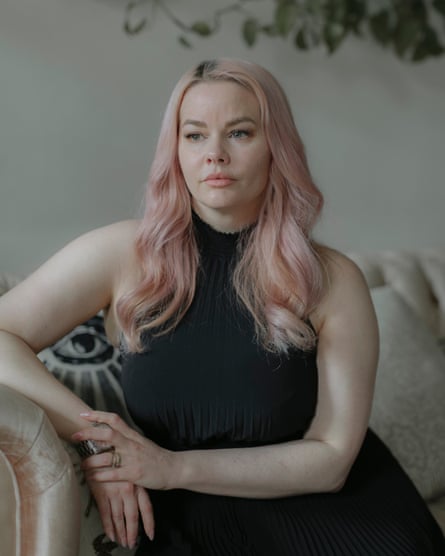
Rachel Waters doesn’t fit the mold of a southern belle. A Buddhist science writer with dyed pink hair and a septum ring, she has been in a relationship with two men, David and Chet, for nearly a decade. She calls them her husbands, though she is not legally married to either.
Rachel grew up in Harlem, Georgia, a quaint town outside Augusta – light-years away from her current home in New York City. Rachel describes it as small and quiet, friendly but conservative. “Everyone tends to know everyone else,” she says.
“Change happens very gradually here,” says Allison Stratton, a former hospice nurse and longtime friend of Rachel’s. “I’ve found that people are very quick to pass judgment on anything that doesn’t fit the mold.” But it’s also a close-knit, caring community, she adds.
Rachel has felt like an outsider – “an alien”, as she puts it – for most of her life. As a child, she was curious, outspoken and defiant in a conservative Christian community that expected girls to be quiet and obedient.
Her development progressed in uneven bursts. She says she scored exceptionally high on IQ tests and, by seven, was reading the entire Encyclopedia Britannica. But she couldn’t tie her shoes until she was eight. She was shuttled between advanced placement and special education classrooms, and struggled socially. Classmates bullied her relentlessly, but she often didn’t recognize it until much later. “I would think the bullies were my friends,” she recalls.
After Marsha’s death, Rachel read her mother’s journals and found entries about how Marsha had argued with her own brother and sister because they called Rachel “the worst child in the world”, saying she was too disobedient.
Rachel describes her mother as her “steadfast defender”. But as close as they were, even Marsha occasionally struggled with Rachel’s intransigence. Once, she told her daughter: “You were a perfect angel, Rachel – until you learned to speak.”
Still, she allowed Rachel to pursue her interests. She would bring her on business trips and let her spend her allowance on whimsical clothes, as long as they weren’t too risque. “She was an artist, so she was very permissive of my creativity,” Rachel says.
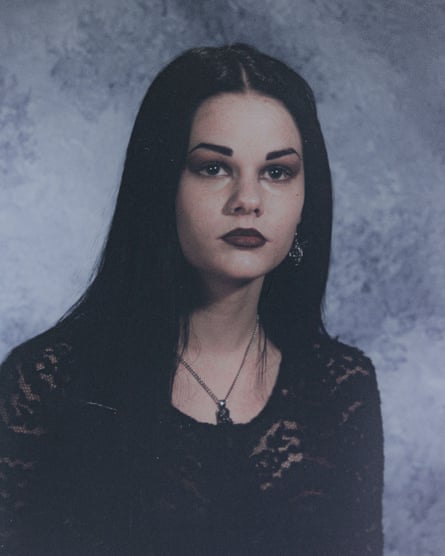
In high school, things changed. Rachel had emerged on the other side of puberty conventionally attractive, and generally understood how she was expected to look and behave. She still stood out – she was a goth who brought a Marilyn Manson lunchbox to school – but her classmates seemed to find this cool and intimidating.
After the 1999 Columbine shooting, however, early reports linking the killers to goth culture changed that. By 10th grade, Rachel found that her aesthetic suddenly frightened people. Teachers grew suspicious, security guards patted her down, and, tired of being treated like a threat, she transferred to an online program and graduated with a full scholarship to college.
It wasn’t until her late 20s that Rachel found her people. At 24, she married her first husband. They soon left Georgia, and Rachel started working as an investigator in Washington DC, doing background checks into federal employees seeking top secret security clearances. On the weekends, she would travel up to New York, where she worked as an alternative model – gothic beauty, fetish fashion – and nightlife hostess.
Eventually, she moved to New York full-time. Shortly after, she and her husband divorced. For the first time in her life, people seemed to love the defiance and directness that had bothered her southern family and peers. “Rachel, most places are not made for people like us,” a friend told her once. “But New York is.”
Years later, at her husband David’s urging, Rachel was tested for and diagnosed with autism at the age of 31.
“It was like the heavens had opened up and 1,000lbs of weight had been removed from my shoulders,” she says. “I suddenly understood why people found me off-putting and disconcerting.”
She learned to be open about her diagnosis, and people seemed to accept her more for it. Still, when she would visit her mom in Georgia, she generally tried to “mask” – hide her autistic tendencies and imitate the behavior of neurotypical people.
But the sicker Marsha got, the harder it became to mask. With her emotions so heightened, she vacillated between being hysterically emotional or cold and clinical.
“I know that contributed almost certainly to me not being very liked [by the Marshall Pines staff],” she says. “Everything that happened with my mom was my greatest trauma magnified.”
Observing her interactions with the Marshall Pines staff, Chet suspected there was a cultural bias working against Rachel. “Here comes this person who thinks she’s better than us, who doesn’t fit the mold, who lives in New York and has two husbands,” he said. “That became the whole relationship.”

After Marsha’s death, Rachel’s relationship with her remaining family – her mother’s brother, Ronnie, and mother’s sister, Gayle – disintegrated. Her text messages and Christmas cards went unanswered, and she was blocked on social media.
One day, when she was back in Harlem, she drove by her aunt’s house and saw Gayle in the yard. Rachel rolled down her window and said: “Hey, Aunt Gayle!” Without a word, her aunt turned her back and walked back into her house.
“It was clear that these people who had been a part of my life no longer wanted me to be a part of their lives,” Rachel says. “I don’t know if it was because of the investigation. Maybe they were only ever close to me for my mom’s benefit.”
Ronnie and Gayle did not respond to requests for comment.
Historically, treatment for the seriously ill was largely limited to palliative care, offering sufferers comfort and symptom relief at the end of their lives. But with antibiotics and 19th- and 20th-century advances, illness and injury became easier to manage.
Death began to seem avoidable, or at least delayable.
The modern hospice philosophy was developed by Cicely Saunders, a nurse, physician and social worker who opened St Christopher’s Hospice in London in 1967. She emphasized treating not just physical pain, but also patients’ emotional and spiritual needs, as well as those of their caregivers.
The first US hospice opened in 1974, and in 1982 Congress introduced the Medicare hospice benefit. Today, nearly half of Medicare beneficiaries receive hospice care. Still, experts say distrust persists among much of the US public.
“There’s a big stigma around hospice, because people think it’s weird, and they think we kill people,” says Stratton. “It has this stigma of giving up.”
This couldn’t be further from the truth, says Dr Debra Parker Oliver, professor of palliative medicine at Washington University St Louis. “I’ve not seen a hospice patient give up,” she says. “They may become resigned to the inevitable, or they may choose not to fight for length of life, but they’re going to fight for comfort.”
What that comfort looks like varies, she says. Some patients prioritize complete pain relief, even if it means being unconscious much of the time; others accept some discomfort to remain alert.
But the kits can also be unsettling. Families are often handed powerful medications without fully understanding how or when to use them, which can be distressing. Instructions and training vary widely. Some hospices provide detailed guidance; others leave the kit and tell families to call with questions.
This can create anxiety, as one 2013 paper Oliver co-authored in the Journal of Pain and Symptom Management showed. Caregivers reported difficulty in assessing pain and administering medication, and worrying about side effects.
One man told researchers: “I’m not a doctor, and I do not know if I helped her go faster or slower or what, hell I do not know.”
In the collective mind, morphine is often associated with death or addiction. A lethal dose of morphine is usually about 200mg, though this varies depending on a patient’s health and medical history.
“You’re taught morphine is a bad thing, and now you’re giving it to somebody every hour in their final hours,” says Oliver. “You can see why that would be disturbing, and why someone who doesn’t understand would come in and says: ‘You killed them.’”
But in hospice, the relationship is often the reverse.
“Giving someone morphine when they have one toe through the veil allows them to relax. It allows them to be out of pain, and then they can go on,” says Stratton. “Pain and stimulus keeps them around.”
At Marshall Pines, tensions between Rachel and staff had been building for months.
The conflict was partly structural. Marshall Pines was not a medical facility but an assisted living complex, where residents paid for help with daily tasks: bathing, dressing, managing medications. Most staff were aides, not nurses.
Decisions about treatment did not rest with them. Those belonged to hospice and to Rachel, who held power of attorney.
At first, Marsha thrived. Her room was large and sunlit, scrupulously tidy, with a small crucifix above the bed.
Marsha, a retired satellite communications engineer who rose through the army’s civilian ranks, was a devoted Christian. She liked to watch Jeopardy and NCIS, and had a big crush on the show’s leading man, Mark Harmon. “She would look at him and say, ‘Isn’t that a handsome man?’” Chet laughs. “Sometimes she referred to him as her husband.” Rachel and her partners decorated the walls with a framed photo of him, as well as Marsha’s own paintings.
But over time, the pain from Marsha’s cancer and bone deterioration wore on her. In April, a certified nursing assistant reported that Marsha had been yelling at residents and staff, “saying she had enough money to have everyone killed”.
As her behavior grew more erratic and aggressive, managers told Rachel she had to intervene. Rachel remembers one nurse yelling over the phone: “What are you going to do about your mother?”
Part of the tension stemmed from Rachel’s reluctance to put her mother on the antipsychotic Seroquel, despite staff urging. Marsha had taken it at home before, but instead of calming her, it intensified her delusions. One night, in a frenzy, she woke Rachel’s partner David and insisted she needed to cut off her own leg. She stopped taking it soon after.
In Marsha’s progress notes on 30 May 2023, Marshall Pines’ executive director Kellie Pugh described a strained in-person meeting with Rachel.
“This writer expressed to Rachel that she needs to stop dictating what medications her mom needs to be on and trust hospice to do what they do,” Pugh wrote.
“She was advised to pick and choose her battles and asked would she rather her mother have more dementia or be in pain all the time. Rachel agreed and stated she understood.”
Prescribing antipsychotics to dementia patients is not uncommon; they are often used to treat distress and violent outbursts. But the practice is controversial. Until recently, there were no FDA-approved antipsychotics for treating dementia, and studies found that these drugs increased the risk of falls and death in dementia patients.
“For many behaviors, it’s kind of like killing a fly with a cannon,” psychiatry professor Dr Helen Kales told Michigan Medicine in 2016. “People have side effects that worsen behaviors, and you have to give them even more medication.”
In May 2023 however, the FDA approved the antipsychotic Rexulti “for the treatment of agitation associated with dementia due to Alzheimer’s disease”. On 10 June, Marsha was put on it.
Tensions continued to rise between Rachel and the Marshall Pines staff. Speaking to an investigator after Marsha’s death, Sheppard, the nursing aide, expressed concern over some of Rachel’s behavior and statements.
“She wants [Marsha] to die. She even told me she had looked into physician-assisted suicide, and they would have to go to Switzerland to do that,” Sheppard said.
And later: “She did not want [Marsha] living any longer.”
Rachel first read Sheppard’s words more than two years later, when she and her lawyers finally received the prosecution’s discovery materials. She remembered discussing assisted dying – but with another nurse, not Sheppard. Also, she had been talking about herself, not Marsha.
If she got Alzheimer’s, Rachel had said, she would go to an assisted-dying clinic in Switzerland. “It was a half joke,” she says. She says her comment about not fearing death had been a reference to her Buddhism, and the acceptance of life’s impermanence.
Kellie Pugh and Marshall Pines declined to comment on this story. Casey Sheppard did not respond to requests for comment.
Rachel was organizing a party for her 42nd birthday when the anonymous comment appeared.
She had just posted a tribute to her mother on Instagram when an anonymous user named wrote under it:
Why have you been indicted for murder in your mother’s death?! That is why your family has disowned you. Shame on you.
It was followed by another comment that included an indictment number, a judge’s name, and the charges of malice murder and felony murder.
Rachel was blindsided. She hadn’t been told a warrant had been issued for her arrest.
In a panic, she called Robert Homlar, the same criminal defense attorney she spoke to on the day her mother died, and who had been reassuring her for the last 18 months that it was unlikely she would be charged with anything.
It was Friday evening, and Homlar was sitting at the bar of the Ritz Carlton in Lake Oconee, Georgia, a couple of drinks deep. He was able to confirm the indictment was real, but wasn’t in a position to deal with the situation.
“But I know who is,” he said.
Within the hour, Rachel was on the phone with Brian Steel.
Steel is arguably Georgia’s most famous attorney. He represented rapper Jeffery “Young Thug” Williams in the much-publicized racketeering trial involving Williams and his associates from YSL records. The rapper Drake has named a 2015 song after him. In April 2025, he was drafted on to Sean “Diddy” Combs’ defense team, and that same month, the New Yorker magazine ran an extensive profile of him.
Despite his glitzy clientele, Steel is not what you might expect from a big name attorney. He was described in the New Yorker as a man “of almost unbelievable purity”.
Steel says he took on Rachel’s case because it would have been “cruel” to not.
“When Rachel called me, there was a true, undeniable love she had for her mother,” he says. “She wanted to make it so others would never go through the agony she went through.”
During their first phone call, Steel told Rachel she would have to go down to Georgia to turn herself in so she could hopefully make bond in order to remain free before the trial.
Before hanging up, Rachel recalls Steel saying: “We are family. Your blood is my blood. We will get through this.”
After Rachel got off the phone, Chet and David asked her if she still wanted to have a party. “‘Oh my God, yes!” she replied. “I need to tell everybody what’s about to happen to me.”
At the party, she gathered the roughly 45 guests in the living room, stood on a chair and filled her friends in on the charges and the fact that she would be turning herself into the police. She might not be coming back for a while, she said. Some of her closest friends knew what was going on, but many didn’t. People were shocked and angry. Some cried.
Amazingly, it still managed to be a pretty fun night, Rachel says. She told her guests she needed to properly celebrate, because she could be in jail for years.
A week later, when Rachel, Chet and David made the drive from New York to Georgia, the mood was significantly more grim. Or as David put it: “It was basically the end of the world.”
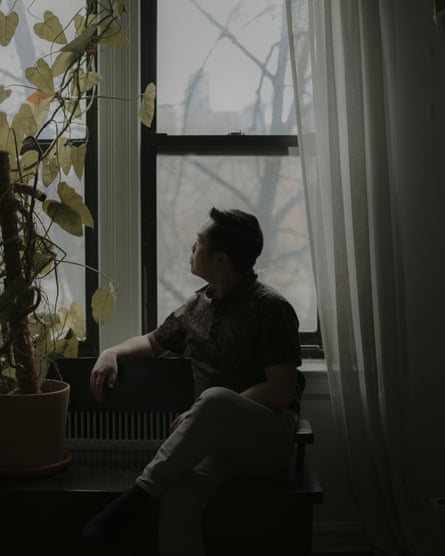
Driving south, Rachel had no idea how long she might be in jail.
As she was facing murder charges, it was very possible the judge would deny her bail. It could mean months, or years behind bars.
She, Chet and David had spent hours combing through case files and court documents, looking for any kind of legal precedent, but they couldn’t find any. “I only found people who had actually killed the person who was in hospice,” Rachel says. In those cases, there was strong evidence of intentional overdose, and none of the victims had been declared actively dying.
At 5am on 5 March 2025, Rachel walked into the Columbia county jail. Officials stripped off her clothes, sprayed disinfectant on her hair, underarms and crotch, and assigned her a number. Other women asked what she was in for, and then scoffed when she told them. “They were like, ‘Nah, you’re not a murderer,’” she laughs.
At the bond hearing, the courtroom held more than 30 of Rachel’s friends who had come to serve as character witnesses. Her ex-husband was present, as were old college professors, friends from New York, and people who had followed her on social media for years.
So many supporters had made the trip that district attorney Natalie Paine eventually asked Steel to stop calling witnesses. She stepped up to the judge and conferred quietly. Bond was granted.
All in all, Rachel was only in jail for 12 hours. She knew she was far luckier than most; her cellmate told Rachel she had spent more of her life in jail than out, even though she had never been charged with a crime.
The next few weeks were a whirl of activity as Rachel, Chet, David and Steel prepared for a possible trial. “It was like we were in a war,” David recalls. “We had to strategize.”
With Steel’s help, Rachel, David and Chet brainstormed defenses for anything the prosecution could possibly throw at them. They gathered reams of evidence: documentation Rachel had from Marsha’s last days, interviews with medical examiners, medical journal articles about the effects of morphine on the body.
The Guardian shared copies of the autopsy with two medical examiners unfamiliar with the case. Both said the autopsy was thorough and well done, but that it was almost impossible to determine from the information provided whether morphine toxicity was the cause of death.
The amount of morphine in Marsha’s blood “can’t be taken out of context”, says forensic pathologist Dr Michael Graham. The effect of a drug depends on the person’s tolerance to it (those who have been opioids before for pain management will probably have a higher tolerance), when they received the dose, and what other medications the patient was receiving.
In April, Steel sent their findings to the medical examiner at the Georgia bureau of investigation.
Then, more waiting. Finally, in early August, the examiner revised Marsha’s cause of death from “homicide” to “undetermined”.
Days later, Paine dropped the charges against Rachel.
Rachel was in bed at home in New York when Steel called to tell her that morning. She started to cry.
Chet and David were overwhelmed with relief, but what Rachel felt was more complicated. There was relief, sure, but also a lot of confusion and frustration.
The accusation had taken up years of her life, leaving her exhausted and unable to process her mother’s death. Her reputation, she felt, had also taken a huge hit: when you Google her name, there are still articles branding her a murderer.
“Murder suspect surrenders on charge of killing mom with morphine,” reads one March 2025 headline.
“Bond set for woman accused of killing her ailing mother,” reads another.
Not the sort of thing that tends to attract potential employers.
“My finances have been obliterated, my ability to work has been obliterated, and I have lost my family. I can’t conceive how they would think that I killed my mom. But they clearly feel like they didn’t know me,” she says.
Rachel has been working to draft and pass what she is calling “Marsha’s Law”. It would require that home hospice providers document what medications are included in each comfort care kit, advised dosing ranges and a list of who is authorized to administer these medications to the patient. The provider would also create a signed and witnessed document showing that approved family and caregivers have been trained and authorized by hospice staff to administer comfort care medications. Hospice companies would also be required to keep a copy of this document and provide it to law enforcement or the coroner in the event of an investigation.
“So if for some reason there’s a warrant, it is clear and upfront that family members are expected to use these substances,” Rachel says.
In March, Rachel launched a website with information about Marsha’s Law. She knows she still has a tough slog ahead of her. She is still consulting attorneys and hospice workers on a final draft of the law. Once that’s done, she has to convince healthcare companies to take on more liability and paperwork. She’ll also have to build enough public trust to be able to advocate for the law.
“The funny thing about being charged with murder, is even if you’re never found guilty, there are going to be a lot of people who look for evidence of guilt,” she says.
In 2016, Marsha came to visit Rachel in New York. Before she left, she and Rachel had an argument about faith. Marsha sometimes struggled with the fact that Rachel was not a devout Christian.
“She was tormented by the idea that she wasn’t sure if I would go to heaven or not,” Rachel says.
Weeks later, Rachel got a letter from Marsha in the mail. It was six pages long, full of additions, subtractions, and crossed out words. In it, Marsha endeavored to lay out what she had struggled to say in person: what she believed and why, what she felt she knew and didn’t know about God.
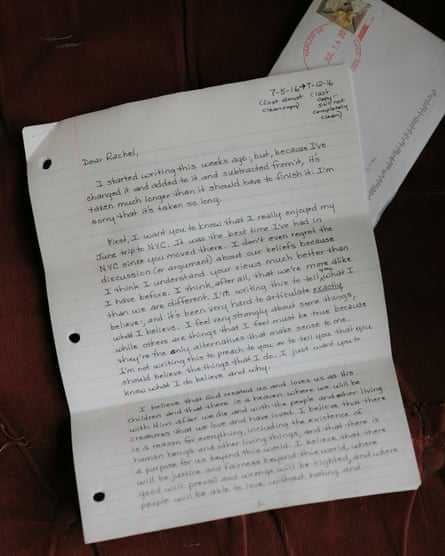
“I believe that God created us and loves us all as His children and that there is a heaven where we will be with Him after we die and with the people and other living creatures that we love and have loved,” she wrote in neat, bubbly handwriting.
In December 2025, four months after the charges against her were dropped, Rachel sits in her apartment in Queens. Her Christmas tree is up, some of Marsha’s old ornaments mixed in with her own, and cats prowl in and out of the living room. She tells her story energetically but carefully, occasionally turning to Chet and David to clarify a detail.
She knows some see her as a villain, but others see her as something of a mercy killer who bravely put her mother out of her misery. “Even people who are sympathetic to me, they all assume I did it.”
In one Reddit thread about her case, for example, users jump to her defense. “It takes an extraordinary amount of love to make those decisions,” wrote one.
Rachel says she is not the hero they think she is. She reiterates that she didn’t try to hasten Marsha’s death, and says that death from morphine or any other medication overdose “is a genuinely awful way to die”.
Hospice workers to whom Rachel and the Guardian have spoken to are divided on the proposal. Some say it would better protect caregivers and staff. Others argue it addresses a problem that doesn’t truly exist – that while Rachel’s experience was a nightmare, it’s not a risk most caregivers face.
“In medical training, we talk about horses and zebras,” says Angela Novas of the Hospice Foundation of America. “We hear hooves, and we think that’s a horse. We don’t hear hooves and think that’s a zebra.” In other words, consider the simplest, most likely scenario first. “I think Rachel’s case was something of a zebra.”
That zebra case cost Rachel her career, her life savings, her husband’s retirement savings – and her relationships with her remaining family back home.
Rachel wonders whether the public will accept her as a spokesperson for legislation like this, or whether they, like her high school bullies, extended family members, and assisted living aides, will be put off by her.
But she is determined. She says she feels she is on a mission, one that requires her to share her story so others might avoid a similar nightmare.
“I want people to know my story and know who I am,” she says. “That is the only way I can achieve justice for my mom.”