3 months ago
93
3 months ago
93
Last month a Jamaican woman said her teenage son had been pulled from lessons because school staff had deemed his afro hairstyle inappropriate.
“The dean of discipline called me to state that my son has been removed,” Michelle Scott said. “You’re telling me that you took him, a fifth-form student, out of classes to go and get a haircut?”
The school, Ardenne high in Kingston, Jamaica, denied the boy had been removed from class, but said he had been spoken to about the “alleged infraction”. According to Jamaica’s school grooming guidelines: hair must be neat, clean and well-maintained at all times.
Disputes over natural Black hairstyles continue to surface throughout the African and Caribbean diaspora, raising questions about the extent to which grooming rules, rooted in colonial ideas about “neatness”, still shape how Black hair is treated in workplaces and classrooms.
This is apparent even in Black-majority countries that were once colonised. Schools in countries such as Ghana, Nigeria and Uganda continue to require girls to cut their natural hair before they are allowed to enrol.
Despite many of these countries achieving independence from Britain, colonial-era attitudes remain embedded in global institutions decades later.
In Trinidad and Tobago, a student said he felt “embarrassed” after he and several classmates were prevented from graduating with their peers because their hairstyles were considered unsuitable for the ceremony.
There is the case of Darryl George in the US, who was suspended from school as officials said his locs violated the dress code, and of Damon Landor, a Rastafarian man who is suing a Louisiana prison for forcibly cutting off his locs during his time there.
In the UK, high-profile incidents have included the case of Chikayzea Flanders, a 12-year-old boy who left a west London school after being told to cut off his dreadlocks, and Ruby Williams, who was repeatedly sent home from school because of her afro hairstyle.
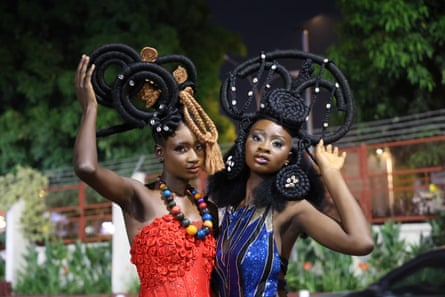
Hair discrimination can be traced back to the trade in enslaved African people and has its roots in Eurocentric ideals.
In many African societies, hair traditionally carried cultural meaning, signalling a person’s social status, community or stage of life. During the transatlantic slave trade, enslaved African people’s hair was often forcibly shaved after capture or before sale, stripping them of cultural markers tied to hairstyles.
Olivette Otele, a professor of history of slavery and memory at the University of Bristol, said: “The Middle Passage was characterised by power, fear, pain, humiliation and death. Removing their hair was one of many psychological tools used to show the enslaved that their cultural practices did not matter because they had become property.”
While shaving heads was sometimes justified as a hygienic measure on slave ships, Otele said it also functioned as a way of asserting power and stripping captives of cultural identity.
During the colonial period, European authorities increasingly imposed grooming rules that discouraged or banned traditional African hairstyles.
Afro hair was sometimes described by colonial officials in derogatory terms and framed as “unprofessional” or “uncivilised”, reinforcing the idea that European standards of appearance represented order and respectability.
Verene Shepherd, a professor emerita of social history at the University of the West Indies, suggested that colonial attitudes continue to influence school policies today and this disproportionately affects Black students.
“Afro-textured hair and Black hairstyles have for a long time been regarded as problematic by some people,” she said. “We have heard comments from children in schools that locs, twists and other styles are not accommodated because of the view that there needs to be uniformity.”
Shepherd said such rules often ended up penalising Black students whose hair textures or cultural styles fall outside narrow definitions of what is considered acceptable.
The legacy of enslavement, she said, continued to shape attitudes in subtle ways, whether people realised it or not. “We can say that certain of the current tendencies go back to slavery, but I’m not even sure if teachers are aware of that history,” she said.
Shepherd, who says she has advised the Jamaican government on developing non-discriminatory grooming policies, added: “During chattel enslavement, introduced and maintained for centuries by Europeans, including Britain, women’s hairstyles and even dress were regulated and targeted. In the post-slavery period, Black women tried to recover their creativity, their sense of self and their sense of style.
“But over the years, churches and religious bodies also tried to regulate women’s dress and hairstyles and that kind of conservatism, that Victorian gender order that typified post-slavery society, I notice has continued today.”
Michelle De Leon, the founder of World Afro Day, said progress had been made in some countries, but the overall picture remained uneven. “I have definitely seen some progress on hair policy in schools,” she said, pointing to guidance from the UK’s equality watchdog on school uniforms designed to help prevent hair discrimination.
“However, the global picture is very mixed. There is still legal action in the UK and the US about individual cases of children being denied education because of their natural hair or cultural hairstyles.”
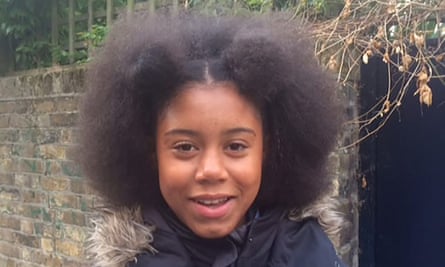
Signs of change are emerging in some countries.
In France, lawmakers have backed legislation aimed at tackling discrimination based on hairstyle, texture or colour after it was championed by the Guadeloupean MP Olivier Serva, who argued that people of African descent often face pressure to alter their hair to fit professional norms.
California in the US became the first state to ban discrimination based on natural hairstyles in 2019, a stance since adopted by many others. The Crown Act, which stands for “create a respectful and open world for natural hair,” recognises hairstyle discrimination as a form of racial discrimination.
And schools in the UK have been able, since 2020, to sign up to the Halo Code, which pledges to end discrimination against black hairstyles.
Campaigners have been pushing for afro-textured hair to be made a protected characteristic under the Equality Act 2010, which would cover discrimination in various contexts including workplaces.
Some Caribbean governments have implemented reforms.
Anguilla became the first Caribbean island to introduce a national hair discrimination policy in 2022.
In 2023 Trinidad and Tobago introduced a national school hair code that allowed students to wear locs, Afros, twists and cornrows.
In Sint Maarten the minister of education, Melissa Gumbs, has called on schools to prepare for proposed legislation that would prevent grooming policies based on natural hair texture or culturally significant hairstyles from discriminating against students.
“Schools continue to be hyper-focused on maintaining strict and oftentimes discriminatory hair and grooming policies,” she said. “Many of these can be traced to subjugating colonial-era standards of appearance rather than providing a safe, dynamic and innovative learning environment for students.
“While societies have evolved, the lingering perception that natural afro-textured hair must be controlled, altered or hidden to be considered ‘acceptable’ still echoes within some institutional policies today. We owe it to current and future generations to carve away the ugly remnants of that history.”