3 months ago
65
3 months ago
65
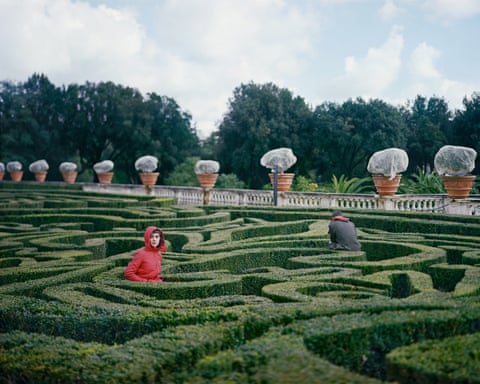
Intriguing images abound in Yolanda del Amo’s new book Archipelago, which explores how our longing for closeness coexists with a desire for individuality
Tue 10 Feb 2026 08.00 CET
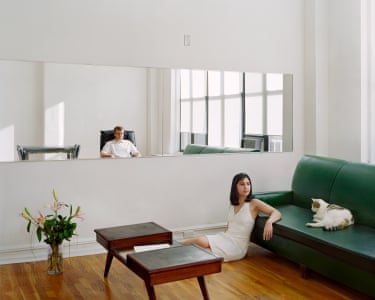
Claudia, Peter, Luna, 2006
Spanish-born, New York-based photographic artist Yolanda del Amo’s debut photobook explores the tension between the inner and exterior realities of human life. It raises questions about class, gender, intimacy and the social connectivity of our times. Archipelago is published by Kehrer Verlag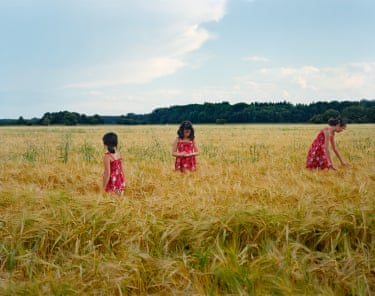
Anabel, Paula, Clara, 200
Archipelago focuses on the contradictions of human relationships across countries, generations and genders. Del Amo explores how our longing for closeness coexists with our desire for individualityPhotograph: Yolanda del Amo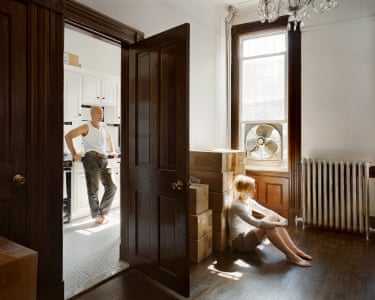
Sarah, David, 2007
Through staged tableaus featuring friends and family, Del Amo constructs moments that expose the social frameworks shaping identity, class, family and gender. Her photographs illustrate how closeness and separation coexist within the same space and reveal the fragile balance between connection and solitude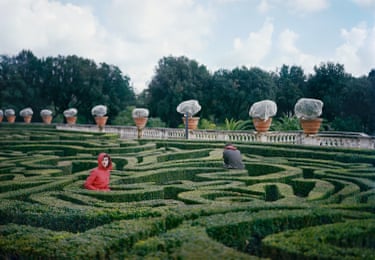
Noemí, Joseant, 2010
Photographed between 2004 and 2014 with a large-format camera, Archipelago was made in real interiors and outdoor locations in various countries including Spain and the United States. Del Amo describes the photographs as ‘a collection of “islands”, separated by the loneliness of each one and linked by the intimate bond of belonging to the same world’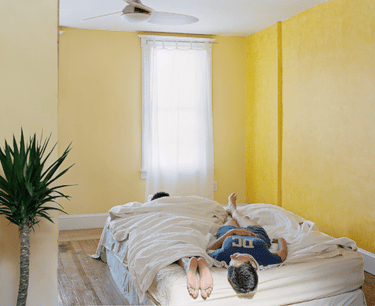
Sophie, Josh, 2008
Del Amo: ‘The relationship between the people defines itself through the setting that conversely becomes a psychological extension of the characters’Photograph: Light Work 6/Yolanda del Amo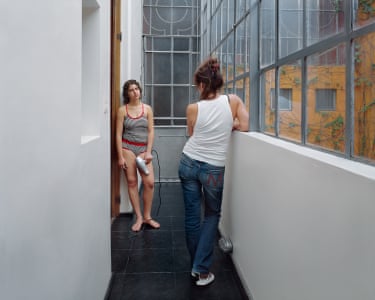
Diana, Josefina, 2007
Influenced by the dance theatre of Pina Bausch, whose work she experienced during her formative university years in Germany, Del Amo draws from Bausch’s exploration of interpersonal relationships as well as her precision in translating emotion into gesture and movement’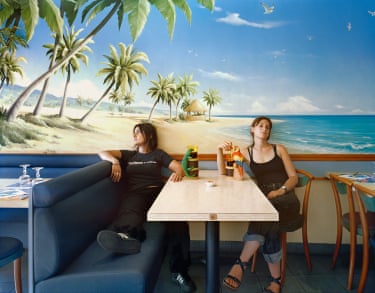
Isabelle, Emilie, 2006
In her essay Islands in the Sea of Life, Vicki Goldberg writes: ‘Del Amo does not take portraits; she invents, designs, and constructs moments from unwritten plays. The casts are amateurs – friends and relatives – directed by her to act the feelings and relationships she has in mind, and the settings are arranged to mirror or explain the emotions on view. The result is a union of psychological tension, subtle formality, wavering levels of reality and striking visual beauty’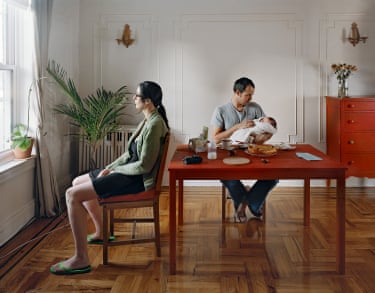
Elena, Malena, Dean, 2005
The viewer is invited to observe and read the emotional exchanges between its subjects. In this scene, a couple with a newborn embody this tension: the mother, turned away from her family, sits by a sunlit window with her robe loose and her stare blank, while the father, absorbed in contemplating the baby he holds, remains unaware of her distance. Small objects – tissues, a baby bottle – mark the reality of new parenthood, while the woman’s withdrawal suggests exhaustion, perhaps depression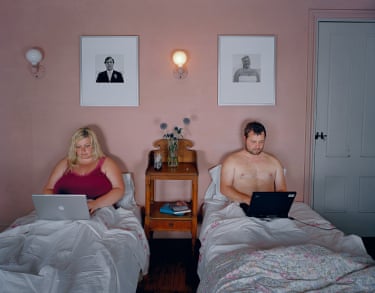
Jesse, Kerry, 2005
Years before it became a public anxiety, Del Amo pictured how technology contributes to isolation even in shared space. In this photograph a young couple are side by side in separate beds, each staring at a laptop, their faces illuminated by the screens. The wedding portraits of her over his bed and his over hers suggest the novelty of their matrimonial status, yet there is already a lack of affection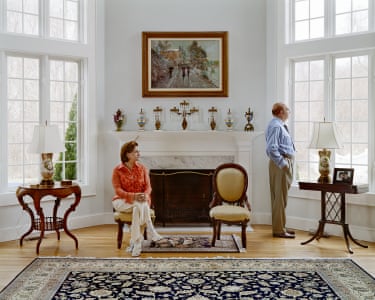
Minou, David, 2006.
Jean Dykstra writes in her essay Alone Together: ‘Del Amo grew up immersed in theatre and film. Her father is a filmmaker and playwright who loved European filmmakers, and she watched a lot of movies, including Michelangelo Antonioni’s so-called “alienation trilogy”, which explores the isolation and emptiness in the lives of his bourgeois subjects. Having gone to rehearsals frequently with her father, Del Amo was also influenced by Bertolt Brecht’s notion of breaking the fourth wall so that members of the audience become active participants rather than passive observers’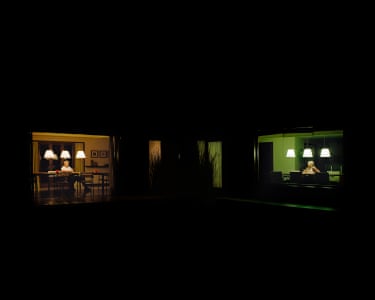
Marcela, Hugo, 2007
Dykstra continues: ‘Here’s another secret in these pictures: they can be funny. In the most understated way, they are often playful, with interventions and contradictions that slyly puncture the sombre surface’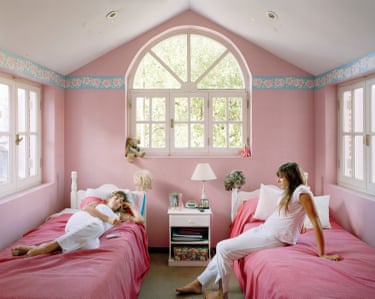
Macarena, Rosario, 2007
Dykstra adds: ‘In Macarena, Rosario, two young women occupy twin beds in what must have been their childhood bedroom – very pink, with a doll and a teddy bear slouched on the windowsill. But on a bedpost of each bed rests a wig, one blonde, one brown. They’re a puzzle, those wigs. Are they childhood props for playacting or the means of disguise and escape?’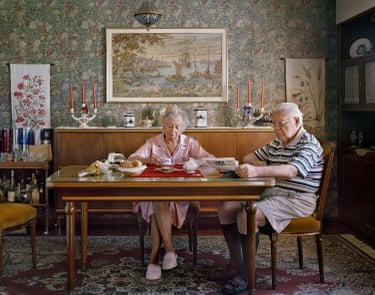
Edith, Juan, 2007
Together, the photographs form a study of intimacy and estrangement. They depict people performing roles that both define and confine them. Del Amo’s style is deliberate: though compositions are balanced and quiet, each portrait is emotionally chargedExplore more on these topics