3 months ago
99
3 months ago
99
There was a meme recently featuring Tony Soprano looking characteristically menacing, with a caption that reads: “Imagine telling him he needs to create short form content to engage the algorithm.” But that sentiment feels inescapable: 82% of all internet traffic is now made up of videos, and the number of short-form videos published on the likes of TikTok and Instagram grew by 71% in the year from 2024.
You may have noticed there is a particularly high number of videos featuring people’s faces, which the algorithm rewards. All of a sudden, chefs, lawyers, podcasters, critics – all people with jobs once associated with an off-camera existence – are turning the lens on themselves. Even film director Werner Herzog, a once proud non-social media user, is now sizzling steaks and doing unboxing videos to camera.
So how are creative people feeling about having to meet the demands of Silicon Valley algorithms? “It’s a hideous situation,” says comedian Stewart Lee, who so far has managed a successful career without using social media. “We’re at a real crossroads. The worst people on earth control the means of communication.”
Lee says that without social media, it has become increasingly difficult to signpost to his audience where to buy tickets directly – and for less money – than via “parasitical” intermediary sites. So in a sales push for his recent London standup show, he was encouraged by his marketing person to try video. “They were desperate for me to create some kind of viral content,” he says. “I went out with the wolf costume [a prop from the show] but I just couldn’t bring myself to do it. Sometimes work benefits from an air of mystery; I don’t want people to know who I am in detail.”
Allow Instagram content?
This article includes content provided by Instagram. We ask for your permission before anything is loaded, as they may be using cookies and other technologies. To view this content, click 'Allow and continue'.
And yet, if you want to be a successful creative person – and especially if you want anyone under 40 to engage with you – you need to start making videos. “I have to be present, otherwise I run the risk of no one turning up to watch us,” says Kingsley Hall, vocalist with the Teesside electronic-punk outfit Benefits. “But none of us really want to do it. It’s a horrible conundrum. This grinding, relentless popularity contest. Seeing creative people chasing the algorithm, craving to go viral, and completely forgetting their purpose: it’s tiresome.”
Lee agrees: “I’m going to have to get social media because I need to keep working. It’s horrifying, but so is the thought of gradually watching audiences ebb away.”
It’s a conundrum right across the creative industries. Actor Chike Chan, who has appeared in everything from Batman Begins to A Thousand Blows, doesn’t want “to be instantly recognisable”, he says. “A lot of my peers think more exposure means more work but I think that’s a bit of a myth. It’s a chicken and egg situation. Do you get more work because of social media? Or do you do more social media to try to get work?”
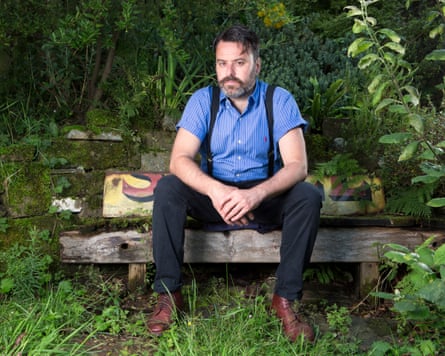
And what about the world of writing? It is “an introvert’s pursuit”, according to bestselling author Benjamin Myers. He has mixed feelings about the huge BookTok community within the world of short-form video. “I’m really grateful people want to enthuse about books and broadcast that,” he offers. “But that world is full of tropes. To film yourself crying because you’ve read a book is completely absurd. There’s something very performative about it, which I find odd, because reading is such an introspective, personal experience.”
That’s not to say Myers isn’t participating online. “I’m as addicted to Instagram as anyone else,” he says. “But it’s not reality. It’s a marketplace, and every time you step into it someone is going to try and sell you something – and occasionally you’re the person doing the selling.”
Even the old derogatory expression of someone “having a face for radio” is increasingly irrelevant, because a face is now required. Many shows are filmed, as are endless social clips, while presenters are also trying to boost their profiles. BBC Radio 6 Music DJ Deb Grant is a convert to creating camera-facing videos. “I feel obliged to have a presence,” she says. “I don’t enjoy it and it feels exposing but it’s an important part now. It’s about building familiarity, and attaching people’s ideas about what you have knowledge and authority on, with your face.”
But beside artists who are hostile or mildly begrudging towards this new way of working, there are others who are enjoying it, such as comedian Lorna Rose Treen. Since she started four years ago, numerous video skits have gone viral, thanks to her surreal and subversive wind-ups of the ubiquitous street interview format. They were noticed: she is now part of the team for the UK Saturday Night Live. “It’s so cheap to make [videos] that you can spaff out loads,” she says. “For a tiny budget, you can be really creative and experiment, which is much harder to do in traditional telly now.”
As the Edinburgh festival fringe becomes prohibitively expensive for new comedians, her strong online presence means she can sell out her shows in advance. She sees other comics struggling in this new landscape, though. “I know incredible, award-winning comedians who just cannot crack online,” she says. “There is a lot of frustration and bitchiness. Some people resent comedians who have gone viral but haven’t had any live experience, but I think it’s all valid. We have to adapt.”
One experienced music journalist who now publishes a Substack newsletter (and wanted to remain anonymous for this article) has recently started doing camera-facing content due to the economics of it. Record labels don’t have the budget to pay for adverts on his newsletter. “That budget is now in social media,” he says. “So if you want some of that, you need to come up with some of that content. I’m doing it to essentially chase the money.”
Crucially, it’s coming good. “I didn’t want to do this but it’s actually been fun and it’s working,” he says. “It’s really satisfying when you’ve had years of a dwindling audience, and then you do this thing that you may not be comfortable with but the payoff is it actually reaches people. I would love for people to still want to read 4,000 words on a new band, and pay for it, but we are not there any more, and haven’t been for quite a long time.”
What about those who have signed up wholeheartedly to the new era? Danielle Udogaranya, founder of Ebonix and an award-winning voice in gaming and technology, has noticed a shift on platforms such as Twitch, where people follow livestreaming gamers. “It’s no longer just a home for gameplay – personality-led content thrives alongside it. Many creators now exist somewhere between player, performer and narrator of their own lives.”
That can put a greater requirement on people to spend even more time in front of the camera, performing as well as playing. “For a lot of creators that pressure never really switches off,” she says. “The cycle of posting, performing, engaging and staying visible can quietly turn into burnout.”
The demand on independent musicians, too, is growing significantly and often superseding the main creative part of their job. The jazz and electronica artist Yarni calculated that he spent four hours a day in 2025 creating video content to promote his music. “In that time, I barely picked up an instrument,” he recently wrote.
It’s getting some people down. One artist manager tells me: “The bane of my life right now is having to sit between a label, who are pushing for content and hitting the algorithm, and trying to protect a band’s morale.”
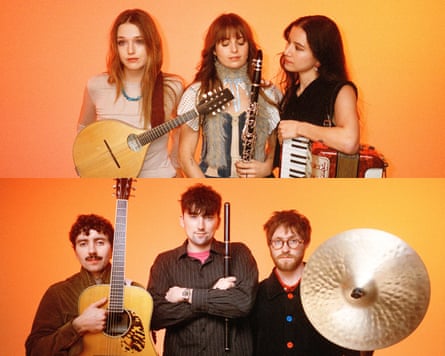
So is it possible to make it in the short-form video era without engaging in it? “We never cared at the start and we don’t really care now,” says Charlie Wayne of art-rock band Black Country, New Road. “But since we formed in 2018, there is 100% more pressure to do it. The real change is the expectation of presence. That because you have the option of engaging your audience constantly, you should.” Wayne feels that while “there’s nothing wrong” with making short-form video, “we have always wanted to be a music-first band, and that’s still the case. And I still believe we live in a landscape where an audience rewards the music.”
Udogaranya argues that more people need to think this way. “Stepping away from screens, having interests outside of digital consumption and allowing yourself to be offline without guilt all matter more than the algorithm ever will,” she says. “Creativity needs space to breathe. Without it, you’re just sustaining output. That’s not a sustainable way to build a career or a life.”
But you may risk being left behind, particularly as social media reinvents itself. Hall says Benefits initially benefitted from Twitter: “We used the tools we had to create our own myth and market ourselves. But when Musk turned X into one big rightwing reach-around, all the stuff we were doing became irrelevant.” More generally, he says, “social media democratised promotion and, momentarily, it seemed to level the playing field. But these things become commodified and the field all of a sudden slopes 45 degrees and you find yourself struggling.”
Being so in thrall to social media like this, so at its mercy, is what really worries Lee. “A lot of successful people now have very bitty acts because they’re assembled from things they’ve created to promote themselves on social media,” Lee says. “It’s a case of the cart before the horse, where the promotional method is defining the timbre of the work.” In reality, Lee says, he is “a cooperative, functional human being”, while he presents himself in his act “as an obstructive, obstreperous, arrogant, self-loathing man”. But in a world led by social media, “I don’t know whether it’s possible to maintain them both any more”.