5 hours ago
6
5 hours ago
6
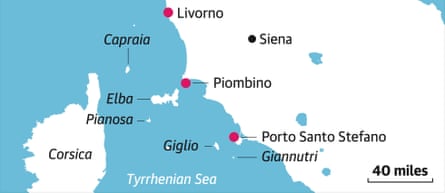
Scattered between the Tuscan coast and Corsica, the seven islands of the Tuscan archipelago offer a striking contrast to mainland Tuscany. All are part of a protected national park, but each has its own character – some are lively, others tiny and sparsely inhabited. Montecristo and Gorgona are only accessible via strictly limited guided tours, but here’s a brief guide to the highlights of the other five.
Elba: the all-year-rounder
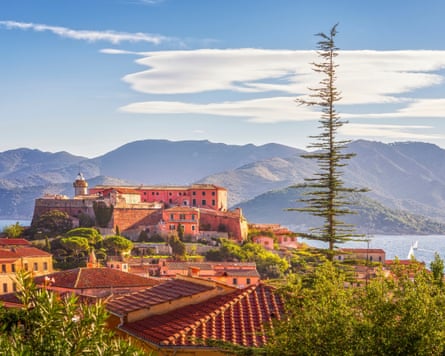
As Italy’s third-largest island, and with a year-round community, Elba is the archipelago’s main tourist hub, blending Napoleonic history with rugged landscapes, lively seaside towns and fine beaches. It is famous for Napoleon’s brief 1814 exile at the Palazzina dei Mulini, but its history runs much deeper, with 16th-century Medici fortifications to defend against pirate raids around the coast, and medieval hill towns, some standing on sites occupied since Roman times, inland.
Beach lovers tend to divide between the white-pebble coves of Sansone and Capo Bianco near the largest town, Portoferraio, in the north, and the golden sands of Fetovaia and Cavoli in the south-west beneath Monte Capanne. Marina di Campo on the south coast is a favourite for watersports, and windsurfing and sailing schools are popular in many resorts, from Procchio in the north to Lacona in the south.
Hikers can explore the 36-mile (58km) Grande Traversata Elbana, crossing the island from Cavo in the north-east to Pomonte or Patresi on the west coast, passing along mountain ridges and through traditional villages. Usually completed in three or four days, it’s best tackled in spring or autumn.
Where to eat: In Portoferraio, Ristorante da Gianni is a favourite for handmade pasta, seafood and traditional cuisine. Try the house speciality, orecchiette with prawns and courgettes. In Marina di Campo, Da Piero serves seafood-focused dishes right on the beach.
Where to stay: Near Fetovaia, Hotel Montemerlo (doubles from about £88 B&B) offers a relaxed, eco-conscious stay among olive groves. In Marina di Campo, Hotel Punto Verde (doubles from about £90 B&B) is a charming family-run hotel near the beach. On the west coast Hotel Gallo Nero (doubles from £79) is a family-run hotel overlooking Capo Sant’Andrea Bay. In an 18th-century building in Portoferraio’s historic centre, Indarsena (doubles from £86 B&B) is 10 minutes’ walk from several beaches.
Getting there: Ferries from Piombino to Portoferraio take about an hour with Toremar, Moby or Blu Navy.
Giglio: the charming isle
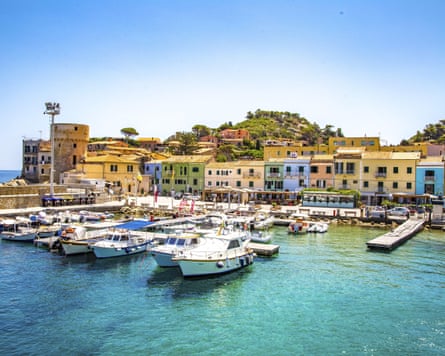
At just 21 sq km, Giglio is small but has three villages, secluded coves, an extensive coastline and a landscape of historic terraced vineyards. Access for private vehicles is heavily restricted during August, with exceptions for longer stays, which helps preserve its peaceful atmosphere, while buses and taxis link the harbour, villages and beaches, so a car-free holiday is easy.
From Giglio Porto, trails lead to hidden coves and hilltop viewpoints, while the medieval lanes of Giglio Castello, a fortified 12th-century hilltop village, are perfect for an aperitivo and an evening stroll.
Beaches have distinct characters. Campese, on the north-west coast, is the largest, with reddish-gold sand and views of the 16th-century Torre del Campese. Cannelle, in the east, offers pale sand and crystalline water, while farther north, Arenella combines golden sand, granite boulders and clear water for snorkelling.
Where to eat: In Giglio Porto, Ristorante Doria is a seafood favourite with a sea-view terrace (try spaghetti alla chitarra with sea urchin and toasted breadcrumbs). In Campese, Da Zio Meino offers cucina povera (peasant cooking) such as pancotti di mare and spaghetti alle vongole e alla bottarga (with clams and cured mullet roe).
Where to stay: On a hillside overlooking Giglio Porto, B&B La Vela (doubles from £87 B&B) is a small guesthouse with maritime-themed interiors. On a headland above Campese Bay, Le Poste di Simplicio (doubles from £100 B&B) is a family-run B&B with sweeping sea views.
Getting there: Toremar or Maregiglio ferries run from Porto Santo Stefano to Giglio Porto in about an hour.
Capraia: a wild hikers’ paradise
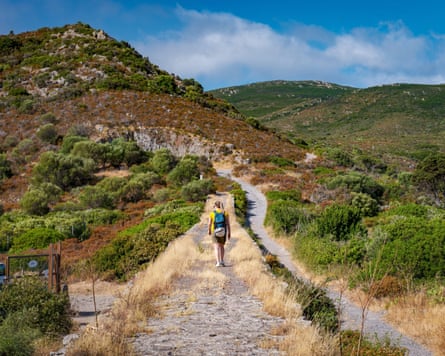
Located just over 20 miles (33km) north-west of Elba, Capraia is one of the archipelago’s most remote islands. Largely car-free, with few roads, it is best explored on foot along mule tracks winding between sea cliffs, hidden coves and 16th-century Genoese fortifications, although taxi boats and a bus provide limited transport.
Highlights include the red rock formations of Cala Rossa, the Genoese fortress of San Giorgio and the 16th-century Torre dello Zenòbito.
Beaches are few, but swimmers can cool off at Cala San Francesco, hike to Cala del Ceppo and Cala dello Zurletto, or take a taxi boat to Spiaggia della Mortola, one of the few sandy stretches.
after newsletter promotion
Where to eat: In the main village, the fixed menu at Il Carabottino changes according to what the local fishers happen to bring ashore, while Il Pigghiolo takes a more contemporary approach, reworking island flavours in dishes such as squid parmigiana and cod croquette.
Where to stay: Accommodation is limited, but La Mandola Eco Hostel (doubles from £70 room-only) near the port is a restorative basecamp for walkers, beachgoers and divers, with a sheltered saltwater pool. In Capraia village, Il Saracino Boutique Suites is a small, characterful retreat with sea views (doubles from £130 B&B).
Getting there: The ferry from Livorno takes 1 hour 45 minutes with Toremar.
Pianosa: the protected isle
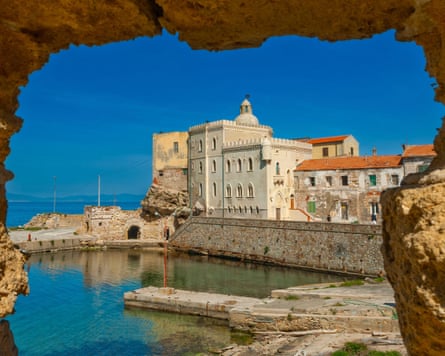
Daily visitor numbers to Pianosa are restricted, helping preserve the island’s fragile environment and tranquil atmosphere. You can either buy a ticket on the limited ferry service or join an authorised guided excursion.
Roman remains (including early Christian catacombs) and abandoned prison buildings from when the island served as a penal colony offer glimpses of its history. And the restored Casa dell’Agronomo and Museo delle Scienze Geologiche e Archeologiche explore its agricultural, geological and archaeological heritage.
Guided walks, cycling and kayak excursions are among the best ways to explore. Swimming is restricted to Cala Giovanna, an easy walk from the small port and historic village, to help safeguard the marine ecosystem.
Where to eat: Da Brunello in the small harbour village is Pianosa’s only cafe/restaurant, with a focus on fresh fish and vegetables grown on the island.
Where to stay: Close to the cafe and run by the same management, the island’s only accommodation, Albergo Milena (doubles from £95 half-board) offers simple rooms in a historic building.
Getting there: There are authorised excursions from Elba with Acquavision (45 minutes), and limited Toremar ferry services run from Piombino to Pianosa (about three hours).
Giannutri: the roadless retreat
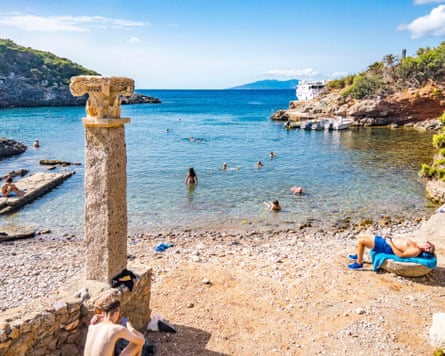
While Elba hums with holidaymakers and Vespas, this tiny, car-free limestone crescent, where scent-heavy macchia slopes into ink-blue waters, offers a radical detox from modern life.
With only one restaurant-cafe, which also functions as a small grocery shop, day trippers are advised to bring their own water and lunch. Most people swim at Cala Spalmatoio and Cala Maestra, while much of the coastline forms part of a protected marine reserve renowned for its diving and snorkelling. A guided tour of a Roman villa linked to the Domitii Ahenobarbi family is a must.
Where to eat: La Vela Giannutri, the island’s only dining option, focuses on seafood dishes, from tuna tartare to spaghetti alle vongole.
Where to stay: Accommodation is limited to the family-run A Casa Diana (doubles from £123 B&B), with simple rooms and sea views, and a scattering of holiday rentals.
Getting there: Maregiglio runs ferries from Porto Santo Stefano, or there are seasonal excursion boats (taking about an hour). In summer, Maregiglio also operates excursions and mini-cruises between Giglio and Giannutri.