2 months ago
60
2 months ago
60
UK programmes to protect nature and the climate in developing countries are suffering swingeing budget cuts despite ministers’ promises, the Guardian has learned.
The cuts belie the government’s claims to be fulfilling international obligations on climate finance and are veiled behind a system that experts have criticised as opaque.
Several programmes intended to protect nature in vital ecosystems in Africa and Asia have been in effect axed. Other schemes have been reduced in scope, undermining their impact.
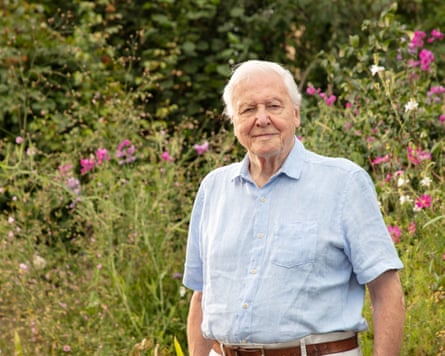
One initiative, the £500m Blue Planet Fund – set up after Sir David Attenborough’s revelations of the plight of the marine environment in his Blue Planet series raised widespread public concern – is also in question.
The cuts have not been publicly revealed and are hidden amid a chronic lack of transparency in climate aid spending. The Guardian has uncovered:
-
The cutting and partial closure of the £100m Biodiverse Landscapes Fund, intended to protect nature in vital ecosystems in poor regions overseas. Six regions were originally targeted, in Africa, South America and Asia, but this has been reduced to two.
-
Coast – a project for Climate and Ocean Adaptation and Sustainable Transition – and Pact (Prepare and Accelerate Climate Transitions) are having substantial cuts.
-
The future of the £500m Blue Planet Fund has been thrown into doubt despite its successful operation.
-
Other schemes have been reduced in scope, for instance by allowing only one year’s funding where years were expected.
-
Requests for data under the Freedom of Information Act have revealed spending has been slashed among the departments responsible for international climate finance (ICF).
These schemes should have been worth hundreds of millions of pounds but are likely to be substantially reduced, in some cases by more than half. It is difficult to gauge the exact budget cuts, because there is no transparent government system for accounting for ICF. Replies to FoI requests, seen by the Guardian, have revealed some headline data on nature spending, but the government has produced no project-level data since 2020.
For the five-year period to the end of March 2026, the government should have spent £11.6bn on ICF to help developing countries cut their greenhouse gas emissions and cope with the impacts of climate breakdown, with £3bn of the pledge earmarked for nature protection.
The Guardian has already revealed that the government plans to reduce the next spending round on ICF by more than a fifth, to £9bn over the next five years, which experts said was out of line with an international pledge by developed countries, including the UK, to triple global ICF to $300bn a year by 2035.
The original pledge to spend £11.6bn on ICF from 2021 to 2026 was made by Boris Johnson in 2021 before the Cop26 UN climate summit in Glasgow.
At least £2bn of that is likely to be made up from an accounting change made by the last Conservative government, by which 30% of any aid spending on the world’s least developed countries can be counted as ICF, even if it has no explicit climate or nature components. This could make it possible to meet the £11.6bn commitment while cutting climate and nature programmes.
Jonathan Hall, of Conservation International UK, said the government was failing to live up to voters’ expectations. “Polling shows protecting rainforests, oceans and wildlife is a very popular use of the UK aid budget, yet the government looks poised to drop these funding commitments, just as the Green party wins its first ever byelection,” he said.
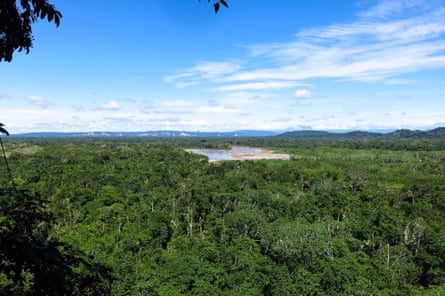
“The UK’s support for international nature must be maintained as its proportion of the international climate budget. A radical improvement in transparency is also needed, so that the UK public can see and take pride in the iconic ecosystems of Attenborough documentaries that UK funds are protecting, plus understand the huge impacts of cuts to these environments and their local communities.”
The Foreign, Commonwealth and Development Office refused to answer questions about individual funds and items of spending. “The UK remains on track to deliver at least £11.6bn in ICF by the end of March 2026,” a spokesperson said. “We continue to publish regular, transparent information to enable people in the UK and internationally to track our progress, and we will publish ODA [overseas development aid] allocations for the next three years shortly.”
Several people familiar with the operation of some of the funds, who could not be named, said money was not being delivered and some were being curtailed. A common complaint was that funding was being drip-fed, doled out a year at a time with no future guarantees, which limits the ability of organisations to plan and puts the employment of the local workers needed to run projects in jeopardy.
Adrian Gahan from Campaign for Nature, one of the co-creators of the UK Nature Finance Tracker, said: “Inspired by David Attenborough’s Blue Planet series, the UK government has spent five years building up the Blue Planet Fund that helps protect oceans, marine life and the communities that depend on them around the world. Unfortunately, in Attenborough’s 100th birthday year, it appears the government is considering closing this programme. Given the importance of healthy oceans to economic and social stability across much of the world, this would be remarkably short-sighted. We urge the government to provide clarification that the Blue Planet Fund is secure and will continue to be funded for the next five years.”
A group of 85 civil society organisations have written to Keir Starmer to ask him to intervene and increase climate funding, raising the money by taxing fossil fuel producers, a strategy polls suggest would be popular with voters. In a letter seen by the Guardian, they say: “[Cutting climate finance] would be a massive betrayal of countries and communities on the frontline of the climate crisis and of your government’s manifesto commitments to the UK public to be a climate leader and to create a world free from poverty on a liveable planet. The UK’s provision of ICF is absolutely central to living up to these manifesto commitments.”
They add that the government could raise tens of billions of pounds a year from taxing oil and gas companies, redirecting fossil fuel subsidies, and from the wealthiest who are responsible for an outsize portion of carbon emissions, for instance through frequent flyer levies and tax on private jets.
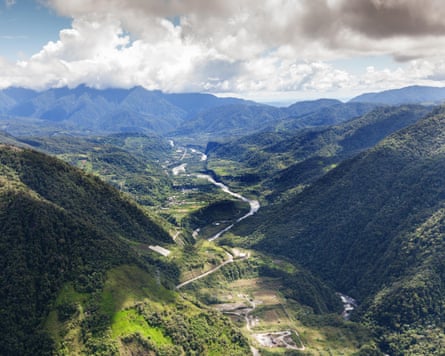
Catherine Pettengell, the executive director of Climate Action Network UK, who organised the letter, said: “Public polling tells us that the UK public think eye-watering fossil fuel profits and luxury travel should be taxed to pay for the damage they cause to our climate. If we did this, the government could raise tens of billions of pounds a year to pay for climate action at home and overseas – bringing down food prices and better protecting us all from costly climate change impacts. Yet the wealthiest and largest polluters continue to be let off the hook, gaining profits, while people who have done the least to cause the climate crisis bear its most significant costs. This has to change.”
Ministers were warned last year in a report compiled by the UK’s spy chiefs, the joint intelligence committee, that the collapse of ecosystems in vulnerable parts of the world – including the Amazon and the extinction of coral reefs – could have serious impacts on the UK’s national security and lead to food shortages, unrest and war.