3 months ago
74
3 months ago
74
People from a town in central Kenya where the US wants to set up an Ebola quarantine facility for its citizens have strongly criticised the plan, saying they fear it will expose them to the virus and that it is indicative of double standards on the part of the US.
“Everybody should be quarantined in their home country. We shouldn’t allow foreigners to bring us diseases,” said Charles Mathenge, a taxi driver who lives near Laikipia Air Base, the proposed site in Nanyuki, 120 miles from the capital, Nairobi. “Kenya is our country, and we should be careful with it.”
There has been rising nationwide anger in recent days. Two people died from gunshot wounds when police opened fire on demonstrators near the airbase on Monday.
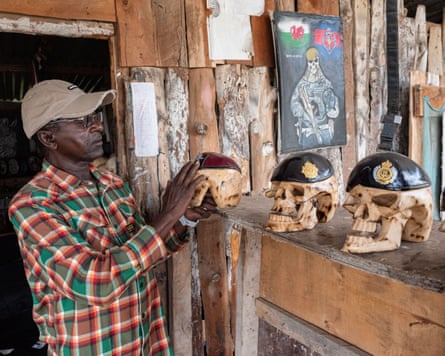
David Mulinge, a souvenir seller, said: “What’s shocking is that the Americans don’t want their infected fellow citizens to step into their own country but to come to Kenya. That’s like treating us as lesser beings.”
Health officials in Uganda and the Democratic Republic of the Congo are battling to contain an outbreak of the virus. The outbreak was declared on 15 May, but the virus is thought to have been circulating undetected for weeks before then.
The epidemic, which the World Health Organization (WHO) has declared a public health emergency of international concern, is caused by the rare Bundibugyo virus, which has no vaccine or approved treatment.
So far, there have been 60 deaths and 344 confirmed cases in the DRC, and one death and nine confirmed cases in Uganda, the WHO said on Tuesday. There are no known cases in Kenya.
The US government plans to send 30 medical personnel to staff the Nanyuki facility, which, if completed, will have 50 beds. In previous Ebola outbreaks, the US has returned affected citizens home for medical treatment.
The US secretary of state, Marco Rubio, said on 28 May that the US must keep potential Ebola patients out of the country. “We cannot and will not allow any cases of Ebola to enter the United States,” he said at a cabinet meeting.
Last month, an American doctor who contracted Ebola in the DRC was flown to Germany for care, with his wife and four children.
The proposal has caused outrage in Kenya. In a statement published last week, Dr Davji Atellah from the Kenya Medical Practitioners, Pharmacists and Dentists Union said the group would not “sit back and watch Kenya be treated as a containment colony”. “If it is too dangerous for America, it is too dangerous for Kenya,” he said.
After a petition by the Kenyan nonprofit Katiba Institute, the Nairobi high court last week temporarily blocked the establishment of the facility and the admission into the country of people exposed to Ebola. The organisation said an arrangement between the Kenyan and US governments over the facility raised serious concerns about public health, governance and sovereignty.
Jeremy Lewin, the US Under Secretary for Foreign Assistance, Humanitarian Affairs, and Religious Freedom, said the US government was in touch with Kenyan authorities and was optimistic about resolving the issue.
On Tuesday Kenya’s president, William Ruto, defended the plan, saying it was being politicised and that it was part of a broader system for national health preparedness. “These measures are intended solely to safeguard public health and strengthen our capacity to respond effectively to health emergencies,” he said.
But the high court judge Patricia Nyaundi later barred the Kenyan government from proceeding with the plan before the case is resolved. She also ordered the government to disclose all agreements related to the facility within seven days. The next hearing is due on 23 June.
In Nanyuki, an agricultural hub of more than 70,000 people that sits almost directly on the equator and hosts a British army training unit, conversations about the planned quarantine facility are taking place among concerned people in shops, markets, homes and elsewhere.

Simon Ong’ono, a motorcycle taxi rider , questioned why the US, which has more advanced healthcare infrastructure and resources than Kenya, wanted to bring Americans exposed to Ebola to the town. “President Ruto should completely abandon this plan and close our borders fromto patients from other countries,” he added.
Mulinge said he was concerned about the potential for the virus to spread quickly in Nanyuki, where he said people engage in a lot of physical contact in businesses and social settings. “We’re very scared about contracting the disease,” he said.
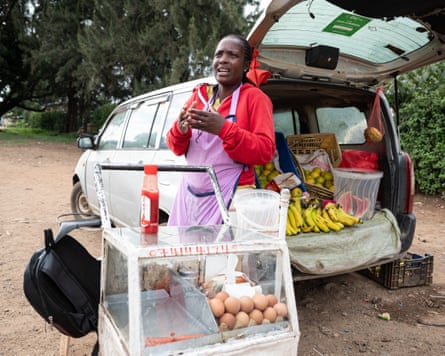
Fauzia Isiche , a street food seller, said she feared the return of a curfew or lockdown like during the Covid-19 pandemic if Ebola spreads to the community, and said it would disrupt her business and make her unable to provide for her child. “We’d die in our houses,” she said.
The airbase hosts a primary and secondary school, and many people are worried that a spread of the disease would affect students. “My grandchildren [are] there daily,” said Mathenge. “We don’t want a problem.”
Purity Kendi, a business person who lives and works near the airbase, said she felt betrayed by the Kenyan government. “We expect our leaders to protect us but they’ve showed us that they don’t care about us,” she said. She urged Kenyans across the country to unite and oppose the plan. “We don’t have another country to run to,” she said.