3 months ago
91
3 months ago
91
Amadou Diouf* has spent the past two months watching people he knows disappear – fleeing across borders, being arrested or simply going silent.
Diouf is the secretary-general of UJEC (Union des Jeunes Engagés pour Notre Communauté), a Dakar-based NGO that stays under the radar of the authorities, running a refuge providing emergency shelter and community support for LGBTQ+ people facing homophobic violence.
In February, when Diouf was attacked by neighbours and family members, he too left Senegal for the Gambia. He has since returned to Dakar, but UJEC’s services are yet to resume. “We have stopped all our activities. We are no longer safe,” he says.
Diouf’s experience is playing out across a country that, for decades, has maintained one of Africa’s most resilient HIV prevention systems. The success was built, in part, on reaching men who have sex with men (MSM), sex workers and other key populations who are being swept up in a wave of arrests as hostility against homosexuality rises in Senegal.
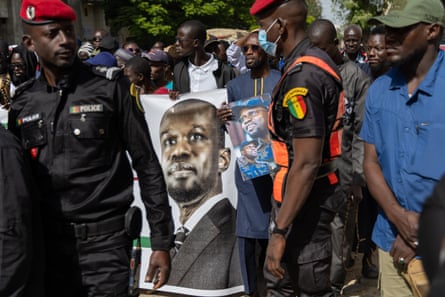
On 27 March, President Bassirou Diomaye Faye signed a new law doubling the maximum prison term to 10 years for sexual acts by same-sex couples and criminalising the “promotion” of homosexuality.
Alice Bordaçarre, at the gender equality desk of the International Federation for Human Rights (FIDH), warns that any organisation working on fundamental rights – including HIV prevention – could be considered as promoting LGBTQ+ rights under the law’s broad framing. “It risks criminalising legitimate human rights activities, including those of lawyers, health workers, journalists and NGOs. It is very dangerous,” she says.

Between 4 and 9 February, authorities arrested at least 12 men in Dakar under Article 319 of the penal code, which criminalises same-sex relations as “acts against nature”, after television presenter Pape Cheikh Diallo was detained at a hotel and police used his phone to identify and trace those connected to him.
According to HIV Justice Network, which monitors HIV criminalisation globally, more than 60 people have been detained since the beginning of February on Article 319 charges, which carry a sentence of one to five years in prison. Forty-two of those cases are linked to the Diallo arrest, according to Sylvie Beaumont of HIV Justice Network.
For years, arrests have typically surged during periods of political pressure or public moral panic. However, Beaumont says the latest wave is “unprecedented in the region” due to the forced HIV testing of those arrested and the automatic addition of intentional transmission charges for those who test positive. “This is a fairly new development,” she says.
Based on HIV Justice Network’s tracking of Senegalese media reports, at least 22 of those detained since February have been identified as HIV positive and face further intentional transmission penalties.
HIV prevalence in Senegal’s general adult population is below 0.5% – but among MSM, that figure rises to 27.6%, according to data from Senegal’s National Council for the Fight Against Aids (CNLS). The same CNLS research also suggests rates as high as 49.6% among this group in parts of Dakar. A 2024 study in the journal Aids estimated that male key populations accounted for up to 79% of HIV transmissions in Senegal between 2012 and 2021.
The impact of the February arrests on HIV healthcare was immediate. A rapid assessment carried out by CNLS from 26 to 28 February across 22 treatment sites recorded a 34.5% decline in consultations and found 44% of MSM patients reporting depression or anxiety. Dr Safiatou Thiam, executive secretary of CNLS, says the decline was directly linked to the early February arrests triggering panic through MSM communities.
Cécile Kazatchkine of the HIV Legal Network says that an even more hostile environment under the new law will mean “no one will be able to reach out to [MSM patients] any more. They will be too scared to come to get treatment or testing.”
She points out that Senegal’s HIV transmission law has high proof requirements: there must be evidence that the accused knew their status, understood transmission routes, took a significant risk and acted with intent to transmit. Those charged and found to be on antiviral medication, she says, could not possibly have met that legal threshold, since effective treatment renders the virus incapable of transmission.
“Having sex while being HIV positive is not criminalised in Senegal,” says Kazatchkine, and that remains true even under the new law. Yet forced testing appears to be happening routinely, with HIV-positive status automatically triggering intentional transmission charges.
Renapoc, a Dakar-based NGO supporting key populations at elevated HIV risk, was advised by CNLS to close its offices and move to remote work. Some peer mediators – patients who support others through treatment – have stopped working altogether. “Patients say they are afraid. They do not want to be arrested,” says Thiam. “We fear that the epidemic will return.”
This is unfolding within an HIV response already weakened by funding cuts. The US freeze on foreign assistance in January 2025 forced an abrupt halt to community-based programmes. Alliance Nationale des Communautés pour la Santé (ANCS), a national coalition of community health organisations coordinating HIV prevention and treatment programmes across Senegal, saw activities suspended and outreach capacity reduced across hundreds of member organisations. Contracts for community mediators – who support testing, treatment adherence and prevention – were terminated, while services such as condom distribution, PrEP access and patient follow-up have been scaled back.
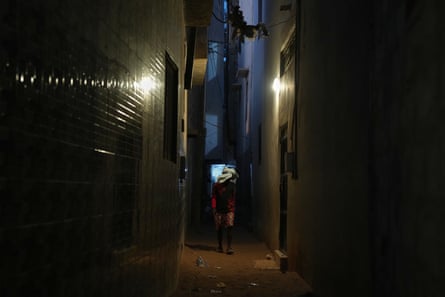
On 18 March, UNAIDS said it was deeply concerned about the legislation’s implications and urged the president not to sign it. It noted that new HIV infections in the country rose 36% between 2010 and 2024, making Senegal one of only four countries in west and central Africa where infections are still climbing.
Arrests have not been confined to Dakar. HIV Justice Network’s monitoring shows police departments across the country have been involved, with arrests starting as early as October and November 2025. The HIV status and names of the accused have been published in the Senegalese press, along with professions and sometimes addresses. Some wives of married detainees, according to Beaumont, felt compelled to publish their own HIV test results publicly to distance themselves from stigma.
Some men have left Senegal entirely. Though neighbouring countries are not risk-free – the Gambia and Mauritania both have stricter laws than Senegal on same-sex relations – people have gone anyway. Beaumont noted reports that police were monitoring border crossings to prevent people from leaving. Asylum applications to France have also increased, according to Beaumont.
The Senegalese Ministry of Justice and the supreme court did not respond to requests for comment. Academics approached in Dakar declined to discuss the situation. Kazatchkine says fear is widespread: “You can receive a three-year minimum sentence just for saying something that would be perceived as promoting homosexuality.”
For Diouf, the question now is whether the HIV prevention system can survive the new legislation and the fear that is driving key communities underground. “People’s statuses are being disclosed, their sexual orientation,” says Diouf. “We are not allowed access to health. We are devastated.”
* name changed for reasons of security