1 month ago
59
1 month ago
59
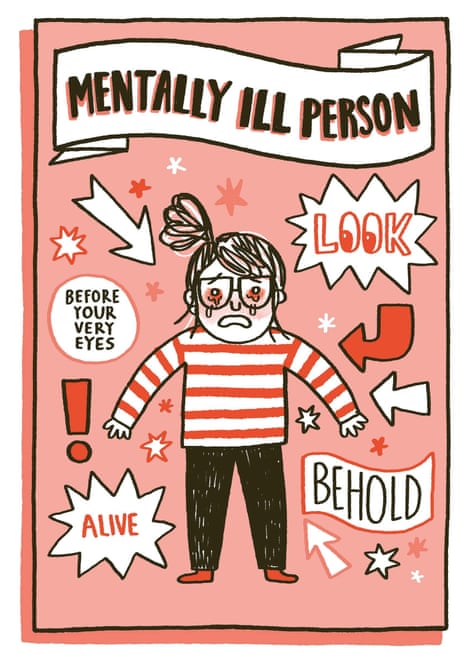
Gemma Correll has suffered from anxiety and depression disorders since childhood, and at 16 she discovered a magical elixir that promised to make her feel better. In this extract from her new book, she shows how that promise was broken
In 2018, I was in my 30s and living in Oakland, California, having moved there from the UK in 2015. I had always struggled with anxiety and panic attacks, but I was doing fairly well – until suddenly I wasn’t. I started having back-to-back panic attacks, wandering the streets of Oakland and nearby Berkeley in a desperate attempt to shake them, without success.
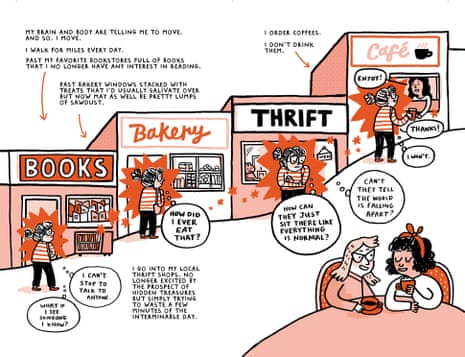
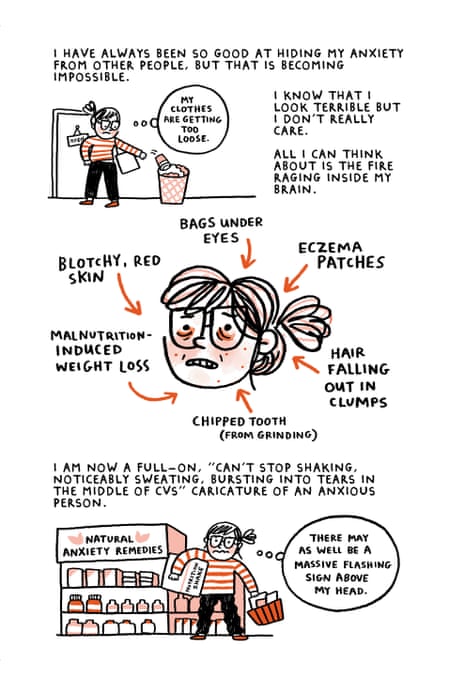
My life felt like an out-of-control fairground ride. Actually, it felt more like an entire theme park. I could see the rides in my head: attractions like the Emotional Rollercoaster, representing the rise and fall of a panic attack, the Depression Obstacle Course, a treacherous and challenging trail, and the House of No Fun, a confusing maze of dissociation and depersonalisation.
Eventually I saw the whole map: Anxietyland.
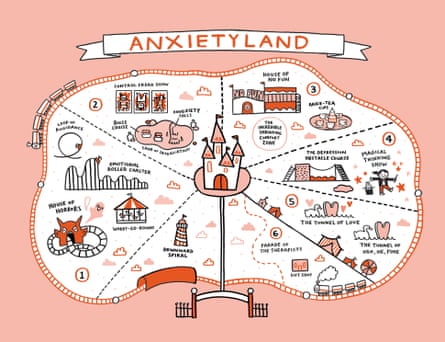
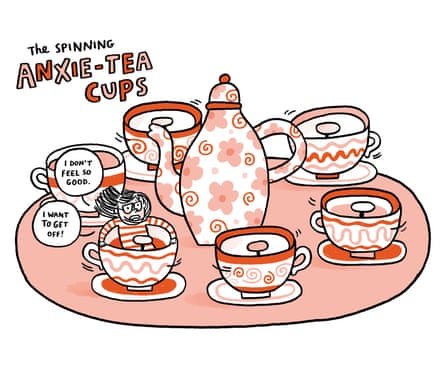
I knew Anxietyland well. I had ridden on the Anxie-Tea Cups, on which I realised that drinking a nice cup of tea – as one counsellor suggested – was not sufficient treatment for a clinical anxiety disorder.
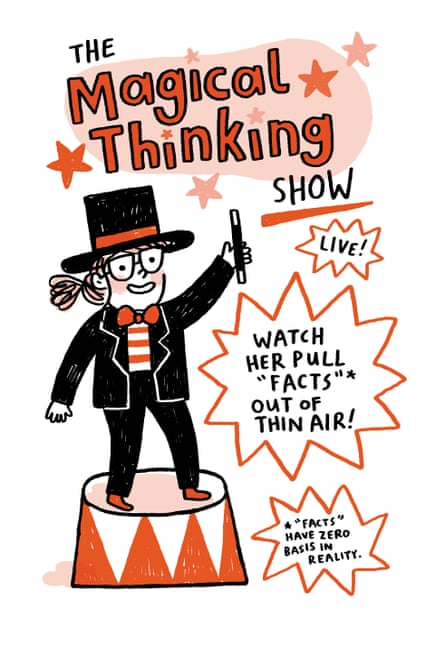
I had sat through the Magical Thinking Show, a place where I learned that I could not, in fact, control the outcome of real-life events using the power of my own thoughts.
I had been on all the rides multiple times, having suffered from anxiety and depression disorders since childhood. I thought that I knew the whole park like the back of my hand, but what was happening to me in 2018 was new – and utterly terrifying. I found myself on a new ride: the Downward Spiral.
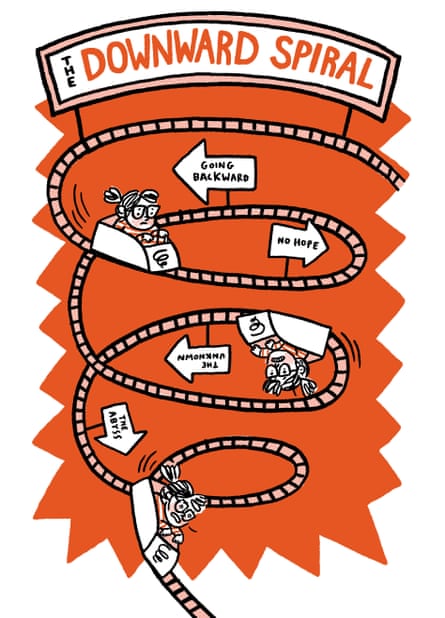
The Downward Spiral was a terrifying slide into the unknown. I’d experienced panic attacks before, beginning at 14, and I already struggled with phobias, including agoraphobia – the fear of becoming trapped in a situation where escape might be difficult or help unavailable. I had avoided riding in lifts for years. But this was new. There was no clear trigger for the panic that enveloped my every waking moment in Oakland – and that made me feel even more out of control. I didn’t know it then, but I was suffering from panic disorder – essentially, I was panicking about panic. At the time, it felt like there was no way off the Downward Spiral.
There was one friend I did turn to for help, though. Boozy.
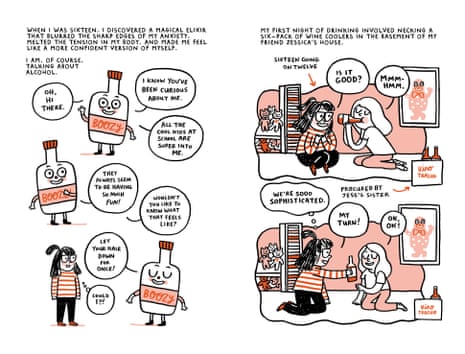
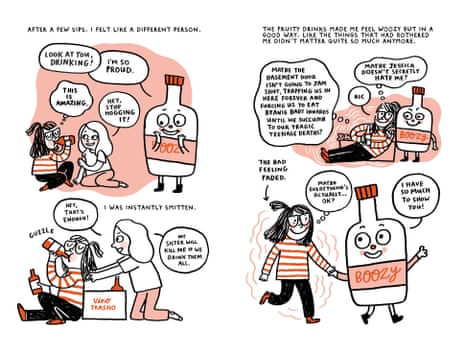
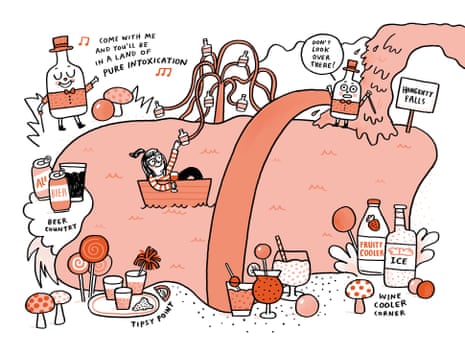
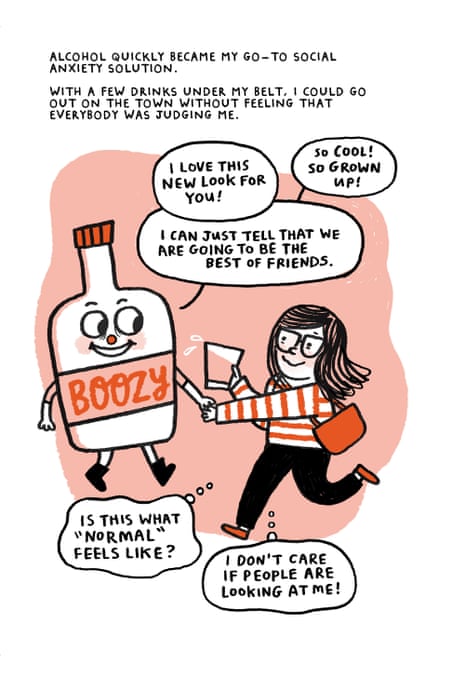
In 2002, I had been accepted to study English literature at Cambridge, which I was very excited about. But upon my arrival at Homerton College, I began to feel an unexpected and intense anxiety around attending classes and meeting new people, a fear that quickly escalated into an inability to leave my room. I spent two weeks in this confusing state of panic, in a world that shrunk to the size of a tiny dorm room, which I named the Incredible Shrinking Comfort Zone, racking up huge phone bills by calling my parents in tears, desperate to go home, but deeply ashamed of my inability to cope. I moved back home in a cloud of embarrassment and guilt.
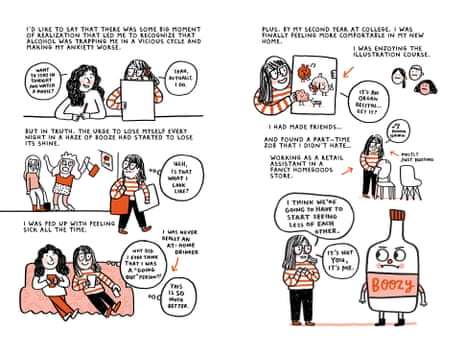
After this aborted attempt to go to university, I found myself on a different path: heading to art school after spending a year on an art foundation course in my home town of Ipswich, Suffolk. My decision to join the foundation course had been based, in part, on having nothing better to do – but I had found myself enjoying it. In particular, I liked the illustration classes, which had reawakened my interest in cartooning and animation, although I was unsure of my ability to turn those skills into a job. At the time, I was struggling with agoraphobia and found it difficult to leave the house (the college in Ipswich was within walking distance of my home), so I approached my second attempt at higher education with a certain amount of trepidation.
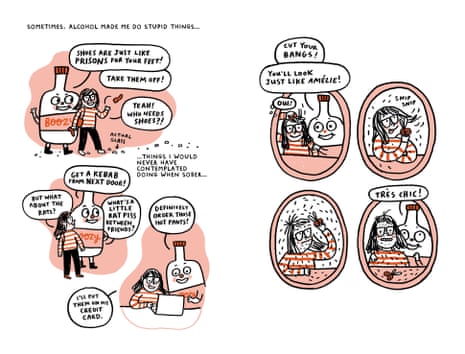
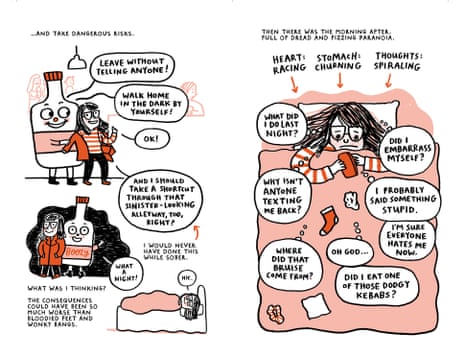
Once again, I found comfort in my friend Boozy.
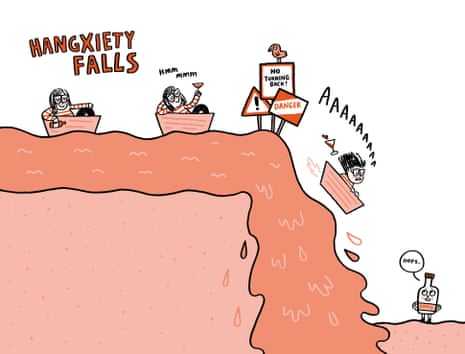
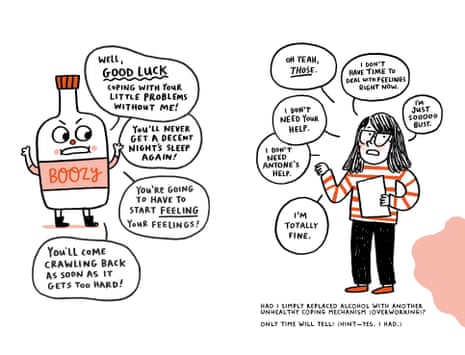
Giving up alcohol didn’t solve all of my problems, of course - but it was a good start.
-
This is an extract from Anxietyland by Gemma Correll (Penguin, £25)