3 months ago
87
3 months ago
87
20. Night and Day (1982)
Releasing a version of the Cole Porter standard – previously recorded by Billie Holiday, Frank Sinatra and Ella Fitzgerald – as a debut single should have been an act of hubris. But Everything But the Girl’s (EBTG) version is fantastic, dolefully understated, effectively relocating the song to a grim bedsit in early 80s Britain.
19. British Summertime (1991)
Worldwide might be EBTG’s least-loved album. The duo’s sleeve notes for the deluxe edition are deeply equivocal about its merits, but it’s the deluxe version you need to hear the demo of British Summertime, stripped of its production gloss, rendered as a simple piano ballad, both careworn and lovely.
18. 25th December (1994)
Unexpectedly resurrected during EBTG’s recent residency at London’s Moth Club, 25th December relegates Tracey Thorn’s voice to harmonies: instead, Ben Watt sings a song that melds sparkling guitars with doleful festive sentiment – a Christmas visit to parents prompting a rumination on the passing of time.
17. Mine (1984)
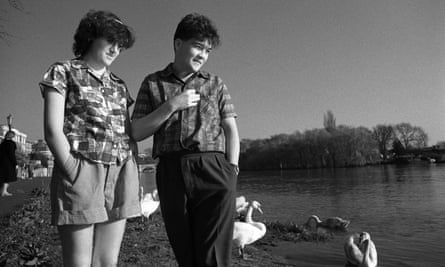
Released only four weeks after debut album Eden, Mine was a left turn away from its jazz-inflected sound, reflecting Thorn and Watt’s increasing fascination with the Smiths. It succeeded in confusing the public, barely denting the charts, but it’s a wonderful song, filled with empathy for its protagonist: an impoverished unmarried mother.
16. Wrong (1996)
There’s a sense in which Wrong was Missing Part 2: another dolorous break-up song set to a house rhythm, another Todd Terry remix. But the song itself is too good, too confident in its new musical surroundings to dismiss as a mere follow-up: note also the slight skip in the rhythm that weirdly presages the rise of UK garage.
15. Oxford Street (1988)
You could take the sound of 1988’s Idlewild as evidence that EBTG were veering close to the middle of the road, but there’s no quibbling with the actual songwriting: Oxford Street, in particular, is a gently heartbreaking reflection on Thorn’s youth, a dry run in song for her fantastic 2013 memoir Bedsit Disco Queen.
14. The Future of the Future (1998)
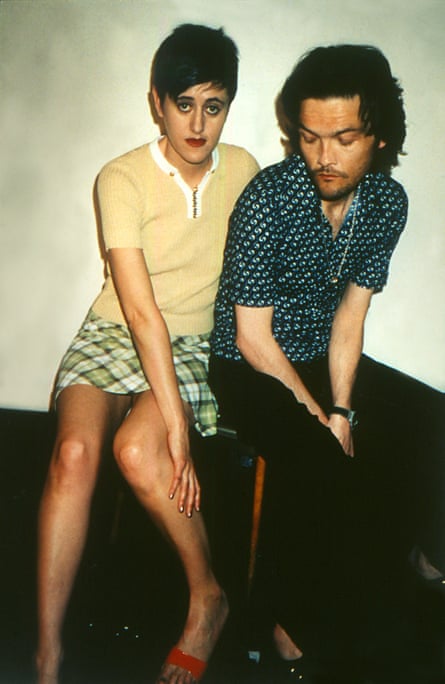
A collaboration with Washington’s Deep Dish that appeared on both Deep Dish’s debut album Junk Science and, in truncated form, on EBTG’s Temperamental, The Future of the Future is noticeably more upbeat than EBTG’s previous forays into house. It feels gently euphoric, not an emotion much associated with Thorn and Watt, but it works.
13. No One Knows We’re Dancing (2023)
At the turn of the 00s, Ben Watt ran Sunday evening London house club night Lazy Dog. No One Knows We’re Dancing lovingly captures the peculiar atmosphere of being out on a night when most people are at home, the intriguing assortment of characters that Sunday clubbing attracts, and the heady sense you’re doing something slightly illicit.
12. Before Today (1996)
The Walking Wounded album now seems extraordinary: what are the chances of a band suddenly having their biggest hit with a house remix of an old track, running with the idea and getting it exactly right? But they did, as evidenced by its beautifully poised opener, its drum’n’bass rhythm amping up the song’s sense of eager anticipation.
11. I Must Confess (1984)
EBTG balked at being lumped in with the UK’s early 80s jazzy pop wave. You can see how it happened, but also why it rankled. On I Must Confess, the jazz/bossa nova influence audibly isn’t a hip affectation, it’s naturally integrated into an entirely unique sound. Still students, they nevertheless knew what they were doing.
10. Come on Home (1986)
When their record label suggested making a “big”-sounding album, EBTG took them at their word. Baby, the Stars Shine Bright was big not in the sense of its 80s peers, but in the manner of a 60s orchestrated ballad: a wonderful song, bolstered by its timpani and crashing strings, it’s faintly mad that Come on Home wasn’t a huge hit.
9. Single (1996)
Aside from the success of Missing, the other big influence on Walking Wounded was Thorn’s guest appearance on Massive Attack’s Protection: the slow-motion Single has a similarly moody atmosphere, although it’s a fantastic song in its own right. And Photek’s remix is superb: markedly different, but sympathetic to the song’s original ambience.
8. This Love (Not for Sale) (1985)
“A real drag,” opined one reviewer of EBTG’s second album Love Not Money. It’s certainly pretty sombre in tone, but it perfectly captures sombre times: This Love (Not for Sale) applies the jazz influence of Eden to a portrait of post-miners’ strike Britain, a sense of weariness and defeat battling simmering fury.
7. Driving (1990)
In a career of unexpected diversions, The Language of Life was particularly unexpected: who imagined EBTG making a slick, Luther Vandross-y pop-soul album with a team of crack US jazz-fusion musicians? It shouldn’t have worked but it does, intermittently. Driving is super-smooth pop perfection.
6. Cross My Heart (1986)
Baby, the Stars Shine Bright’s crowning glory: lavishly appointed with strings, brass and what sounds like vibraphone, Cross My Heart doesn’t just aim for the sound of a mid-60s Dusty Springfield record, it’s a song so good that Springfield might have happily recorded it in her prime – soulful but luxurious, way beyond pastiche.

5. Run a Red Light (2023)
The brilliance of comeback album Fuse is that it sounds both of a piece with EBTG’s back catalogue and resolutely a product of the 2020s: Run a Red Light is extraordinarily beautiful, desperately sad and subtly alive to the sonic developments that took place while the duo were otherwise engaged.
4. Walking Wounded (1996)
Watt has said he “got” drum’n’bass “straight away” – the breaks reminded him of the jazz he grew up on, and there was space in the sound “where Tracey’s voice could go”. Certainly, their first venture into the genre was wildly impressive: a classic slice of EBTG heartbreak perfectly allied to Metalheadz-influenced beats.
3. Rollercoaster (1994)
The story that EBTG’s career was rescued by Terry’s take on Missing doesn’t really hold water: primarily acoustic, the Amplified Heart album already boasted a fresh sense of purpose and direction. Rollercoaster is both characteristic of the album and a highlight: musically restrained, lyrically fragile but resigned, entirely wonderful.
2. Each and Every One (1984)
A gentle melody and soft, entirely charming Latin American-influenced arrangement mask a lyric that’s livid at the treatment of Thorn’s former band Marine Girls by patronising male journalists. Being simultaneously enchanting and supremely pissed off is quite a trick to pull off: EBTG’s first hit seems to do it effortlessly.
1. Missing (1994)
EBTG’s most famous song is an incredible track in any of its iterations. The overlooked original is absolutely beautiful, moody synthesiser tones swirling around Tracey Thorn’s exquisite vocal. Todd Terry’s remix transformed it into one of the best pop singles of the 90s, a perfect confection of heartbreak and dancefloor power: it didn’t sound like a remix so much as how the song was meant to be. And, on the 12in, there was Terry’s Lite Mix, which stripped Missing back to its beat-less bare bones. Whichever version you pick, it can still stop you dead in your tracks.