1 month ago
61
1 month ago
61
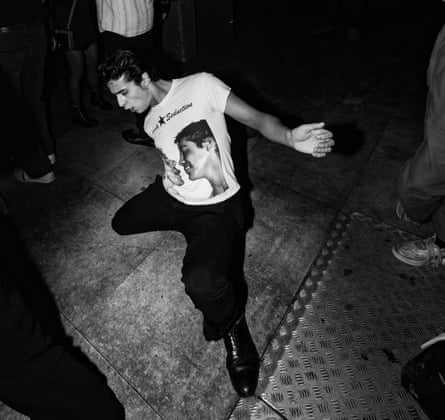
Tom found northern soul by mistake. Despite living in Salford, Greater Manchester his entire life, the 24-year-old had never heard of the movement that began in the north and Midlands – known for its bombastic dancing and devotion to obscure black American soul music. He remembers how he felt on the fateful evening, watching people his age at a northern soul club night ditch their phones for the dancefloor.
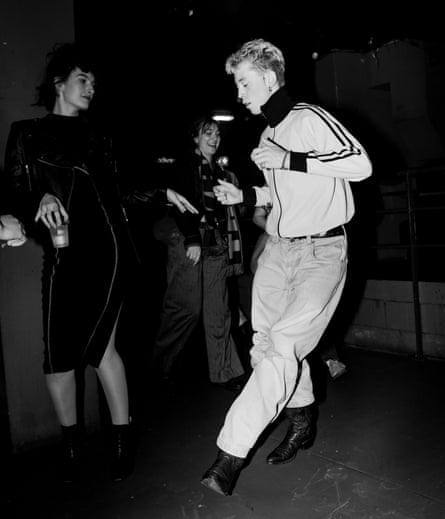
Captivated, Tom took it upon himself to learn the signature dance style: spinning, high air-kicking, and falling to the ground backwards before launching back upright. Now Tom can regularly be seen keeping the faith on talc-covered, friction-reducing floors. The evening in central Manchester was an awakening for Tom and he’s not the only one.
Northern soul is back. So say the many, many articles documenting gen-Z’s love for the subculture. “[…] across the country there’s a surge of youth-led northern soul scenes that are not only surviving – but thriving”, read a piece in youth culture magazine, Dazed. Videos of young dancers frequently go viral. Photo features dazzle us with images of twentysomethings keeping the faith during new all-nighters.
But look closer and you’ll notice something strange. Whether it’s at Bristol Northern Soul Club or south London’s Rivoli Ballroom, all the biggest actors in this so-called northern revival are from south of Birmingham – as was the case with the organisers of the night in Manchester that Tom attended. So, it begs the question, one that Tom couldn’t shake on that dancefloor: When did northern soul get so southern?
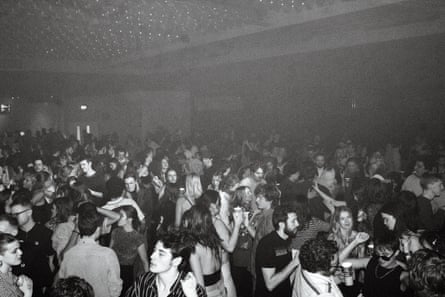
Northern soul began as an underground music and dance movement in the early 1970s as a form of escapism for young people living in small industrial towns across the north. Dressed in baggy trousers, vests and bowling shirts, enthusiasts had a spiritual devotion to dancing to fast-tempo American soul music well into the wee hours – often assisted with the drug of choice, speed. DJs flew to the US to find rare records from obscure artists, and brought them back to soundtrack small dancehalls and working men’s clubs full of dance-hungry youngsters. Word soon spread, and people travelled from across the country to experience the high-intensity evenings in the scene’s biggest venues such as the Wigan Casino and Blackpool Mecca.
YouGov polling found that people in the north-west and north-east have some of the strongest attachments to their region, with the latter outpacing London for home town pride. Despite this, the collapse of industry across northern towns has defined northern towns with higher deprivation and fewer opportunities than many places in England; 44% of 16–21-year-old northerners expect to move from their home town in search of work. With a brain drain pulling young people towards the capital, does northern culture risk being flushed down the plug hole, too?
Keith Gildart, an academic from Leigh, Greater Manchester and co-author of Keeping the Faith: A History of Northern Soul, says Dave Godin – a journalist, music expert and soul record shop owner in the 1970s – was one of the first to observe the cultural differences that went on to define the northern soul subculture: “He saw an authentic industrial working-class scene which was very different from the counterculture of the south. That sense of northernness, which is mythologised in a lot of ways, comes from Dave Godin.”
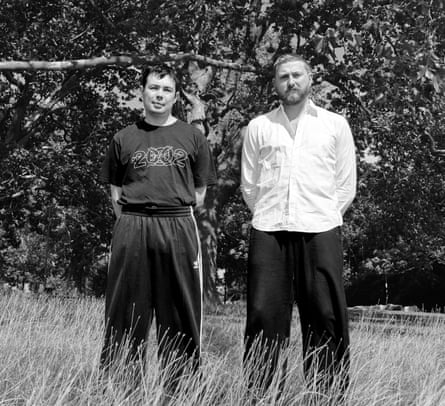
Lewis Henderson is one half of the south London-based Deptford Northern Soul Club; he’s responsible for the night where Tom discovered the scene. Henderson has an unmistakably London drawl but his father’s record collection and home town of Carlisle lay the groundwork for his affinity for northern soul. “I realised the music my dad was banging on about was actually dead rare.”
Northern soul down south may sound contradictory, but the history of the scene is not solely the preserve of the upper half of England. The term “northern soul” was itself a Deptford creation, coined by Godin after he recognised an influx of northern customers looking for increasingly rare American soul records in his own store.
When asked about the implications of northern identity in his club events, Henderson speaks with much forethought. “You have to understand Deptford has a huge black community,” he says. “And this music is black American music from the working cities like Detroit. Even though it means a lot to the people of northern England, it belongs to the people of America.”
The northern soul sound found in songs such as Frank Wilson’s Do I Love You (Indeed I Do) and Out on the Floor by Dobie Gray was championed by mod venues like the Flamingo Club in 1960s London, Gildart argues. “A lot of that soul music was central to the mod scene in the south,” he says. “The other important individual is Roger Eagle, who was from Oxford, and was one of the DJs at the Twisted Wheel in Manchester.”
While they may not be synonymous with the scene, London and the south always played a part in the history of northern soul. “You always had people from the south who travelled up to the north,” says Gildart. “They might not have had their own scenes, or the scenes were much smaller, but they were moving across the country seeking out the best soul nights.”
What actually may distinguish the modern era of southern soul from its northern equivalent is an age divide. Deptford’s nights – held everywhere from Portsmouth to Nottingham – are unashamedly targeted at younger dancers, as are those of Burnin Up Soul Club, founded by Aaron Alexander Reed. The 21-year-old is originally from Bristol, and it was the city’s eponymous club that inspired him to set up his own northern soul events in his new home of Manchester (and, of course, London). Reed says his Manchester nights are targeted at students in younger hubs such as Fallowfield, and attenders are a “mix” of southern students, blow-ins and locals from nearby Salford. He theorises that most northerners may associate northern soul with their parents (his own father grew up in Blackpool) – and a lack of familial cringe means that curious students from the south more readily flock to his events.
Meanwhile, many of the places that helped spawn northern soul like Wigan, Blackpool and Stoke are reliant on the older generations who cut their teeth during the scene’s heyday. As Reed points out: “When I go to some classic soul nights – and I do go to them quite a lot – it’s all the old people there. The new nights, not so much.”
Bristol Northern Soul Club is arguably the one most responsible for introducing the younger generation to northern soul: founder Eve Arslett who filmed a viral video of her daughter and fellow club co-creator, Levanna McLean, dancing in 2013 that first truly captured the attention of social media. Arslett isn’t interested in a north-south divide: “You could say at the moment that northern soul is global … There isn’t just one northern soul scene anyway, there’s lots of different scenes now, all very much doing slightly different things.”
She says that her Bristol group has “very different aims and [does] things very differently” to her soul contemporaries from Deptford. For her, the question around northern soul comes down to authenticity. “The term purist is nothing about the location or the geography,” she says. “It’s about the music or the record collecting. Growth is a good thing. Things like that will naturally evolve. It’s not really limited to the north of England.”
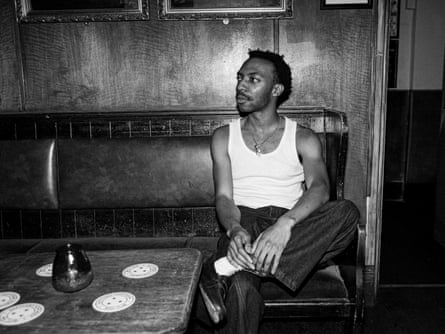
Kev Roberts, who got his start as a DJ at Wigan Casino when he was just 16, does see a difference between the regions. The 69-year-old is glad to see southern events flourish, but wishes the media would finally give the north its flowers. “They never have done,” he says, “probably because Blackpool has got an image of a bit of a kiss-me-quick scene.
“They really ought to remember the folks and organisers and the venues that have really kept this going, no disrespect to the south at all,” he adds. “I don’t just mean Blackpool Tower but Sheffield City Hall and King George’s Hall in Blackburn – these places were regularly pulling 1,000 people, which the south, so far, has not done. Those fans have kept the scene well and truly going to make it easier for the future.”
The question of whether northern soul is being given a leg up by interest down south, or it’s being stripped of its historical and regional context comes at a time when northerners seem to be thinking about identity more and more. Northern societies are “fighting back” at what they see as swarms of southerners in their home towns; while a new, exciting movement of northern gothic music has emerged in Bradford, Preston and Hull.
Northern soul isn’t the only northern-born musical subculture to be adopted by the south in recent years. Donk, a genre spin-off from hard house that developed in Wigan and Bolton during the late 00s, was initially derided in the press, shunned and remained relatively obscure (outside the genre’s de facto anthem, Put a Donk On It by the Blackout Crew). It took 15 years before donk was embraced in London clubs becoming a phenomenon miles away from its original home.
But unlike donk, the contemporary form of northern soul seems here to stay. Northern soul’s emphasis on dancing and unashamed movement places it in contrast with modern club culture, at a time when young people are going out less and less (in one study, conducted on behalf of the Night Time Industries Association, 61% of young people reported going out less frequently, with just 16% saying they were more likely to go out after 10pm).
On where a time-stamped movement like northern soul can go, Henderson says he wants to “bring northern soul into the 21st century”. He goes on: “We want to make a safe space where people can feel free to lose themselves in a group, because that’s really hard right now in individualism. We want that feeling to carry you away and make you dance, because that’s what it is: a clubbing movement; a dance movement.”
But has the scene lost its northern soul? To people like Henderson, the scene is simply evolving to meet the needs of a new generation of young people who are again seeking a form of escapism. “In England, there is this north-south divide, but there’s also a class divide. That divide doesn’t matter to us. What matters to us is you go out, you work all week, and you just want to have a nice time.”